Hania to headline Saim Sadiq's next film
Updated 22 minutes ago

Musical gatherings featuring metal trays, spoons, folk songs and women's voices are giving way to DJs and organised e
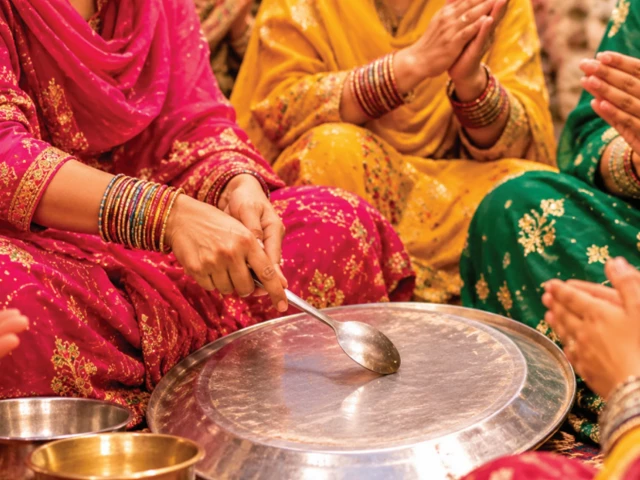
There was a time when wedding celebrations in traditional Punjabi households needed neither expensive musical instruments nor DJs and sophisticated sound systems, rather a spoon striking a metal tray, rhythmic clapping and the cheerful voices of women were enough to turn an ordinary courtyard into a lively musical gathering.
As wedding festivities approached, homes across Punjab would resonate with folk melodies, laughter and improvised beats, as women gathered several days before the ceremony. At the heart of these informal musical evenings was an ordinary kitchen utensil: the large metal parat, whose distinctive sound became an unmistakable feature of traditional wedding celebrations.
Particularly in rural and traditional households, wedding festivities often began four or five days before the actual ceremony. As evening fell, mothers, sisters, sisters-in-law, aunts, cousins and female friends from neighbouring homes gathered in courtyards or spacious rooms, transforming family gatherings into memorable musical occasions.
There was no need for professional singers or elaborate musical arrangements. The kitchen provided everything required. A large metal parat, a shallow, wide vessel traditionally used for kneading dough, was placed before the women, while spoons, ladles, steel plates and brass bowls supplied different tones to the spontaneous performances.
The parat had a distinctive role in these gatherings. One woman would hold or position it while another struck its surface rhythmically with a spoon or ladle, producing a characteristic metallic beat. Others joined in with clapping and folk songs, with different women taking turns to lead the melodies.
Traditional Punjabi wedding songs, including suhag, boliyan and tappay, formed the soul of these gatherings. "The singing, accompanied by the improvised percussion, often continued late into the night, creating an atmosphere of warmth and collective celebration," said Madeeha Bibi, a housewife.
Celebrating the bride, groom and their families, the songs captured the excitement of a new beginning while also touching on childhood memories, parental affection and the emotional pain of leaving one's parental home after marriage.
Humour and playful exchanges added another dimension to the musical evenings. Women frequently sang about relationships between mothers-in-law, daughters-in-law, sisters-in-law and other family members, turning familiar domestic situations into amusing verses that prompted laughter and affectionate banter.
Beyond entertainment, these gatherings served an important social purpose. "They provided women with an opportunity to reconnect with relatives and neighbours, exchange experiences and enjoy a welcome break from their everyday domestic responsibilities," said Sakeena Bibi, an elderly resident of Vehari.
The gatherings also provided an informal setting for passing cultural knowledge from one generation to another. Older women taught younger family members traditional songs and melodies, preserving an oral heritage that had travelled through families over decades. Wedding celebrations thus became occasions for sharing memories and sustaining cultural traditions.
Music was only one part of the preparations. While some women sang and played household utensils, others stitched bridal clothes, decorated dupattas, arranged wedding accessories or helped with household chores. Work, music and laughter blended naturally, making the days leading up to the wedding as memorable as the ceremony itself.
However, changing lifestyles have gradually transformed the character of these celebrations. Traditional courtyard gatherings have increasingly given way to organised musical nights, DJs, sound systems, recorded songs and elaborate mehndi functions. In many households, several days of informal singing have been condensed into a single event, with professionally arranged entertainment replacing spontaneous participation.
"The decline of the joint family system, smaller residential spaces, increasingly busy routines, changing social preferences and the commercialisation of weddings have all contributed to the fading tradition," said Hashir, an event planner. "Where women from neighbouring households once gathered without elaborate arrangements, spontaneous community interactions have become less common."
Hashir observed that the tradition had not disappeared entirely, although its form had changed considerably. "Dholki gatherings continued in some households but were increasingly incorporated into formal mehndi celebrations. Modern musical arrangements had also replaced some of the simple, improvised rhythms that once defined these occasions."
Highlighting the cultural significance of the practice, Rahib Hussain, a producer at a local radio station, said traditional wedding songs and women's musical evenings represented an important part of Punjab's intangible cultural heritage. They were not simply entertainment but also reflected family relationships, social values, emotions and the everyday experiences of women.
He stressed that preserving this heritage required documenting traditional wedding songs, recording the memories of elderly women and introducing younger generations to the cultural significance of these customs. Modern celebrations, he said, could coexist with traditional practices, ensuring that changing lifestyles did not come at the expense of cultural identity.
Perhaps today's younger generation would find it difficult to imagine that an ordinary kitchen utensil once brought an entire household together in celebration. Yet, the rhythmic striking of a spoon against a parat, accompanied by folk songs, clapping and laughter, was once enough to fill a home with unforgettable wedding memories.
As modern music increasingly dominates wedding celebrations, those fading metallic rhythms remain a reminder of an era when happiness required no elaborate arrangements, only togetherness, tradition and the voices of women celebrating life's cherished moments, Rahib concluded.










This material may not be published, broadcast, rewritten, redistributed or derived from. Unless otherwise stated, all content is copyrighted © 2026 The Express Tribune.





COMMENTS
Comments are moderated and generally will be posted if they are on-topic and not abusive.
For more information, please see our Comments FAQ