PM Shehbaz credits civil-military cooperation for Pakistan's economic stability
Updated 25 minutes ago

Recalls Pakistan's near-default situation in 2023, says the country's economic position has since improved
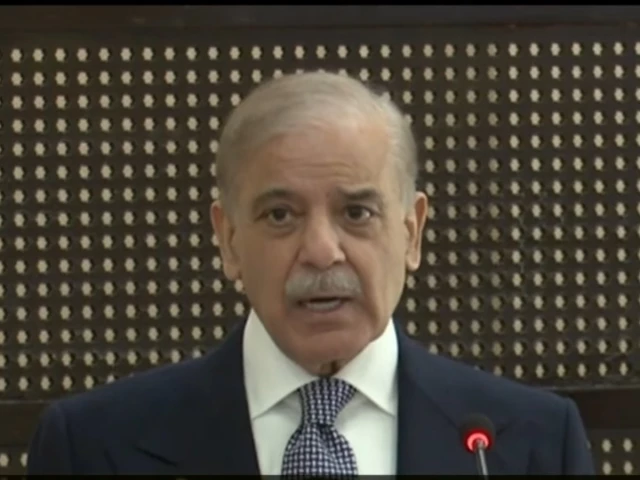
Prime Minister Shehbaz Sharif on Thursday credited cooperation between the civilian government and military leadership for Pakistan's economic progress, saying stronger coordination could help transform the country's economy and accelerate growth across key sectors.
Addressing members of the American Business Council of Pakistan, the premier praised the partnership between his government and Field Marshal Asim Munir's team, describing it as a key factor in efforts to stabilise the economy.
He said Pakistan had not previously witnessed such a productive partnership between the political and military leadership, adding that the country could have achieved significant progress much earlier had similar cooperation existed in the past.
PM Shehbaz stressed that national development required teamwork, flexibility, sincerity, hard work and a willingness to place national interests above personal preferences.
Addressing a ceremony hosted by the American Business Council, Prime Minister Shehbaz Sharif says the civil and military leadership are working in close coordination and harmony to steer Pakistan towards stability, progress and prosperity.@CMShehbaz #PMShehbazSharif… pic.twitter.com/x9j9aXYCQF
— Pakistan TV (@PakTVGlobal) November 19, 2026
He said the government and military leadership were working together to strengthen the economy and create opportunities for further growth.
The prime minister maintained that Pakistan should aim not only to achieve economic stability but also to accelerate growth in agriculture, industry, artificial intelligence, information technology, mining and minerals.
The premier recalled that Pakistan had faced a serious threat of default in 2023 but said its economic position had since improved. He said the country's combined reserves held by commercial banks and the central bank stood at approximately $27 billion.
According to him, inflation had declined from 32% to 11.5%, while the policy rate had fallen from 23.5% to 12%. He said these improvements had been achieved despite the ongoing Gulf crisis, which had affected economies around the world.
The prime minister acknowledged that Pakistan remained vulnerable because of its dependence on imported energy, saying the country imported more than 90% of its energy requirements, including oil, gas, LNG and petrol.
Read: PM Shehbaz, CDF Munir top world's 500 most influential Muslims list
He said the government had managed to maintain fuel supplies without unrest at petrol pumps and had introduced a subsidy programme to protect vulnerable sections of society. He credited the improvement in economic conditions to the efforts of his government and the sacrifices made by ordinary Pakistanis.
He expressed concern over the difficulties faced by low-income families, including their inability to afford food, medicines, education, clothing and heating during winter.
The prime minister said the transition towards economic stability had been difficult and required financial discipline. He pledged to address investors' grievances and remove bureaucratic and procedural hurdles that discouraged investment.
He said the government would establish a mechanism to address genuine complaints from investors and remove obstacles that affected businesses. The prime minister noted that bureaucratic and procedural delays often continued for years, discouraging potential investors both within Pakistan and abroad.
Addressing a ceremony hosted by the American Business Council, Prime Minister Shehbaz Sharif says the government is making every effort to attract maximum foreign investment to Pakistan. He highlights ongoing efforts to ensure transparency across government operations and… pic.twitter.com/D3PQBZDFcW
— Pakistan TV (@PakTVGlobal) November 19, 2026
He stressed that transparency was essential to improving the investment environment and said the government was making efforts to ensure it. PM Shehbaz praised members of the American Business Council for their contributions to Pakistan's economy through investments in industry, agriculture, information technology and other sectors.
He described them as ambassadors of Pakistan who had demonstrated confidence in the country's long-term economic prospects.
Read more: PM Shehbaz calls for collective efforts to tackle regional security threats in meeting with ECO FMs
Referring to the ongoing Gulf crisis, PM Shehbaz said Pakistan was continuing diplomatic efforts to restore peace in the region. He said Islamabad was engaged in discussions with Iran and Washington, with support from friendly countries, to help resolve the crisis.
The prime minister expressed hope that the situation would improve and said regional peace could create opportunities for Pakistan's economic growth. He urged the private sector to take advantage of those opportunities, saying the government's responsibility was to facilitate businesses rather than conduct commercial activities itself.
The premier said the government had taken difficult decisions, maintained fiscal discipline and introduced structural reforms to stabilise the economy. He stressed that the next priority was to consolidate those gains and achieve sustained export-led growth.
The prime minister said the government had provided tax relief worth Rs400 billion in the budget despite operating under an International Monetary Fund (IMF) programme. He said Pakistan was exploring increased imports of American agricultural products, including soybeans, while seeking greater access to the US market for Pakistani surgical instruments, sports goods and other manufactured products.
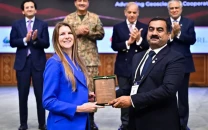
Prime Minister Muhammad Shehbaz Sharif attends the ceremony of the American Business Council, highlighting the importance of strengthening Pakistan-US business and economic ties.@CMShehbaz #PMShehbazSharif #PakistanUSEconomicTies #AmericanBusinessCouncil #TradeRelations… pic.twitter.com/NxrqZiGSh9
— Pakistan TV (@PakTVGlobal) November 19, 2026
PM Shehbaz also highlighted reforms to the Export Development Fund, saying it was being headed by private-sector entrepreneur Omar Saeed. He said the Export-Import Bank had been allocated Rs4 billion to provide subsidised financing to potential exporters.
The premier added that the Small and Medium Enterprises Development Authority (SMEDA) had undergone restructuring and was being strengthened to improve support for businesses. He said small and medium-sized enterprises required greater access to finance and institutional assistance.
Also read: PM, Nawaz press AJK govt to fulfil pledges
The prime minister criticised Pakistan's automobile industry for failing to meet localisation targets despite receiving subsidies and concessions for decades. He said the industry had previously committed to achieving 80% localisation of vehicle components but continued to operate at around 50%.
He questioned the industry's resistance to competition and said the government had decided to promote electric vehicles while discouraging internal combustion engine vehicles. The decision followed four months of consultations involving the finance minister, deputy prime minister, ministers for industries and commerce, and senior officials, he said.
The premier said electric two-wheelers, three-wheelers and four-wheelers could help reduce dependence on imported energy, improve transport efficiency and lower costs. He maintained that policies supporting modern technology should take priority over protecting industries that had failed to meet their commitments.
PM Shehbaz said Pakistan possessed mineral deposits worth trillions of dollars but had made limited progress in developing them over the past two decades. He said active work in the mining sector had begun over the previous two to three years.
The prime minister also highlighted the country's young population, describing it as both a challenge and an opportunity. He said the government had introduced vocational and technical training programmes, laptops, tablets and stipends to help young people develop skills.
However, he acknowledged that millions more young Pakistanis needed access to education and training to contribute to economic growth. The prime minister also identified agriculture and livestock as sectors with considerable potential to strengthen the economy.
He said livestock development could contribute significantly to economic growth and that the government had separated the livestock department from the agriculture ministry to establish an independent unit. The premier said the Livestock Board was being led by a private-sector entrepreneur, with additional members being appointed from the relevant industry.
He added that Turkish consultants were being consulted and that Pakistan was studying the experience of countries such as Brazil in livestock exports. The prime minister said the government had abolished the Pakistan Works Department (PakPWD), which he described as an institution affected by widespread corruption.
He claimed the decision had saved billions of rupees and helped reduce unnecessary government expenditure. The prime minister also referred to reforms in the distribution of subsidised food during Ramazan.
He said the government had discontinued the previous system of providing subsidised food through government outlets because of corruption concerns. Instead, he said, financial assistance was being provided directly to eligible families through digital transactions.
According to the prime minister, Rs27 billion had been distributed through the system during the current year. He said the arrangement allowed beneficiaries to receive assistance without waiting in long queues for subsidised food items.
PM Shehbaz stressed that further reforms were needed to reduce government expenditure, improve efficiency and break the cycle of borrowing to repay existing loans. The prime minister called for closer cooperation between the government and private sector, saying Pakistan needed to learn from past mistakes and move forward through collective efforts.
He urged business leaders to increase investment and exports, reiterating that the government would continue supporting efforts to strengthen the economy.






This material may not be published, broadcast, rewritten, redistributed or derived from. Unless otherwise stated, all content is copyrighted © 2026 The Express Tribune.




COMMENTS
Comments are moderated and generally will be posted if they are on-topic and not abusive.
For more information, please see our Comments FAQ