Punjab restricts school trips to 50km amid smog, transport safety concerns
Updated 41 minutes ago

Officials told to ensure compliance, with action warned against those responsible for negligence
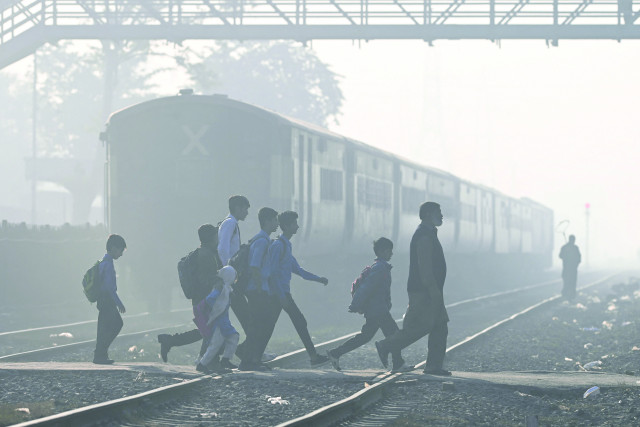
The Punjab government on Wednesday restricted recreational school trips to a 50-kilometre radius as part of new guidelines for public and private educational institutions, amid concerns over students’ safety during the smog and fog season.
The instructions, issued by the School Education Department, also required schools to provide face masks and hand sanitisers, introduce a daily English vocabulary activity during the zero period, and improve classroom facilities.
Under the new rules, schools could organise recreational trips only within their respective districts or within a distance of 50 kilometres. The directions were issued at a meeting chaired by the secretary of the School Education Department and attended by chief executive officers of education authorities from various districts. Officials were told to ensure compliance, with action warned against those responsible for negligence.
The restrictions came against the backdrop of recent road accidents involving schoolchildren, including a fatal incident near Shawala in Murree on November 10. A bus carrying students and staff overturned while returning from a recreational trip. The driver was killed, while nine schoolchildren were injured.
Read: Punjab steps up anti-smog operations
The accident raised concerns about the condition of vehicles used for school excursions and the risks involved in transporting large groups of children over long distances.
A similar incident occurred on September 29, when a school van carrying 10 children caught fire near Bara Hotar Link Road in Murree. Ten children were injured, three of them seriously, with one suffering burns to 42 per cent of his body.
The department also issued separate guidelines for educational tours the previous week. These required schools to obtain prior approval from the relevant District Education Authority, secure written parental consent, and provide emergency contact details and complete information about transport arrangements.
Vehicles used for trips must have valid fitness certificates and commercial permits. The guidelines also prescribed a ratio of one teacher for every 15 students, with a senior teacher required to accompany each group. Schools were further directed to carry first-aid kits and students’ medical information.
Former president of the Punjab Teachers Union Allah Rakha Gujjar said winter was a peak season for school excursions, making it particularly important for teachers and school administrators to follow safety guidelines amid smog and fog.
Read more: As smog hangs over Lahore, new pollution squad races to douse stubble fires
However, transport safety was not the only concern as Punjab entered the winter season. Worsening air quality posed additional health risks for children, particularly those travelling during early morning hours when fog and accumulated pollution could reduce visibility and increase exposure to harmful particles.
Lahore recorded an Air Quality Index (AQI) of 535 at the beginning of this month, with PM2.5 concentrations reaching 343 micrograms per cubic metre, according to IQAir. Several other cities in Punjab also experienced extremely high pollution levels.
In August, the School Education Department had instructed public schools to limit outdoor activities, check AQI readings before outdoor exercise, ensure students wore masks, and restrict playground activities during unhealthy air conditions. Schools were also advised to keep doors and windows closed to limit the entry of polluted air.
The latest instructions on masks and sanitisers therefore came alongside these earlier precautions. Their effectiveness would depend not only on their availability but also on schools following air quality advisories and adjusting outdoor activities according to prevailing conditions.
Also read: Lahore's AQI soars to 535 early morning as air pollution reaches hazardous levels
School transport also has an environmental impact, with traffic congestion and vehicle emissions adding to pollution in major cities. Reducing the number of private vehicles used to transport students and strengthening collective school transport arrangements have therefore remained important parts of the wider response.
The Lahore High Court, in its August 13 judgment in long-running environmental litigation, had also reinforced directions for schools to shift students towards bus-based transport, with buses required for at least half of their students.
The policy challenge for Punjab was therefore twofold: ensuring safer school buses and properly maintained vehicles while reducing the number of individual vehicles used for daily school journeys.
Limiting recreational trips to 50 kilometres may reduce some travel risks, but the restriction alone cannot guarantee that vehicles are roadworthy or that students are adequately supervised. Regular fitness inspections, verification of commercial permits, checks against overloading, emergency equipment, trained drivers and compliance with fog-related travel precautions remain essential.








This material may not be published, broadcast, rewritten, redistributed or derived from. Unless otherwise stated, all content is copyrighted © 2026 The Express Tribune.








COMMENTS
Comments are moderated and generally will be posted if they are on-topic and not abusive.
For more information, please see our Comments FAQ