KSA sacks commander of anti-Houthi coalition
Updated 26 minutes ago

Trump says may meet North Korea's Kim in China
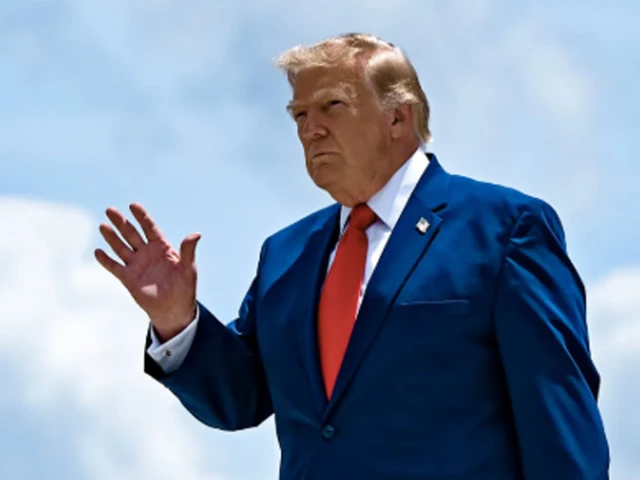
US President Donald Trump headed to Asia on Monday, after a midterm election drubbing and allegationsinvolving a suspected Chinese spy that have raised the stakes for his latest meeting with Beijing's powerful leader, Xi Jinping.
As he left the White House, Trump said he might also meet with North Korean leader Kim Jong Un in China, a surprise announcement that could reshape his swing through the region if it in fact occurs.
Trump will first visit Manila for meetings with Southeast Asian and other regional leaders on Tuesday before jetting to Shenzhen for the Asia-Pacific Economic Cooperation (APEC) forum, where he will meet the Chinese president and hold three-way discussions with Xi and Russia's Vladimir Putin.
Trump said he would discuss denuclearization, Iran and Ukraine in the meeting with Putin and Xi, as well as trade and the economy.
"We may meet with Kim Jong Un also," Trump said, adding: "He may come. I don't know. That's up to President Xi."
The president met the North Korean leader several times during his 2017-2021 term and has repeatedly expressed interest in another meeting, but has also previewed meetings that never took place, including during a trip to Asia last year.
North Korea, whose mission to the United Nations did not immediately respond to a request for comment, has publicly indicated it has no intention of meeting with the US president at this time.
With a fragile trade-war truce between the US and China extended to early next year, and more Trump-Xi talks due in December at the G20 in Miami, some analysts had initially billed the Shenzhen meeting as a low-stakes summit.
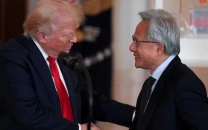
But a backlash against Trump's Republican Party in this month's midterms and criticism that his administration failed to act on intelligence that Nvidia NVDA.O CEO Jensen Huang, who has close ties to Trump, had an affair with a suspected Chinese spy have muddied those expectations.
Chinese analysts say there are concerns in China that allegations that restricted semiconductors were diverted to Chinese customers could harden US attitudes towards China.
"With less reason to worry about market reactions or electoral fallout, (Trump) may be more willing to consider disruptive measures," said Ruby Osman, a senior policy adviser on China at the Tony Blair Institute, a London-based think tank.
Washington has already signaled such willingness ahead of the meeting, urging China to live up to its commitments made under the truce agreed between Trump and Xi a year ago.
And on Monday, the Trump administration issued a rule that will restrict chip exports to overseas data centers in countries like Malaysia and Thailand and hurt Chinese companies that use these to access advanced AI chips to train their artificial intelligence models.












This material may not be published, broadcast, rewritten, redistributed or derived from. Unless otherwise stated, all content is copyrighted © 2026 The Express Tribune.






COMMENTS
Comments are moderated and generally will be posted if they are on-topic and not abusive.
For more information, please see our Comments FAQ