A way forward to credible elections
Updated 18 minutes ago

.

Pakistan is moving towards a digital future, but the foundations needed to sustain that transition remain alarmingly weak. We speak enthusiastically about a cashless economy, digital governance and technological innovation, yet millions of Pakistanis still struggle to maintain a stable internet connection.
A basic question that arises here is, how can citizens rely on digital transactions when they cannot rely on their internet connection?
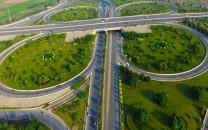
The problem is not confined to remote villages. During my daily commute between home and work along Islamabad Expressway, I pass through several stretches where mobile signals disappear, and internet connectivity becomes almost nonexistent. If reliable connectivity remains a challenge in Islamabad, one can imagine the situation in rural and underserved areas.
For a country aspiring to become a digital economy, these are not minor inconveniences. An interrupted connection can prevent a shopkeeper from receiving payment, a student from attending an online class or a professional from accessing essential services. Digitalisation, without dependable infrastructure, risks creating another divide between those who can participate in the economy and those who cannot.
There is also a distinction between digital access and digital literacy that policymakers frequently overlook. Pakistanis spend considerable time on social media platforms. Yet the ability to use social media does not necessarily translate into the skills required to navigate online banking, recognise financial scams, protect personal information or use artificial intelligence productively.
Digital literacy must therefore be treated as an essential life skill rather than an optional subject. Schools, universities and vocational institutions should introduce practical training in cybersecurity, digital finance, online privacy and emerging technologies. Such initiatives must extend beyond urban centres, particularly to women, older citizens and communities where access to digital education remains limited. Public awareness campaigns in regional languages could help first-time users understand their rights, report fraud and build confidence in services they are increasingly expected to use.
Equally concerning is Pakistan's slow progress in adopting alternative connectivity solutions. Satellite internet services, including Starlink, could provide much-needed connectivity in areas where laying optical fibre is difficult or economically unviable. Yet Starlink has not received the necessary approvals to begin commercial operations in Pakistan. While regulatory and security considerations are legitimate, unnecessary delays come at the expense of communities already excluded from the digital economy.
Recent tensions involving Iran also raise a question that deserves serious consideration: how resilient is Pakistan's digital infrastructure in the face of a regional conflict? Imagine an escalation involving an attack on nuclear facilities and threats to submarine internet cables materialising into actual disruptions. If Pakistan were to experience a prolonged internet blackout, how would its banking system function? What would happen to digital payments, electricity sector operations, hospitals and other essential services increasingly dependent on internet connectivity? These possibilities underline the need for alternative connectivity arrangements, network redundancy and credible contingency plans.
Pakistan certainly needs a digital transformation, but it cannot be achieved through policy announcements and ambitious targets alone. It requires reliable networks, affordable internet, meaningful digital education and a regulatory environment that encourages technological investment.
The government must recognise that promoting digital payments is only one part of the equation. Ensuring that citizens can actually access and trust the systems supporting those payments is equally important. A digital Pakistan should not merely be a country where everything is done online. It should be one where the internet works when people need it most.









This material may not be published, broadcast, rewritten, redistributed or derived from. Unless otherwise stated, all content is copyrighted © 2026 The Express Tribune.








COMMENTS
Comments are moderated and generally will be posted if they are on-topic and not abusive.
For more information, please see our Comments FAQ