China is awake while the world sleeps
Updated 24 minutes ago

.

I saw the present and future of China while standing on the green hilltop of Lianhuashan Park in Shenzhen, overlooking a forest of skyscrapers that did not exist forty years ago. The park also honours Deng Xiaoping, whose statue occupies centre stage, striding forward. It was he who, in the 1980s, designated this largely rural area of fishing villages - with a population of just 30,000 - as the country's first Special Economic Zone.
Today, Shenzhen is a thriving city of 18 million people and has become a major centre for global trade, technology and finance. Companies with a global reach extending to millions - such as Huawei, Tencent, DJI and BYD - were built here within a single generation. No other country has ever developed the equivalent of a Silicon Valley, a global trading hub, and a major port from a zero baseline in just forty years.
That afternoon in Shenzhen's Talent Park, I, along with many other visitors, watched drones delivering food orders, buzzing across the park, lowering a delivery box to a designated drop-off point, and then flying away. In the same city that was a cluster of villages forty years ago, food now flies through the air.
The world thinks China is rising. It has already risen.
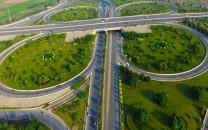
What shocks a visitor is not just the technology and development, but also the sheer scale. Chongqing, a vertical city of 32 million built on cliffs, features roads lined with greenery and flowers. It is no surprise that China is a world leader in tree planting and expanding its planted forest area. All of this exists amid exemplary cleanliness across every urban area I visited.
Then you notice what you do not hear: horns. I experienced this during peak rush hour in Chengdu, the city of pandas where seventy per cent of the world's iPads are produced. Our tourist bus was involved in a collision with a car in the middle of a busy road. In many countries, this would trigger shouting and an endless blare of horns. Traffic piled up behind us, yet not a single horn could be heard. Everyone waited patiently and with discipline. The police arrived, checked the traffic cameras, determined who was at fault, and we were soon on our way. I learnt more about China's development from that silence than from its skyline.
The country also demonstrates that infrastructure alone does not build a country. People do. Investing in human capital development, China has accomplished gender parity in education and almost complete literacy. The people will help you, guide you if you are lost, walk you to the place you are searching, always with a smile. And all this in an environment where you feel completely safe and secure.
I spent my career at the World Bank, whose mission is carved into the wall at its headquarters in Washington, DC: "A World Free of Poverty." To achieve this, billions of dollars in projects have been - and continue to be - financed, units have been established to measure outcomes, numerous conferences have been held, and hundreds of reports have been written. China did not simply write reports about it or spend years evaluating impact; it ended extreme poverty. In forty years, it lifted 800 million women, men and children out of extreme poverty. In a final push from 2012 to 2020, it lifted the remaining 100 million people out of extreme poverty using its own resources, its own planning, and its own implementation - delivered through its own people. As someone who devoted her professional life to this mission, I must say that the largest and most successful poverty reduction campaign in human history was not achieved by countries receiving heavy international assistance, but by China for China.
Finally, China has preserved what many countries have lost: pride in its history and roots. In Chongqing, we watched a play staged daily at the 1949 Grand Theatre depicting the struggles that led to the founding of New China in 1949. We also visited another theatre recreating ancient dynastic battles. These shows are not performed for tourists. The auditorium was filled with citizens of all ages, watching, remembering and learning from their history.
Continuing to build and develop, China offers valuable examples and lessons for the world to learn from - both for the present and the future.












This material may not be published, broadcast, rewritten, redistributed or derived from. Unless otherwise stated, all content is copyrighted © 2026 The Express Tribune.




COMMENTS
Comments are moderated and generally will be posted if they are on-topic and not abusive.
For more information, please see our Comments FAQ