World in transition - Margalla Dialogue 2026
Updated 43 minutes ago

.
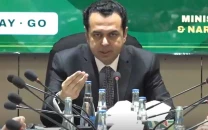
It was an honour and privilege to attend the Margalla Security Dialogue 2026, organised by the Islamabad Policy Research Institute (IPRI) in Islamabad. Held under the theme "Global Order in Transition: Geopolitics and the Realignment of Global Power", the two-day event brought together distinguished scholars, policymakers and strategic thinkers from Pakistan and abroad. As always, IPRI provided a valuable platform for intellectual exchange and debate on some of the most consequential questions shaping contemporary international politics. The discussions were particularly enriching, offering a wealth of insights into the changing global order. This piece focusses on the contributions and perspectives of two speakers – Professor John J Mearsheimer of the University of Chicago and Senator Mushahid Hussain Sayed of Pakistan.
Professor Mearsheimer began by arguing that the American war against Iran was premised on the flawed assumption that airpower alone could bring about fundamental political change in the region. He considered this neither a rational nor a strategically sound approach, arguing that it had consequently failed to deliver the desired American objectives. Turning to Israel, he drew attention to the demographic reality of 7.3 million Israeli Jews and a comparable number of Palestinians living in Israel and the occupied territories. He called Israel's actions in Gaza genocide, arguing that the underlying objective was to remove the Palestinian population. Discussing the idea of a 'Greater Israel', he suggested that, having devastated Gaza, Israel could next seek to displace Palestinians from the West Bank into Jordan. He also described the US as complicit in Israel's actions, pointing not only to its military support but also to the six vetoes it had exercised in the UNSC since 7 October 2023, obstructing efforts to secure a halt to Israel's military campaign in Gaza.
Shifting his focus to great-power politics, Prof Mearsheimer argued that East Asia had become more strategically important to Washington than Europe because China represented the principal long-term challenge to American power. He dismissed the argument that Russia posed a serious threat of conquering Ukraine or advancing further into Europe. In his view, the American approach towards Moscow is counterproductive because it is pushing Russia closer to China, thereby strengthening the very strategic alignment Washington should seek to prevent.
The professor also offered his assessment of Pakistan's strategic position. He did not foresee any fundamental improvement in Indo-Pak relations. He nevertheless expressed surprise at Pakistan's ability to maintain working relations with both Washington and Beijing without being compelled to choose between them. He said Pakistan should seek to preserve this strategic flexibility. He further argued that Washington could only undertake a meaningful pivot towards East Asia once the war in the Gulf came to an end. Such a shift, he believed, would inevitably intensify American-Chinese tensions. Interestingly, he suggested that this development would not serve Pakistan's interests and that the continuation of the Gulf conflict, by constraining America's strategic pivot towards East Asia, could, from a narrow geopolitical perspective, work to Pakistan's advantage.
Senator Mushahid Hussain Sayed began by linking the changing destinies of nation-states to decisions taken in Washington. In a particularly striking observation, he suggested that Iran had influenced the outcome of the recent US elections. He argued that the global centre of gravity was shifting towards East and that the scale of the changes unfolding today had not been witnessed in more than a century. Turning to the Middle East, he maintained that the US relationship with the Gulf states, built over more than seven decades, had undergone a qualitative transformation. He pointed to what he described as Washington's failure to respond meaningfully to the Israeli attack on Qatar and the earlier Houthi attacks on Saudi oil installations. He further claimed that 26 American military bases in the region had been shut down, contributing to a growing realisation among Gulf countries that financial resources alone could not guarantee their security. In his assessment, the Abraham Accords had effectively lost their political momentum, while Israel had shifted from being a strategic asset for the US to a strategic liability. These developments, he argued, represented a profound and potentially irreversible change in the regional order.
On Pakistan, the senator emphasised the country's historical Pan-Islamic outlook, tracing it to the ideas of the country's founder, Quaid-e-Azam Muhammad Ali Jinnah, and Allama Muhammad Iqbal. He argued that Pakistan's worldview had always been shaped, in significant measure, by its interaction with the Muslim world. Placing Pakistan within the wider transition in the international order, he invoked Vladimir Lenin's famous observation: "There are decades where nothing happens, and there are weeks where decades happen." Turning to Pakistan's immediate neighborhood, he maintained that India's policy towards Pakistan had failed and argued that Pakistan had demonstrated its resolve by responding forcefully during the four-day conflict in May 2025. However, he was equally critical of Pakistan's policy towards Afghanistan, suggesting that it required a fundamental reassessment. He cautioned against border closures and the return of Afghan students, arguing that Pakistan and Afghanistan were inseparably connected. Pakistan, he warned, should avoid pushing Afghanistan closer to India. With trade and economic activity suffering on both sides of the border, he called for a reversal of what he described as a tactical policy, advocating a broader regional approach to rebuild relations with Kabul.
The insights shared by both speakers underscore the scale of the transformation currently unfolding in international politics. While their perspectives differed in emphasis, both pointed towards an emerging global order in which established power relationships are being questioned and strategic realignments are reshaping regional and international politics. For Pakistan, this transition presents both opportunities and difficult choices. The challenge is to preserve strategic autonomy, avoid becoming entangled in great-power rivalries and pursue a regional foreign policy grounded in pragmatism rather than short-term calculations. Ultimately, as the global balance of power shifts, Pakistan's ability to navigate these changes will be a matter of great importance.







This material may not be published, broadcast, rewritten, redistributed or derived from. Unless otherwise stated, all content is copyrighted © 2026 The Express Tribune.

COMMENTS
Comments are moderated and generally will be posted if they are on-topic and not abusive.
For more information, please see our Comments FAQ