New provinces not anyone's wish but Pakistan's need: Mustafa Kamal
Updated 58 minutes ago

Health minister reiterates support for new administrative units, argues money for provinces doesn't go to villages
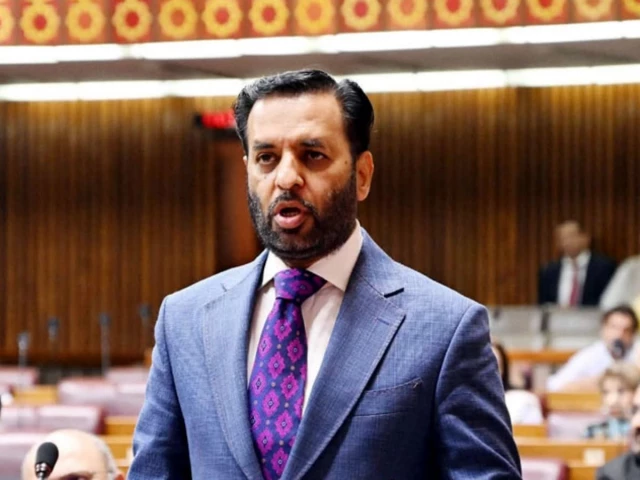
Federal Health Minister Mustafa Kamal on Friday said that the creation of new, smaller provinces wasn't anyone's wish but "Pakistan's need," adding that the creation of new provinces had "become indispensable to save and run the state."
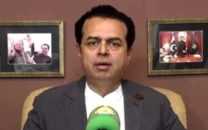
The remarks came a day after Minister for Parliamentary Affairs Tariq Fazal Chaudhry said that Parliament and the provincial assemblies could not be "bypassed or negated" on the question of making new provinces through a referendum to determine the public will.
Chaudhry made the remarks in the wake of Interior Minister Mohsin Naqvi's renewed call for a referendum on the creation of new provinces, saying the people should have the final say on the matter, while making it clear that no such initiative would move forward without the consent of all allied parties in the ruling coalition.
Speaking at the inauguration of a regional office of the Allied Health Professionals Council in Karachi, Kamal noted that Punjab was a bigger province than 180 countries of the world, Sindh was bigger than 175 countries, Khyber-Pakhtunkhwa (K-P) bigger than 162 and Balochistan bigger than 185.
Read: 'Creation of new provinces requires two-thirds majority in Sindh PA'
"In a divisible pool, 57.5% of the money gets parked with the provinces," the minister added, saying that this year, Rs8.84 trillion had been received by the four provinces "but the money is not reaching down to the village level."
The biggest problem, Kamal said, was that the provinces had not devolved downwards.
The minister further argued that the International Monetary Fund (IMF) "cannot pull Pakistan out of this economic quagmire, Karachi can," stating that the city was "Pakistan's revenue engine" but that not even 10% of its potential had yet been tapped.
"When a family grows, a new room has to be built; that does not break up the home," Kamal stated.
Earlier this month, Kamal had reiterated his support for the creation of new provinces, saying Pakistan couldn't be governed under the existing administrative model and that the creation of new administrative units had become inevitable.
The minister had stated that he had reached the conclusion, after years of struggle, that raising complaints about Karachi had become futile as nobody seemed to care.
"The people of Karachi earn and contribute, yet they still have to beg the federal government for their rights," he said, adding that the federal bureaucracy in Islamabad was displeased with the presence of Karachiites.
"I honestly believe the existing government system cannot work. The longer we delay the creation of new administrative units, the greater the damage will be," he said, adding that the issue was now being taken seriously, which was why opponents had adopted a harsher tone.
The remarks followed those by Kamal in August, calling for the creation of new administrative units in the country while saying the existing system had become paralysed and needed to be improved.
The minister had stated that Pakistan had a population of 260 million but only four provinces and argued that the creation of new administrative units had become necessary.
Background of debate over new provinces
The current debate over new provinces began on July 30, when Interior Minister Mohsin Naqvi called for additional administrative units or provinces as part of a broader overhaul of the country’s governance system. Naqvi argued that meaningful structural reforms were needed to improve governance, deliver justice and create opportunities for young people.
The proposal quickly became politically sensitive in Sindh, where the Pakistan Peoples Party (PPP) strongly opposed any move to divide the province. Sindh Chief Minister Murad Ali Shah rejected Naqvi’s assessment that the governance system had collapsed and called the proposal outdated, warning that no bloodshed would be allowed over the creation of new provinces.
The debate widened in August when Muttahida Qaumi Movement–Pakistan (MQM-P) backed the creation of new provinces and called for a national dialogue with political parties. The party argued that Pakistan’s growing population, poor governance and concentration of political power made greater administrative devolution necessary. The move put the party, which is part of the federal coalition but sits in opposition in Sindh, at odds with the PPP’s position on the province.
Read More: Presidency denies discussion on new units with Naqvi
The PPP, meanwhile, maintained that administrative reform and the division of Sindh were separate questions. Sindh minister Nasir Hussain Shah said the provincial government was willing to discuss measures to improve governance and devolve power, but rejected linking those reforms to the creation of a new province.
The dispute reached the Sindh Assembly at the beginning of September. On September 3, the house unanimously passed a resolution rejecting any proposal to divide Sindh or alter its territorial limits. The resolution described Sindh as a “historic, civilisational and constitutional entity” and declared that “Sindh is one and shall remain one”.
Naqvi, however, showed no sign of backing away. On September 5, he said he would continue to support new provinces regardless of whether he remained in office, arguing that the ultimate decision should belong to the people rather than politicians or governments. He said the public should first be told the “pros and cons” of creating new administrative units before being allowed to decide.
Also Read: Naqvi vows not to back down from demand for new provinces, says decision must reflect public will
That position has since raised another question over how public opinion could be formally established. A constitutional debate emerged over whether a referendum could be used to gauge support for new provinces. Article 48(6) allows a matter of national importance to be put to a referendum following approval by a joint sitting of Parliament, although a referendum itself would not create a new province; any change to provincial boundaries would still have to follow the constitutional process.
Pakistan Tehreek-e-Insaf's (PTI's) Barrister Gohar Ali Khan warned on September 7 that dividing Sindh or any other province without the consent of its people and representatives would weaken the federation. He called for a commission and extensive deliberations before the issue was taken to parliament.
Defence Minister Khawaja Asif, while accepting that Sindh had the right to take its own position, also said a final decision would have to emerge through consensus. Asif separately suggested that Islamabad could be used as a starting point for any future administrative restructuring, while Prime Minister’s Adviser Rana Sanaullah said the question of new provinces should be taken up at the relevant forums and resolved through consensus among political parties.








This material may not be published, broadcast, rewritten, redistributed or derived from. Unless otherwise stated, all content is copyrighted © 2026 The Express Tribune.






COMMENTS
Comments are moderated and generally will be posted if they are on-topic and not abusive.
For more information, please see our Comments FAQ