Petrol drops by Rs2, diesel remains unchanged till Nov 16
Updated 4 hours ago

Says Nawabshah meeting focused on national security and regional situation
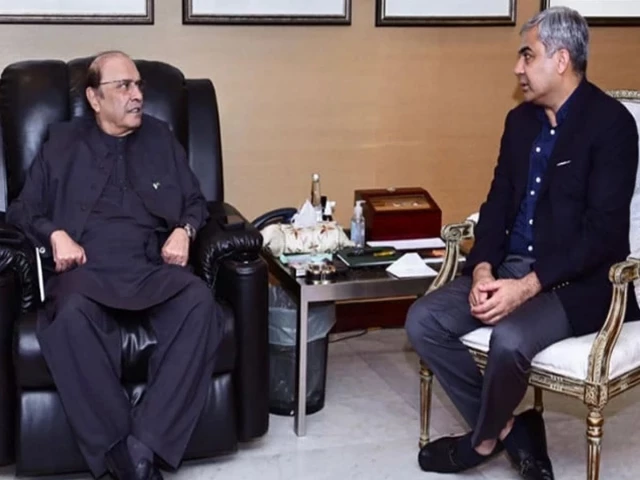
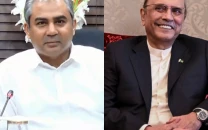
The President’s House on Friday issued a clarification regarding a meeting between President Asif Ali Zardari and Interior Minister Mohsin Naqvi, rejecting media reports suggesting that provincial matters had come under discussion.
The clarification came a day after Naqvi made a surprise visit to Nawabshah to meet the president. Sources had said the meeting focused on proposals for the creation of new provinces and the possibility of holding a referendum on the issue.
Sources also claimed that Naqvi had travelled to Nawabshah on an urgent basis, carrying an important message from a senior national figure, and sought to take the president into confidence over the matters discussed.
Read: Naqvi makes surprise dash to Nawabshah with ‘important message’ for Zardari
Following the reports, the President’s House spokesperson dismissed claims that provincial matters had been discussed during the meeting.
“There is no truth in media reports claiming that matters relating to the provinces were discussed during the interior minister's meeting with the president,” the spokesperson said.
“Matters concerning national security and the regional situation were discussed at the meeting, but no provincial matters were discussed,” the spokesperson added.
صدرِ مملکت آصف علی زرداری اور وفاقی وزیر داخلہ محسن نقوی کے درمیان گزشتہ روز ہونے والی ملاقات کے حوالے سے ترجمان کی وضاحت۔
— The President of Pakistan (@PresOfPakistan) November 13, 2026
صدرِ مملکت سے وفاقی وزیر داخلہ کی ملاقات میں صوبوں سے متعلق امور پر گفتگو سے متعلق میڈیا رپورٹس میں کوئی صداقت نہیں: ترجمان
ملاقات میں قومی سلامتی اور خطے…
The debate over creating new provinces as part of a broader restructuring of the system gained momentum on July 31, when Naqvi called for additional administrative units or provinces to overhaul what he described as the country's outdated governance system.
Addressing the Pakistan Economic Summit 2026 in Islamabad, he argued that the existing governance model had effectively “collapsed” after decades of failing to deliver. He said decentralisation was essential to improving public services, ensuring timely justice and creating opportunities for young people.
His remarks drew a mixed response, with several PML-N leaders criticising him and describing him as one of the beneficiaries of the existing system.
Among them was PML-N leader and Prime Minister's aide Rana Sanaullah, who questioned how Naqvi could criticise the political system after rising to the office of interior minister through the same system in just three and a half years.
Defence Minister Khawaja Asif, however, differed with his party colleague, saying he largely agreed with the interior minister's assessment.
Also Read: PML-N's Asif backs twelve new provinces
On September 4, the Sindh Assembly passed a resolution rejecting attempts to divide the province or create new administrative units. Chief Minister Syed Murad Ali Shah declared that “there will be no compromise on Sindh's geographical unity”.
Two days later, Naqvi renewed his call for a “reset” of the country's governance system, stressing the need to restructure its administrative framework.
The proposal has also drawn interest from Muttahida Qaumi Movement-Pakistan (MQM-P) leader Mustafa Kamal, who heads the federal health ministry and has repeatedly advocated carving out new provinces from Sindh.
Even before Naqvi's July 31 remarks, Kamal had floated the idea of dividing Sindh, drawing strong opposition. He remains a prominent advocate of the demand.
However, the creation of new provinces would require a demanding constitutional process. Legal experts cited by The Express Tribune have pointed out that a public vote alone cannot lead to the creation of a new province. Any change to provincial boundaries must follow the constitutional amendment procedure, including approval by the relevant provincial assembly.
A referendum could potentially provide democratic legitimacy to such a move, but would not replace the constitutional requirements.
The debate over new provinces, therefore, extends beyond administrative restructuring to questions about the distribution of powers between the federation, provinces and local governments, as well as the role of citizens in decisions affecting governance and public service delivery.





This material may not be published, broadcast, rewritten, redistributed or derived from. Unless otherwise stated, all content is copyrighted © 2026 The Express Tribune.





COMMENTS
Comments are moderated and generally will be posted if they are on-topic and not abusive.
For more information, please see our Comments FAQ