Lahore tops global pollution rankings as AQI crosses 500 in several Punjab cities
Updated 46 minutes ago

PAQI report finds air pollution in Lahore increased by 32% compared to the corresponding period last year
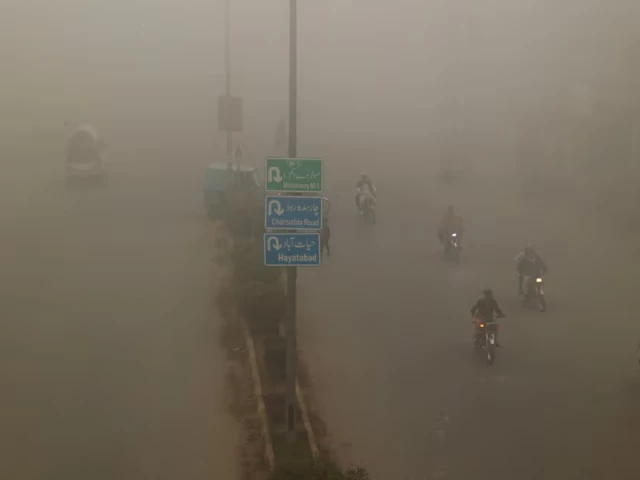
Lahore on Thursday remained the world’s most polluted city on the global air quality rankings, while several cities across Punjab recorded Air Quality Index (AQI) levels of 500 or higher, as air pollution continued to pose a serious health risk.
A recent report by the Pakistan Air Quality Initiative (PAQI) also found that air pollution in Lahore increased by 32 per cent compared to the corresponding period last year.
According to Punjab’s air quality monitoring data, Lahore today recorded an AQI of 346 at 8am, compared to 444 at the same time a day earlier, marking a decline of 98 points in 24 hours.
However, pollution levels remained extremely high. IQAir recorded Lahore’s AQI at different times at 344, 363 and 371, with the city retaining the top position in its global pollution rankings. New Delhi ranked second.
Air quality conditions were also alarming in other parts of Punjab. According to IQAir, Raiwind recorded an AQI of 519, Bahawalpur 515 and Multan 507, while Gujranwala registered 411.
Punjab’s air quality monitoring network also recorded AQI levels of up to 500 in Kasur, Jhang, Nankana Sahib, Okara, Pakpattan and Sahiwal.
Read: 'Keep politics out of fight against smog'
Within Lahore, Kahna Nau recorded an AQI of 423, followed by Multan Road and DHA Phase VI at 414 each. Egerton Road recorded 390, Safari Park 380, Barki Road 364, and Shahdara 357.
Meanwhile, a PAQI report covering November 4 to 10, 2026, showed that Lahore’s average concentration of fine particulate matter (PM2.5) stood at 207.1 micrograms per cubic metre, 32 per cent higher than the average of 156.4 micrograms recorded during the same period last year.
The city’s average AQI during the seven-day period was 257. PM2.5 concentrations remained above Pakistan’s National Environmental Quality Standards (NEQS) limit of 35 micrograms per cubic metre on all seven days.
According to the report, November 9 was the most polluted day of the period, with PM2.5 levels reaching 253.7 micrograms per cubic metre and the AQI standing at 303. The average PM2.5 concentration was around 13.8 times higher than the World Health Organisation’s 24-hour guideline of 15 micrograms per cubic metre.
The report attributed part of the deterioration to unfavourable weather conditions. Wind speeds were 32 per cent lower than last year, limiting the dispersal of pollutants. These meteorological conditions contributed an estimated 16 per cent to the increase in pollution levels.
Read more: Faisalabad: the air you breathe is poisoning you
Citing NASA satellite data, the report identified 4,933 fire incidents across Pakistan and India between November 4 and 10. Of these, 2,824 were reported in Pakistan and 2,104 in India. The report linked air movement from fire-affected areas to higher pollution levels in Lahore, noting that PM2.5 concentrations were 124 per cent higher on days when winds passed over these locations.
The report also found that Lahore’s average PM10 concentration stood at 435.4 micrograms per cubic metre during the period, nearly three times Pakistan’s permissible limit of 150 micrograms.
A review of nine years of available data showed that the first week of November this year was the fourth most polluted week recorded during the period.















This material may not be published, broadcast, rewritten, redistributed or derived from. Unless otherwise stated, all content is copyrighted © 2026 The Express Tribune.









COMMENTS
Comments are moderated and generally will be posted if they are on-topic and not abusive.
For more information, please see our Comments FAQ