
Poison in the air
Updated 1 hour ago

.
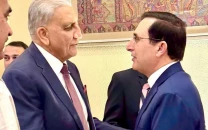
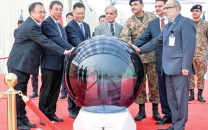
Margalla Dialogue, the flagship international conference of the Islamabad Policy Research Institute (IPRI), made an earnest effort to bring together scholars of repute and policymakers from across the globe, as well as practitioners and civil society leaders, to chart a discourse on traditional and non-traditional security. It was an endeavour to build a narrative aligned with the vision of establishing a rules-based new world order. The two-day moot, titled "Global Order in Transition: Navigating Strategic Uncertainty", held in Islamabad, reflected on the regional and international upheavals that have put human security indexes in peril and pushed the world to the brink of chaos. The participating scholars and policymakers also emphasised that supply chain disruptions, geopolitical ruptures caused by aggression and the rise of AI and algorithms in the realms of geo-economics and modern warfare are challenges that require a collective global response and cannot be left at the mercy of hegemons.
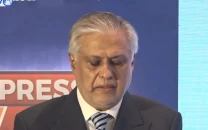
The most articulate message was the summarisation from Deputy Prime Minister Ishaq Dar, who stated that the Makkah Joint Defence Agreement is a purely defensive arrangement aimed at regional peace, collective security and credible deterrence, without targeting any specific country. The speakers, in their eloquent and thought-provoking presentations, affirmed that unresolved disputes, military asymmetries and unilateral actions undermine strategic stability in South Asia, and called for restraint and responsible statecraft. They noted that this is a sine qua non for ending the strategic misadventurism underway these days, as international law has been thrown to the wind and human apathy is on the rise, with the sole superpower bent upon erasing civilisations and the norms of post-Westphalian statehood.
Legendary American political scientist, Professor John J Mearsheimer was categorical in noting that the Trump administration has waged an irrational war with Iran solely to appease the State of Israel – a conflict that it is bound to lose. America's meddling in the Ukraine conflict and the emerging "alliance of the willing" between Beijing and Moscow were highlighted as factors shaping multilateralism. Additionally, India's blatant violation of the Indus Waters Treaty and its denial of legitimate water rights to lower-riparian Pakistan were cited as tools of aggrandisement by a country that will never become a major power if it continues to discriminate against its neighbours.
The colloquium pointed out that major-power rivalries have reached a peak, while international bodies like the United Nations are in the midst of a crisis of identity and survivability. This is where the daunting task lies: navigating a way forward in which development, peace and security are upheld as cardinal principles of coexistence. Participants rightly emphasised that this necessitates a dual strategy of building "strength at home" alongside "effective diplomacy abroad". In the same vein, experts identified three critical developments requiring the attention of thinkers and policymakers: mounting pressure on security architectures; the deep intertwining of geopolitics and economics; and rapid technological advancements. As technology and a digitised economy are game-changers, it is time to limit the space for conflict and create avenues for effective multilateralism and shared values of rapprochement.






This material may not be published, broadcast, rewritten, redistributed or derived from. Unless otherwise stated, all content is copyrighted © 2026 The Express Tribune.




COMMENTS
Comments are moderated and generally will be posted if they are on-topic and not abusive.
For more information, please see our Comments FAQ