When multilateralism is selective, climate change is left waiting
Updated 40 minutes ago

World’s richest leaders take a rain check on annual UN climate summit
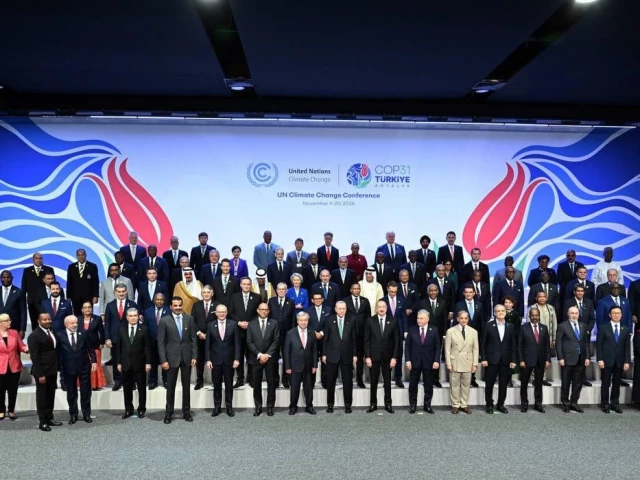
As leaders of wealthy nations skip the COP31 Leaders’ Summit in Antalya, their absence raises serious questions about commitments to international cooperation on the one issue that will inevitably define humanity’s fate.
The absence of several heads of government from the annual United Nations climate gathering comes at a time when developing countries are demanding greater financial support to deal with the impacts of climate, adapt to rising temperatures and recover from increasingly destructive disasters. For countries already struggling with the economic consequences of climate change, the absence of political leadership from wealthy nations is about more than diplomatic symbolism.
Germany, France, Italy, Denmark, Sweden, Ireland and the Netherlands are among the European countries whose leaders are missing from the Antalya gathering. Canada’s Prime Minister Mark Carney and Japan’s Prime Minister Sanae Takaichi are also absent. Their governments, however, are represented by ministers and other officials attending the negotiations.
Read: PM Shehbaz seeks concessional financing to achieve 35pc clean energy target by 2035
Climate Action Network (CAN), a global coalition of civil society organizations, described the empty chairs as a troubling gap between governments’ public commitments to multilateralism and their willingness to demonstrate that commitment at the highest political level. And the timing has added to the criticism as several European leaders are also expected in Dublin this week for meetings of the European Political Community and the European Council. The latter, scheduled for November 13, will include a discussion on artificial intelligence. The juxtaposition has prompted CAN, among other climate activists, to question why political leaders can make time for discussions about emerging technologies while the climate crisis struggles to secure their presence.
One observer speaking on the condition of anonymity noted that the comparison is not about whether artificial intelligence deserves political attention; rather, it raises questions about the political priority attached to different global challenges. Climate change, he said, cannot be contained within national borders or addressed through individual government decisions. “Its causes and consequences are international, making cooperation essential to any meaningful response.”
More than a ceremonial gathering
The Leaders’ Summit provides heads of government an opportunity to set political direction, build alliances and engage directly with countries facing the most severe consequences of climate change. Their presence can also help create the political conditions for progress on difficult negotiations, particularly those concerning climate finance, adaptation and the transition away from fossil fuels.
Harjeet Singh, strategic adviser to the Fossil Fuel Treaty Initiative and global convenor of the Fill the Fund campaign, argues that the absence of wealthy-country leaders has consequences beyond the optics of empty chairs. “When prime ministers and presidents stay home, their delegations lack the political mandate needed to break deadlocks on public climate finance and Loss and Damage,” he cautioned.
Singh said the absence sent a negative signal to negotiators and weakened the prospects of reaching agreement on issues that directly affect vulnerable countries. “The true test of multilateralism is showing up when it matters most,” he added, accusing wealthy nations of walking away from their legal and moral responsibilities while developing countries press ahead with climate action and efforts to build resilience.
For Singh, the issue is also one of trust. “Multilateralism cannot survive as a selective commitment where wealthy nations champion rules-based order in public while abandoning international climate obligations when the bill comes due,” he said.
Chiara Martinelli, director of CAN Europe, said the absent European leaders were missing an opportunity to build trust and demonstrate that international climate cooperation still had political backing at the highest level. Their absence would not stop the negotiations, she said, but placed greater responsibility on the ministers and negotiators attending on their governments’ behalf.
My message to world leaders at #COP31:
— António Guterres (@antonioguterres) November 11, 2026
We know that change is possible.
History has handed us a remarkable opportunity to build economies that are cleaner, societies that are fairer & a world that is safer.
This is not only about climate. It's also about sustainable… pic.twitter.com/Je2VYTsmEi
Canada’s absence has drawn particular criticism because of its recent public commitment to multilateral cooperation. In September, Canada joined the European Union and other countries in a declaration reaffirming support for the Paris Agreement and stronger international cooperation on climate change. Carney’s absence from the Antalya gathering has therefore raised questions about how such commitments translate into political action.
Caroline Brouillette, executive director of Climate Action Network Canada, said the absence was being noticed internationally and sent a worrying signal about Canada’s willingness to follow through on shared global challenges.
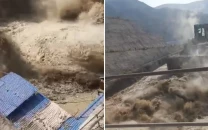
The consequences of inadequate climate finance are particularly serious for countries already struggling to pay for recovery from climate disasters. Nepal’s devastating floods, which preceded COP31, offer a recent example of the gap between the resources vulnerable countries need and the support available to them.
Time for Action.
— COP31 Türkiye (@turkiyecop31) November 11, 2026
Let’s COP #COP31 #COP31Antalya #COP31Türkiye pic.twitter.com/vWgQkppIuL
According to figures cited by CAN, assessments put Nepal’s recovery needs in the billions of dollars, while the Fund for Responding to Loss and Damage has provisionally set aside around $20 million for the country. The disparity raises questions about whether international financial support is matching the scale of the damage. For countries facing repeated climate disasters, commitments to solidarity mean little without the resources to rebuild communities and protect livelihoods.
Singh said the failure of wealthy countries to provide grant-based climate finance was forcing developing nations further into debt to repair infrastructure and recover from climate shocks. “This retreat leaves frontline communities to carry the crushing financial and human burden of a crisis they did not cause,” he said.
Developing countries have repeatedly argued that loans cannot substitute for grants when they are already facing high debt burdens and the growing costs of climate-related disasters. Singh warned that repeated evasions by countries responsible for a large share of historical emissions were damaging international trust and threatening the framework of cooperative climate governance.
Cumhurbaşkanı Erdoğan, #COP31 Liderler Zirvesi'ne katılan Pakistan Başbakanı Şahbaz Şerif'i karşıladı.
— TRT HABER (@trthaber) November 11, 2026
◾️BM Genel Sekreteri Guterres:
"Sizi birlikte görmek harika."
◾️Şahbaz Şerif:
"Biz kardeşiz." pic.twitter.com/zTrWKT9OyH
Wealthy countries bear a particular responsibility in this debate, and they account for a substantial share of historical greenhouse gas emissions and have considerably greater financial capacity than many developing nations. The principle of common but differentiated responsibilities and respective capabilities, which underpins the international climate framework, recognises that countries share responsibility for addressing climate change but have different obligations according to their circumstances and capacities.
There is, however, an important qualification as leaders from other major economies in the Global South are also absent from Antalya. Nor does the absence of a head of government mean that a country has withdrawn from climate negotiations. Ministers, diplomats and technical teams from the countries concerned remain engaged. European Commission President Ursula von der Leyen is representing the European Commission at the summit, while Brazil’s President Luiz Inácio Lula da Silva is also attending. The US, one of the largest polluters since the start of the Industrial Age, has not only withdrawn from the Paris Agreement but also has no official delegation present at COP31.
According to experts on the matter, the negotiations can therefore proceed, and their outcome will depend on what governments are prepared to agree and deliver, not simply on who occupies the seats at the summit. But the absence of political leaders at a gathering designed to build consensus and direction around climate action shows the priority governments attach to the process.
This story was produced as part of the COP31 CCMP, a fellowship for journalists covering the UN climate talks.






This material may not be published, broadcast, rewritten, redistributed or derived from. Unless otherwise stated, all content is copyrighted © 2026 The Express Tribune.



COMMENTS
Comments are moderated and generally will be posted if they are on-topic and not abusive.
For more information, please see our Comments FAQ