A tilak, a prayer that celebrates sibling love
Updated 49 minutes ago

Bhai Dooj festivities bring brothers and sisters together
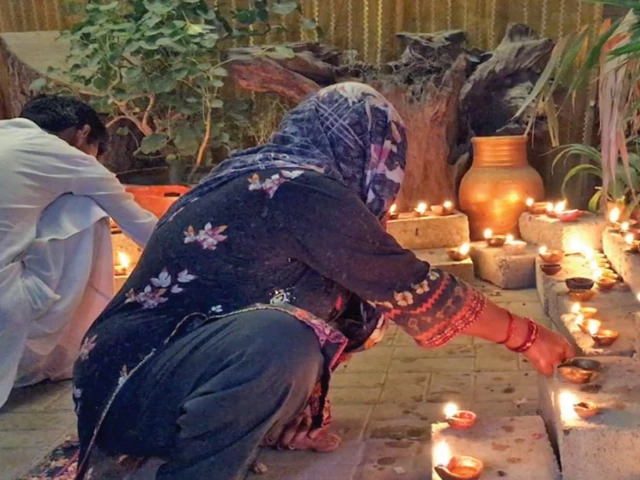
A forehead adorned with a tilak, the warmth of a sister's prayers and the sweetness of shared celebrations marked Bhai Dooj at the historic Shri Panchmukhi Hanuman Mandir, where the Hindu community continued its Diwali festivities by celebrating the enduring bond between brothers and sisters.
As part of the traditional observance, sisters welcomed their brothers, performed aarti, applied vermilion tilak to their foreheads and offered prayers for their health, safety, prosperity and long life. Brothers, in turn, expressed their affection by presenting gifts to their sisters.
Celebrated two days after Diwali, Bhai Dooj is among the important festivals in the Hindu calendar, symbolising the affection, trust and mutual protection that bind siblings together.
Shri Ram Nath Mishra Maharaj, head priest of the historic Soldier Bazaar temple, said the festival falls on the second day of Shukla Paksha in the Hindu month of Kartik. The traditional rituals include welcoming brothers, performing aarti, applying a tilak and offering sweets, while brothers reciprocate with gifts.
The festival traces its origins to an ancient Hindu legend involving Yama, Yamaraj or Dharmaraja, the Hindu god of death, and his sister Yamuna. According to the traditional account, Yama once visited his sister, who welcomed him with affection, applied a tilak to his forehead and prayed for his well-being. Touched by her devotion, Yama blessed her, and the encounter became the foundation of a tradition celebrating the special bond between siblings.
Mishra Maharaj said that although the rituals differ from one region to another, the essence of Bhai Dooj remains unchanged: an expression of love, sincerity and respect, accompanied by prayers for each other's happiness and prosperity.
While Bhai Dooj shares the spirit of sibling affection with Raksha Bandhan, the two festivals have distinct traditions. On Raksha Bandhan, sisters tie a sacred thread, or rakhi, around their brothers' wrists, whereas Bhai Dooj centres on the ceremonial tilak and aarti, reaffirming the bond through prayers and family traditions.










This material may not be published, broadcast, rewritten, redistributed or derived from. Unless otherwise stated, all content is copyrighted © 2026 The Express Tribune.











COMMENTS
Comments are moderated and generally will be posted if they are on-topic and not abusive.
For more information, please see our Comments FAQ