Pakistan embassy in US marks Iqbal Day
Updated 50 minutes ago

The 4,000-year-old crop rich in nutrients continues to sustain livelihoods
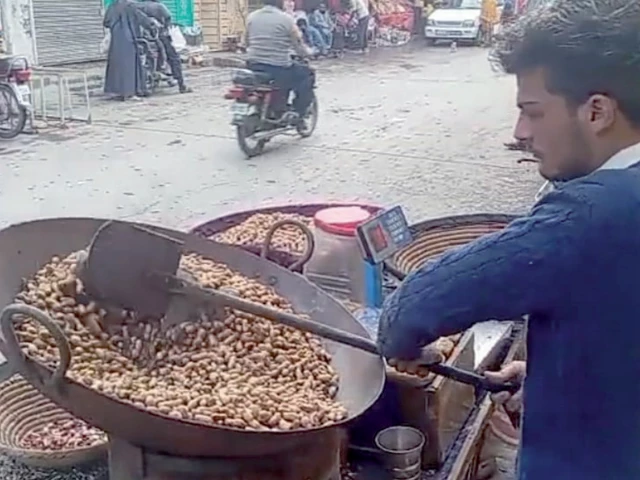
Peanuts are one of winter's most popular and nutritious treats. Owing to their distinctive taste and rich nutritional value, they are also called the "poor man's almond".
The Urdu term moong phali is a combination of two words, moong and phali. In Sanskrit, peanuts were known as "Mandapi" or "Mudgaphalo", in which mudg referred to the mung bean and phali to the seed's shell. Over time, the word evolved into the commonly used moong phali in Urdu and Hindi and moong phali in Punjabi, pronounced moong phali or moong fali.
Peanuts originated in South America, particularly Brazil, Peru and Paraguay. Archaeologists have discovered peanut remains alongside thousands-of-years-old mummies in Peru, indicating that the crop was cultivated there between 3,500 and 4,000 years ago.
In the 16th century, when Spanish and Portuguese explorers reached South America, they took peanuts to Africa and the Philippines. The crop became so popular in Africa that it was subsequently introduced to America through enslaved people.
Peanuts arrived in the Indian subcontinent through Portuguese traders in the 16th or 17th century. They first introduced the crop in coastal areas of southern India, including Tamil Nadu and Maharashtra. The climate proved so favourable that peanuts became one of the subcontinent's most popular cash crops and a favourite winter food.
Peanuts are considered a powerhouse of protein. Every 100 grammes contains 25 grammes of protein, making them beneficial for muscle strength and cell regeneration. They are also rich in essential nutrients, including vitamins B, E and D, folic acid, calcium, copper, niacin and phosphorus.
Peanuts help lower harmful cholesterol levels in the body. They also have antioxidant properties and contain iron, which plays an important role in producing new blood cells. They are an important source of protein, fibre and minerals.
Peanuts can also help reduce blood pressure, cholesterol levels and inflammation. However, it is considered better to avoid eating them in cases of skin itching, cough and jaundice.
China currently leads the world in peanut cultivation and production, accounting for 42 per cent of global cultivation, followed by India in second place and the United States in third.
In Pakistan, Chakwal, particularly Thoha Mehram Khan, is renowned for peanut cultivation. Traditional roasting furnaces operate in Chakwal, Talagang and Rawalpindi, where raw peanuts are roasted and sent as gifts to different parts of the Rawalpindi division, Khyber Pakhtunkhwa, Azad Kashmir and abroad.
Traditional roasting furnaces are designed like tandoors, but instead of extending deep into the ground, they are built upright. Intense fires are lit inside them, and up to 10 kilogrammes of peanuts can be roasted at a time. Peanut roasters are highly skilled at their work.
Modern peanut-roasting machines have also entered the market, while women roast peanuts at home by placing sand in large containers over high heat. Roasting peanuts at home remains common in rural areas.
Peanuts mixed with jaggery are used to make a popular sweet known as moong phali gur gatta, a favourite winter treat among children and adults alike.















This material may not be published, broadcast, rewritten, redistributed or derived from. Unless otherwise stated, all content is copyrighted © 2026 The Express Tribune.







COMMENTS
Comments are moderated and generally will be posted if they are on-topic and not abusive.
For more information, please see our Comments FAQ