PSX jumps 5,449 points in spectacular rally
Updated 1 hour ago

Parts makers say policy puts 300,000 jobs at risk, undermines local manufacturing
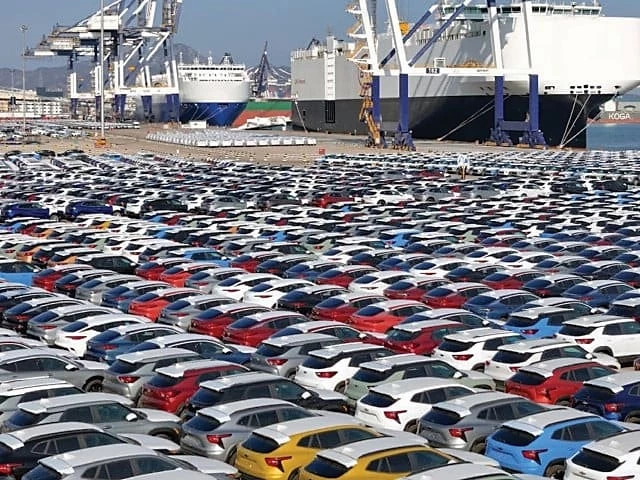
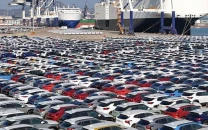
Pakistan's newly announced auto policy has drawn strong criticism from the domestic automotive parts industry, which warns that its import-centric approach could undermine local manufacturing, threaten 300,000 direct jobs and increase pressure on foreign exchange reserves.
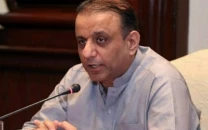
Former President of the Pakistan Association of Automotive Parts and Accessories Manufacturers (PAAPAM) Aamir Allawala said the policy favoured imports of completely built-up electric vehicles and completely knocked-down kits over domestic manufacturing, putting nearly 1,200 engineering and component manufacturing enterprises at risk.
He said the policy could reverse years of progress in localisation, currently estimated at 50% to 65% for several locally assembled models, and that assemblers would find it more economical to import components from foreign partners rather than procure them locally, threatening 300,000 direct jobs and another 1.5 million indirectly associated with the industry.
Increased vehicle imports would create additional demand for foreign exchange, while tax concessions on imported electric vehicles could widen the Federal Board of Revenue (FBR)'s revenue gap, he warned.
Allawala argued that consumers, representing only around 0.1% of the population who buy cars annually, might benefit from a 5% to 7% price reduction, but questioned whether these limited gains justified damage to the wider industrial ecosystem. He said component manufacturers had not endorsed the policy, claiming its final version was substantially different from proposals discussed with the Ministry of Industries and Production up to June 2026.
He suggested renaming it from the "Auto and Auto Parts Policy" to the "Policy for Automobile Assembly and Import of New and Used Vehicles", arguing its incentives primarily benefited imports rather than local manufacturing.
Former PAAPAM chairman Abdul Rehman Aizaz described the policy as import-centred and warned that cutting customs duty on completely built-up vehicles to 15% by 2031 would undermine the entire domestic value chain, with consequences extending beyond component makers to material producers including Aisha Steel, International Steels and People's Steel Mills, as well as local assemblers.
He questioned how Pakistan could compete when India, Thailand and Indonesia impose completely built-up import duties of around 120%, 80% and 52% respectively, against the proposed 15%, warning that around 300,000 direct jobs could disappear by 2031 if domestic production became commercially unviable.
Aizaz also raised concerns over concessions for new energy vehicles, particularly the proposed 15% localisation target over five years, saying low import duties on electric vehicles and components could shift manufacturing and employment abroad. He questioned facilitating commercial imports of used vehicles without an age limit, saying it contradicted the stated objective of reducing carbon emissions.
Auto expert Mashood Ali Khan said two successive policies covering 2016-21 and 2021-26 had failed to deliver meaningful localisation, with companies offered a 25% incentive to establish local manufacturing but many continuing to import components. He questioned how localisation would be achieved when the completely built-up tariff would fall to 15% by 2031, noting Pakistan had already reached around 65% localisation in several categories.
He urged binding localisation requirements for every new model, with at least 10% of components made locally at launch and an annual roadmap for increasing domestic content and questioned the $6 billion export target envisaging equal contributions from parts makers and original equipment manufacturers.
The Pakistan Automotive Manufacturers Association called the policy a need of the time and asked the ministry for an official copy of the policy for its members.








This material may not be published, broadcast, rewritten, redistributed or derived from. Unless otherwise stated, all content is copyrighted © 2026 The Express Tribune.



COMMENTS
Comments are moderated and generally will be posted if they are on-topic and not abusive.
For more information, please see our Comments FAQ