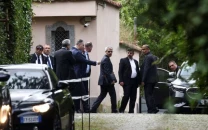
FBI arrests Meghan Markle's father
Updated 31 minutes ago

Media houses in Ireland, Bulgaria receive threats as officials warn of possible 'hybrid aggression'
A widening wave of hoax bomb threats targeting passenger flights and news organisations disrupted air travel across Europe for a third consecutive day on Friday, prompting evacuations, flight diversions and military escorts, although no explosives were found.
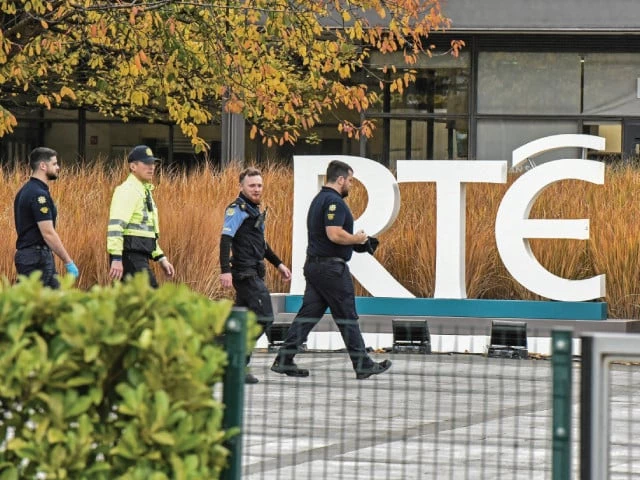
Broadcasters in Ireland and Bulgaria received emailed threats from a purported sender named Mikhail Andropov, warning of further attacks on transport across Europe. Ireland's public broadcaster RTE evacuated its offices and suspended programming, while Bulgaria's Nova TV also received a threat.
Britain's Sky broadcaster reported a security threat. Reuters could not establish the sender's identity or determine whether the emails originated from the same source as threats affecting dozens of flights since Tuesday. All aircraft landed safely, and no explosive devices were discovered.
Disruptions were considerably fewer on Friday than Thursday, when more than two dozen flights were affected. An Italian airport authority source said a Wizz Air flight from Prague to Rome was diverted to Venice.
Hungarian fighter jets escorted airliners travelling from Brussels to Sofia and from Prague to Bucharest and Cyprus through Hungarian airspace. Hungary's defence minister said NATO had ordered air patrols in the region, marking the first reported involvement of the military alliance.
Spanish Foreign Minister Jose Manuel Albares described the developments as apparent "hybrid aggression and a form of psychological warfare". European officials have increasingly blamed Russia for such operations, although Moscow has denied involvement.
EU technology commissioner Henna Virkkunen said Europe had faced sabotage, drone incursions, cyber breaches and election interference since Russia's 2022 invasion of Ukraine. "The reason behind these operations is to destabilise our societies and create mistrust among our citizens," she told Reuters.
Meanwhile, Vladislav Pozdniakov, founder of Russia's banned far-right misogynist movement Male State, denied involvement in the threats. Emails sent to Rome and Sofia airports had reportedly been signed by the movement's supporters.
Pozdniakov said the group had ceased to exist in 2021, when Russian authorities banned it for extremism, accusing unidentified individuals of exploiting its name for their own purposes.












This material may not be published, broadcast, rewritten, redistributed or derived from. Unless otherwise stated, all content is copyrighted © 2026 The Express Tribune.





COMMENTS
Comments are moderated and generally will be posted if they are on-topic and not abusive.
For more information, please see our Comments FAQ