SPI inflation accelerates past 12%
Updated 55 minutes ago

Experts differ on calculations as border costs, energy prices weigh on exports
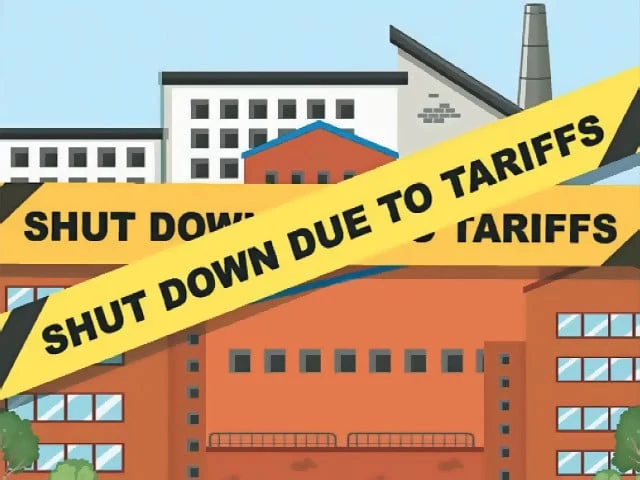
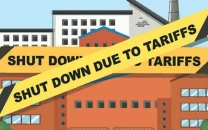
Pakistan's tariff policy has exposed a sharp divide over how the country's import duties should be measured and whether reducing them will make local industry more competitive.
The debate came into focus at a three-hour dialogue at the School of Economics and Social Sciences (SESS), IBA Karachi on Friday, where speakers also questioned whether high tariffs were the main constraint on exports or whether energy costs, border procedures and limited access to foreign markets mattered more.
The Centre for Business and Economic Research organised the session during the 6th SESS Annual International Conference. Discussion centred on the National Tariff Policy 2025-30, which aims to reduce customs-duty slabs from five to four and bring the average tariff down to 9.7% by FY2030. Speakers disagreed over the figures underpinning the policy and its effects.
Pakistan Single Window Chief Domain Officer Naveed Abbas Memon said tariff cuts would have limited impact if costly border procedures persisted. "Tariffs are cut on paper, but costs are cut at the border," he said, citing the United Nations Conference on Trade and Development's Global Trade Update of May 2026. In 88% of countries, non-tariff measures cost exporters more than tariffs. Clearer rules could reduce those costs by 19%, while better coordination among regulators could cut them by another 15% to 30%, he said. Lower duties would not help if goods remained held up at ports.
Dr Manzoor Ahmad, a former ambassador to the WTO and trade expert, countered the argument by saying all duties should be counted. "A duty by any name is still a duty," he said. Importers pay 10.3% in customs duty, 3.65% in additional duties and 4.57% in regulatory duties, taking the total to 18.5%. On this basis, Pakistan charges tariffs twice as high as Vietnam's and three times Malaysia's. He added that all 20 fastest-growing exporters had cut tariffs over the past decade, while Pakistan had raised its own by 11%.
Tecno Group CEO Aamir Allawala challenged the policy's tariff comparison, calling it "wrong on its facts, its concepts and its logic". He said it added Pakistan's additional duties to customs duty but counted only customs duty for other countries, raising Pakistan's figure from the WTO's 10.3% to 18.5%. Applying the same method across countries would put Pakistan fourth among 12, below India, Bangladesh and Nepal, he argued. He attributed weak exports to security concerns, a lack of trade agreements and high electricity and interest rates.
Federal Board of Revenue Member Mukarram Jah Ansari, from Pakistan Customs, shifted the debate to Pakistan's role in global trade. Trade accounts for 27.2% of GDP against a world average of 68% and 190% in Vietnam, he said. "The problem is not excessive imports but insufficient exports and weak integration into global supply chains." Import-stage taxes make up 40% to 50% of FBR's total collections, while customs-duty revenue had recorded no growth in the current quarter, and he questioned how the government would replace lost revenue.
Louie Dane, senior economic adviser at the Foreign, Commonwealth and Development Office, said exports ultimately depended on productivity. "Firms produce more per worker when they can buy inputs they cannot make at home," he said. He added that scale mattered just as much and no firm reached scale selling only at home. Countries that had opened their economies successfully, he said, had acted decisively and kept policy simple.
Pakistan Business Council Chief Executive Javed Kureishi outlined the choices facing formal industry: cheaper imported inputs but less protection for locally produced goods. Competitiveness would also depend on energy prices, taxes and the cost of capital, he said.
Dr Vaqar Ahmed of Oxford Policy Management discussed the limits of economic models used to forecast reform, along with replacing forgone revenue and monitoring implementation.
Trade expert Aisha Moriani said export-market access increasingly depended on standards beyond tariff rates. The European Union's carbon border tax took full effect on January 1, 2026, covering steel, aluminium, cement, fertilisers, electricity and hydrogen. Exporters would need to demonstrate carbon performance through certification and traceability, she said. This required emissions-measurement systems, accredited laboratories and support for small firms, none of which a tariff schedule could provide.
Professor Adeel Malik of Oxford University said in closing that tariff policies had favoured special interest groups through significant benefits and concessions. Duties on products linked to these groups were higher than those applied to others, and the gap had widened over the past 15 years.
The discussion brought the policy's central test into focus: whether cuts in duties on industrial inputs would be matched by reduced protection for finished goods. Speakers also supported cheaper inputs and more efficient border procedures but disagreed over how Pakistan's tariff burden should be measured and what was holding exports back.
The dialogue suggested that reform could be weakened through successive exceptions even without formal reversal.







This material may not be published, broadcast, rewritten, redistributed or derived from. Unless otherwise stated, all content is copyrighted © 2026 The Express Tribune.



COMMENTS
Comments are moderated and generally will be posted if they are on-topic and not abusive.
For more information, please see our Comments FAQ