PTI seeks Imran's immediate transfer to Shifa International Hospital over renewed blood pressure concerns
Updated 53 minutes ago

Karachi court orders IO to submit the challan and investigation report within the stipulated time
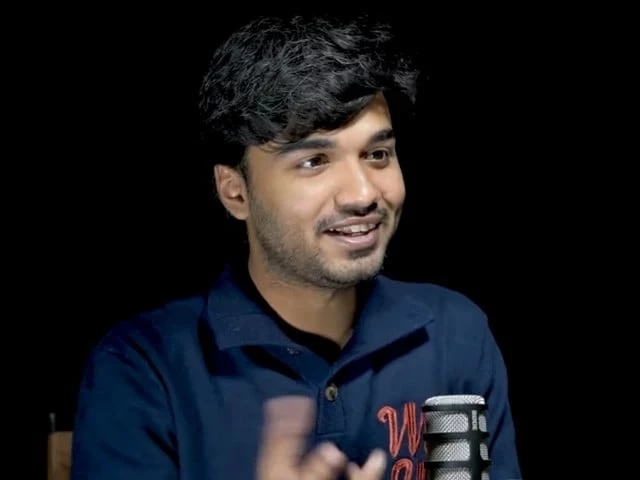
A Karachi court has granted the third newly appointed investigation officer (IO) an additional 10 days to complete the probe into the Mir Raza murder case.
Raza, a waffle-making business owner, went missing from his PECHS residence in the early hours of July 28. Later, his body was found within the jurisdiction of Gulistan-e-Johar Police Station. His murder was confirmed in the second post-mortem exam after the first exam failed to answer key questions.
Later, a judicial commission was formed to probe into the police misprobe, which suggested the formation of a Joint Investigation Team (JIT) in the case. The Sindh government issued an order on October 24 for its formation, with Deputy Inspector General of Police (DIG) Irfan Ali Baloch as its lead. Senior officers of the Inter-Services Intelligence (ISI), Intelligence Bureau (IB), Pakistan Rangers Sindh and National Cyber Crime Investigation Agency (NCCIA) were to be included in the team.
The new IO, Deputy Superintendent of Police (DSP) Fareed Ahmed Khan, appointed by the JIT in the case, was allowed additional days by the magisterial court on Tuesday to submit the challan and investigation report.
Read: Sindh home minister apologises 'unconditionally' to Mir Raza's judicial commission
Appearing before the Judicial Magistrate Karachi East, DSP Khan said more than 1,100 pages of case records have been obtained and are currently being reviewed and requested a fortnight to complete the investigation; however, the court granted him only 10 days to submit the complete case report.
Inspector Shabbir Laghari was initially appointed as the IO, after which the investigation was handed over to DSP Siraj Lashari. The case failed to reach a conclusive stage under either officer.
A one-member judicial commission, constituted on the directives of the Sindh government, raised several questions about the performance of the first IO, Inspector Laghari. Aligned with the victim’s family's request, the commission recommended that the investigation be handed over to a JIT.
Although a JIT was formed, it failed to submit the challan or a progress report before the court within the stipulated time. Consequently, the court issued a show-cause notice to the JIT head, DIG Baloch, seeking an explanation for the delay on November 2.
Events surrounding the case
Raza went missing from his residence in PECHS, Karachi, in the early hours of July 28. His body was subsequently recovered within the jurisdiction of Gulistan-e-Johar Police Station and buried after a post-mortem examination at Jinnah Hospital.
The police initially treated the incident as a suicide; however, Raza’s family disputed this conclusion, alleging that his body bore visible signs of torture.
Following concerns raised by the family and anomalies identified in the initial post-mortem report, the body was exhumed on August 8 for a fresh examination. The subsequent medical findings, formally issued around August 31, established that Raza had died from a firearm injury entering from the back, ruling out suicide and raising serious questions about the circumstances surrounding his death.
A judicial commission headed by Sindh High Court Judge Justice Omar Sial was subsequently constituted to examine the circumstances of Raza’s death and the handling of the investigation.
In its report, submitted to the Sindh Chief Minister on October 15, the commission concluded that Raza had been murdered and severely criticised the police investigation, describing it as an "epic failure".
The commission identified serious shortcomings, including reliance on unverified text messages and selectively obtained CCTV footage, inconsistencies in medical reports, alleged mishandling and destruction of evidence, and irregularities in the constitution and replacement of the medical board.
Justice Sial also raised concerns about the possible involvement or negligence of police and health department officials, observing that the possibility of an initial cover-up could not be conclusively ruled out. It recommended further criminal and departmental proceedings against the officials concerned, alongside a fresh investigation through a JIT, citing the serious loss of public confidence in the police investigation.
Following the commission’s findings, the Sindh government initiated steps to implement its recommendations.
On October 24, a JIT headed by DIG West Zone Karachi Irfan Ali Baloch was constituted.
Also Read: Sindh govt forms JIT to investigate Mir Raza case, orders action against police officials
Separately, the provincial government established an inquiry committee, headed by Additional IG counter terrorism department (CTD) Zulfiqar Ali Larik, to examine the conduct and performance of 13 police officers and personnel identified in the commission’s report.
Disciplinary and administrative action was also initiated against several police officials, while inquiries were ordered into the role of health department officials and irregularities in medico-legal procedures.
The government thus moved towards implementing the commission’s recommendations, with the JIT tasked with establishing the circumstances of Raza’s murder and identifying those responsible.










This material may not be published, broadcast, rewritten, redistributed or derived from. Unless otherwise stated, all content is copyrighted © 2026 The Express Tribune.





COMMENTS
Comments are moderated and generally will be posted if they are on-topic and not abusive.
For more information, please see our Comments FAQ