The direct tax illusion
Updated 1 hour ago

Failure to convert waste into wealth reflects missing agri-circular economy
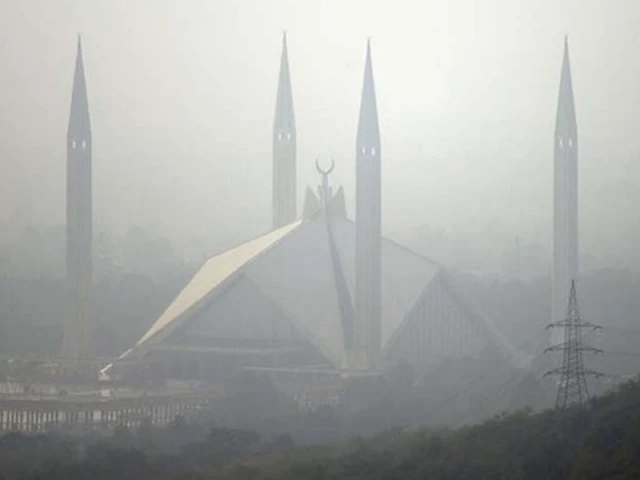
Every year, as winter approaches, Lahore and other cities across Punjab are engulfed by hazardous smog, posing serious risks to public health, disrupting daily life and reducing visibility. Environmental experts frequently identify crop-residue burning, particularly rice-stubble burning in Punjab and across the border in India, as a major contributor to seasonal air pollution.
However, smog also results from vehicle emissions, industrial smoke, brick kilns, construction dust and other pollutants. Weather conditions, including low wind speeds and temperature inversions, further trap pollutants close to the ground. Addressing this recurring crisis requires scientific assessment of pollution sources, stricter emissions controls, cleaner agricultural practices and coordinated regional action.
Pakistan's smog problem also exposes a wider economic failure: agricultural waste that could generate income is often treated as a nuisance. According to a UNDP report on rural revitalisation in China, more than 647 million tonnes of crop straw were recycled in 2021, achieving a utilisation rate of nearly 90%. This demonstrates the potential of converting agricultural residues into valuable economic resources.
Rice straw can be used for animal feed, bio-fertilisers, industrial raw materials and mushroom cultivation. Rice bran can be used for bran edible oil, husk can support biomass co-generation energy, ash, silica, blocks and other industrial applications. Research and investment can also explore rice straw-based boards, packaging materials, yarn and other products.
In Pakistan, however, rice straw is frequently burnt in fields, husk accumulates at rice mills, and valuable byproducts remain underutilised. At a time when the country urgently needs higher exports, rural employment, affordable energy and import substitution, this represents a substantial missed opportunity.
Beyond subsidies and penalties
Punjab Chief Minister Maryam Nawaz has launched a subsidy under the Punjab Clean Air Programme, offering rice growers Rs5,000 per acre, subject to a maximum of Rs25,000 per farmer, to discourage stubble burning. The initiative provides immediate assistance, but financial incentives alone cannot establish a permanent solution. Similarly, imposing fines on farmers and FIRs without providing practical and economically viable alternatives are unlikely to eliminate the problem sustainably. Pakistan needs to transform stubble management from a pollution-control exercise into a commercially viable agricultural industry.
Waste-to-Wealth Company
The Punjab government should establish an Agricultural Waste-to-Wealth Company to develop an integrated system for collecting, processing and marketing agricultural residues, beginning with rice straw and husk. Its principal responsibilities should include:
1-Rice-straw collection network: Establish collection centres in major rice-producing districts and provide balers, shredders and transportation through cooperatives and private contractors. Farmers should receive commercially viable prices for usable straw, creating a financial incentive to stop burning it. Collection operations must be organised around the short interval between rice harvesting and the planting of the next crop. Timely removal is essential if farmers are to adopt alternative practices.
2-Industrial utilisation and value addition: Encourage rice mills to utilise paddy husk for biomass power generation and industrial heat where economically feasible. Develop composting and organic-fertiliser facilities, and promote rice straw-based boards, packaging materials and other suitable manufactured products. Research institutions and businesses should investigate advanced applications, including biofuels and cellulose-based products. Where technically and commercially viable, cellulose extracted from rice straw could provide raw material for industrial applications, potentially including textile fibres and yarn. The objective should be to develop multiple uses for agricultural residues rather than depend on a single technology or market.
3-Private-sector investment: Invite domestic and foreign investors' joint ventures to establish agricultural waste processing facilities in rice-producing regions. The government should offer transparent, time-bound incentives linked to actual production, investment and verified residue utilisation. Long-term supply agreements between farmers, collection companies, rice mills and industrial consumers would help establish reliable supply chains and reduce commercial uncertainty.
4-Farmer participation and mechanisation: Farmers must be partners in the proposed system, not merely the targets of enforcement. Machinery for chopping, collecting, baling and transporting straw should be made accessible through service providers, cooperatives and affordable financing. Financial institutions, including Zarai Taraqiati Bank Limited and Apna Kissan Bank, could support eligible investments in agricultural machinery, collection centres, storage facilities and residue-processing projects. The government should aid coordination among agricultural departments, rice mills, research institutions and trade associations to ensure that collection and processing systems operate efficiently.
From agricultural waste to economic value
An integrated waste-to-wealth system could deliver several benefits simultaneously. These include reducing open-field burning and helping mitigate seasonal air pollution, generating additional income for rice farmers, creating rural employment and new businesses, supplying raw materials to energy and manufacturing industries, encouraging investment in agricultural technology, reducing waste and supporting import substitution, and developing new products with potential for domestic sales and exports.
However, success will depend on suitable technology, transport costs, reliable buyers and the economics of individual applications. Not all rice straw can be collected or processed profitably. Local feasibility studies and pilot projects should therefore precede large-scale investment. Punjab and Sindh should adapt their approaches to local agricultural conditions, infrastructure and industrial demand. The objective should be to establish commercially sustainable systems rather than create permanent dependence on subsidies.
Role of trade associations
Trade associations also have a responsibility beyond lobbying for their members' immediate demands. They should help develop the research, technology and industrial capabilities needed to make entire sectors more competitive. Pakistan's rice industry offers an opportunity to build clusters around agricultural residues, including straw, husk, bran and other byproducts. Such industries could diversify revenue streams, strengthen rural economies and improve the sector's overall competitiveness. After 79 years of independence, Pakistan needs less ceremonial and more economic leadership: laboratories instead of excessive ceremony, technology instead of trophy sales, and measurable results instead of publicity.
Stubble management must evolve from a policy focused primarily on controlling burning into a comprehensive resource-recovery industry. The government should facilitate investment, establish collection infrastructure, support research and create a regulatory environment in which agricultural waste becomes a commercially valuable resource. Farmers should earn from residues that currently impose disposal costs, while businesses should have incentives to convert them into marketable products. Pakistan's next rice revolution should not be measured solely by how much rice the country grows or exports, but by how much additional value it creates from every ton, and how little it wastes.
The writer is a former vice president of Karachi Chamber of Commerce & Industry and former board member of REAP





This material may not be published, broadcast, rewritten, redistributed or derived from. Unless otherwise stated, all content is copyrighted © 2026 The Express Tribune.






COMMENTS
Comments are moderated and generally will be posted if they are on-topic and not abusive.
For more information, please see our Comments FAQ