SHC partially allows appeal of 'RAW agent'
Updated 2 hours ago

Says move aimed at ensuring planned, sustainable and inclusive urban development
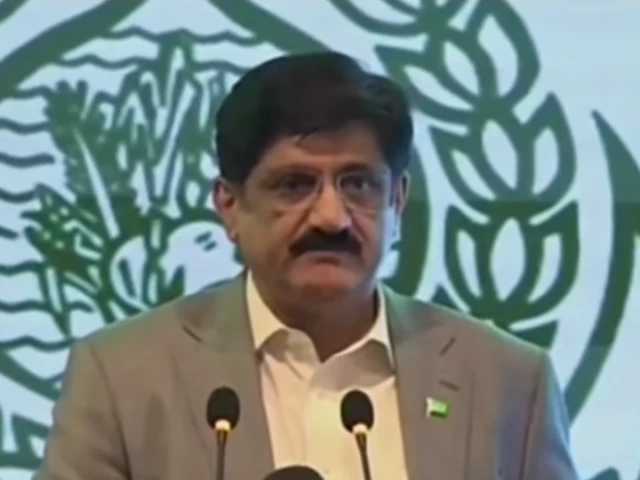
Sindh Chief Minister Syed Murad Ali Shah said on Saturday that the provincial government was working on master plans for 31 cities across the province, including major urban centres such as Karachi and Hyderabad, to ensure planned, sustainable and inclusive urban development.
Addressing the Sindh Cities Forum 2026, organised by the Sindh Master Plan Authority (SMPA) in collaboration with NED University and UN-Habitat at the Convention Centre of the Golf Club on the occasion of World Cities Day, the chief minister said master planning was essential to address growing urban challenges, including unplanned construction, traffic congestion, water shortages, inadequate drainage systems and the effects of climate change.
According to the minister for local government, housing and town planning, master plans for 17 cities had been completed, while work on the remaining 14 was in its final stages. The government has so far issued notifications for the master plans of nine cities: Sukkur, Larkana, Mirpurkhas, Umerkot, Mithi, Islamkot, Dadu, Nawabshah and Naushahro Feroze.
The CM said work on the master plans for Karachi and Hyderabad was progressing rapidly. International consultants had been engaged to prepare Karachi's master plan, which, he acknowledged, would be a particularly challenging exercise given the city's existing urban conditions.
Preparing a master plan for a new city from scratch was relatively easy, he said, adding that correcting Karachi's existing situation was a major challenge for consultants and urban planners. He urged them to propose measures not only to improve the city's condition but also to ensure effective implementation of the plan.
Recalling his personal association with Karachi, the chief minister said he had witnessed the city's rapid expansion. However, its growth had also exposed serious planning failures, making subsequent efforts to improve urban infrastructure increasingly difficult.
Referring to the 2020 monsoon floods in Yousuf Goth, District West, he said roads originally designed with adequate carriageways, central medians and storm-water drains had subsequently been encroached upon. Shops had been established on service roads, medians and drainage channels, damaging the original infrastructure.
He acknowledged that successive governments, including his own, had made mistakes that had contributed to the city's present condition. Once structural problems develop in a city, correcting them becomes extremely difficult, he said, stressing that the government could not address urban challenges without the cooperation of citizens, planners, builders, utility companies and other stakeholders.












This material may not be published, broadcast, rewritten, redistributed or derived from. Unless otherwise stated, all content is copyrighted © 2026 The Express Tribune.





COMMENTS
Comments are moderated and generally will be posted if they are on-topic and not abusive.
For more information, please see our Comments FAQ