FCC warns executive over ignored orders
Updated 1 hour ago

Rupee depreciation drives up price tags for Bhasha, Dasu
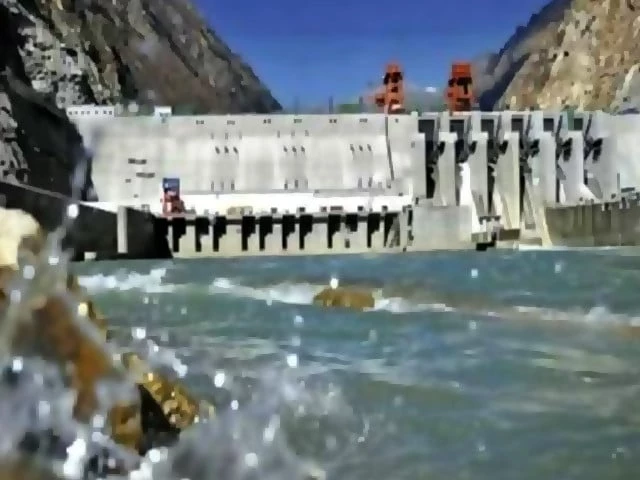
The depreciation of the Pakistani rupee against the US dollar in recent years has significantly driven up the cost of two major hydropower projects, adding a combined Rs1.896 trillion to their estimated expenses.
According to details presented by the Ministry of Water Resources in the National Assembly, the cost of the Diamer-Bhasha Dam increased by Rs642 billion, with its project cost rising from Rs479 billion to Rs1.121 trillion.
The ministry attributed the increase to changes in foreign exchange rates and said a revised PC-I had been submitted to the Ministry of Water Resources.
The estimated cost of the Dasu Hydropower Project also surged from Rs486 billion to Rs1.740 trillion, representing an increase of Rs1.254 trillion, or around 260%.
The government also acknowledged a sharp increase in the prices of petroleum products and construction materials, further adding to the financial burden of infrastructure projects.
According to the figures presented, the price of a cement bag rose by 204% from Rs530 to Rs1,610 while the price of high-speed diesel climbed from Rs72 to Rs414 per litre, marking an increase of 472%.
Steel and iron bars became significantly more expensive, with their price rising by 268%, from Rs72,000 to Rs265,000 per metric tonne.
The National Assembly was informed that after the dissolution of Pakistan Agricultural Storage and Services Corporation (PASSCO), letters have been sent to relevant institutions and provinces for distribution of available wheat stocks, while wheat is also being supplied to Balochistan, Azad Kashmir and other concerned areas.
Parliamentary Secretary for National Food Security and Research Shaista Khan gave the information during Question Hour in response to questions by Shahida Rehmani and Aliya Kamran.
She said wheat imports have also been made to meet requirements and imported stocks have reached warehouses. To make wheat transportation and supply to provinces transparent, a digital system has been introduced with a dashboard to monitor movement, the concerned province and complete delivery details.
In reply to a supplementary question, the Parliamentary Secretary said PASSCO had declined due to financial and administrative issues, as some provinces were not paying its dues and bills on time.
She explained that the government intends to properly involve the private sector and for this purpose relevant companies will be linked with the Ministry of National Food Security and Research.
A system is also being devised to monitor and hold private companies accountable to make wheat supply and distribution process effective.
The National Assembly on Friday passed four government bills by majority vote after clause-by-clause consideration. The bills included the Higher Education Commission (Amendment) Bill, 2026; the NFC Institute of Engineering and Technology Multan (Amendment) Bill, 2026 and the National Textile University (Amendment) Bill, 2026.










This material may not be published, broadcast, rewritten, redistributed or derived from. Unless otherwise stated, all content is copyrighted © 2026 The Express Tribune.







COMMENTS
Comments are moderated and generally will be posted if they are on-topic and not abusive.
For more information, please see our Comments FAQ