IHC seeks answers on passenger offloading
Updated 1 hour ago

Garrison city will launch another vaccination drive on Nov 2
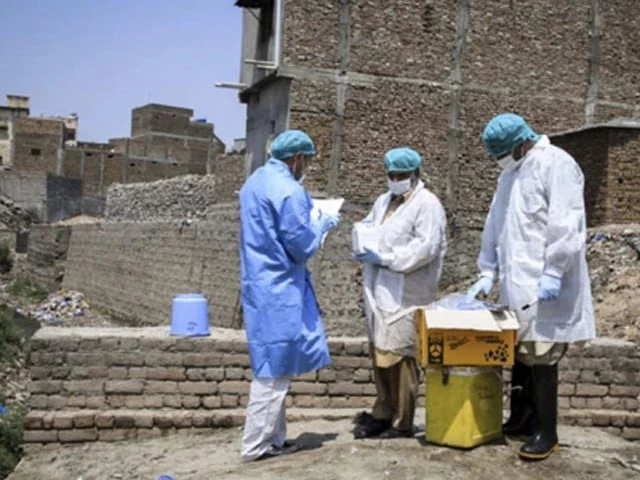
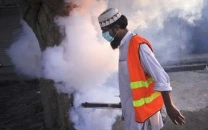
The health department and district administration have approved another anti-polio campaign from November 2 after the United Nations Children's Fund (Unicef) confirmed a substantial presence of poliovirus in Rawalpindi's sewage.
The last anti-polio campaign of the year will also be held in December.
Earlier this year, the district administration and health department had made strong claims that Rawalpindi's sewage had been completely cleared of poliovirus.
However, a third-party survey detected a significant quantity of the virus in the city's sewage, particularly in Nullah Lai, prompting authorities to launch another vaccination campaign.
The district administration had previously described families refusing polio drops as Afghan refugees. However, the number of refusal cases has continued to rise despite the deportation of all Afghan families from Rawalpindi district.
From January 1 to October 30 this year, the health department has remained unable to effectively cover families refusing vaccination.
Authorities have once again claimed that such families will be a particular focus of the campaign beginning on November 2. These include a large number of Kashmiri and local Rawalpindi families living in affluent areas as well as Pindora, Satellite Town, Saddar, Dhok Hassu, Pirwadhai, Fauji Colony, Dhok Mangtal, Adiala Road, Gulistan Colony and Rehmatabad.
Meanwhile, a meeting of the District Polio Eradication Committee, chaired by Deputy Commissioner Nadeem Nasir, was held on Thursday to review arrangements for the November 2 campaign, the performance of the previous drive and preparations for the upcoming campaign.
A presentation on the previous campaign reviewed the performance of union councils, vaccination coverage, missed children and cases involving parents who refused vaccination.
According to the presentation, a target of 989,924 children had been set in Rawalpindi district during the previous campaign. Of the children missed during the drive, 84 per cent were covered on the same day.
The deputy commissioner directed officials to pay special attention during the upcoming campaign to union councils where vaccination coverage had remained low.
He called for identifying missed children and ensuring effective follow-up to administer polio drops.
He also issued special instructions for Lab Thatho union council in Taxila, saying the complete eradication of polio was a national responsibility.
The health department, World Health Organisation and other relevant institutions should work in coordination and adopt a joint strategy, he said.
He directed officials to continuously monitor the performance of field teams and ensure there was no negligence during the campaign.
Later, the deputy commissioner formally inaugurated the campaign by administering polio drops to children.




This material may not be published, broadcast, rewritten, redistributed or derived from. Unless otherwise stated, all content is copyrighted © 2026 The Express Tribune.




COMMENTS
Comments are moderated and generally will be posted if they are on-topic and not abusive.
For more information, please see our Comments FAQ