IHC seeks answers on passenger offloading
Updated 59 minutes ago

Scanned answer sheets of biology, chemistry, statistics to be asessed
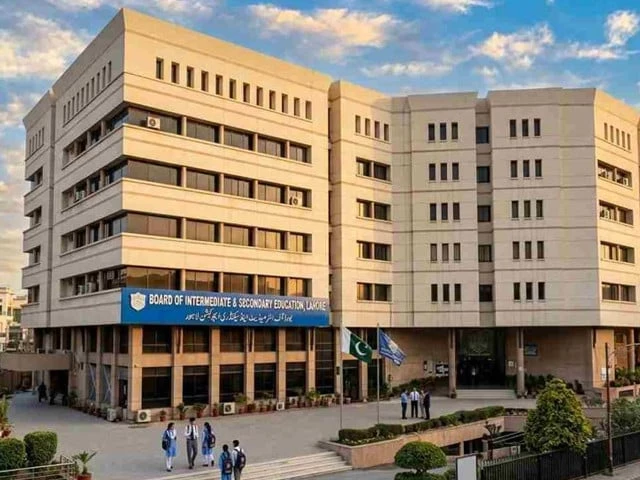
The Lahore Board of Intermediate and Secondary Education (BISE) is moving towards digital assessment of answer scripts with four subjects selected for the initial phase and an expansion expected for the examinations next year.
The development comes ahead of the Intermediate Second Annual examinations scheduled to begin on November 3, when biology, chemistry, computer science and statistics will have on-screen marking.
According to sources, the board has prepared a complete answer book and bubble sheet pattern for the computer science exam.
The board also arranged district-wise seminars and training workshops during October for educational institutions and examination personnel. The plan covers Lahore, Kasur, Sheikhupura and Nankana Sahib.
Under the new mechanism, students will continue to use conventional answer sheets.
However, instead of distributing the answer books among examiners for manual checking, the completed scripts will be scanned and converted into digital record before being made available through an electronic assessment platform.
Examiners will evaluate the scanned scripts on computer screens, allowing the examination authorities to monitor the allocation and assessment of answer books through a centralised mechanism.
The initial selection of four subjects provides the board an opportunity to assess the technical and administrative requirements of the system before extending it.
Education Minister Rana Sikandar Hayat had announced that manual checking would be replaced by on-screen assessment from 2027 with digital identification and QR code-based arrangements.
The government has presented the initiative as an effort to improve transparency and consistency in the evaluation.
According to experts, the digital assessment could address several weaknesses associated with paper checking.
"Physical answer books require transportation, distribution and collection, while monitoring the progress of individual examiners through the manual process can be administratively demanding.
However, electronic allocation could allow examination authorities to maintain a record of which examiner receives a particular script when its assessment begins and when the marking is completed. It could also help identify delayed assessments and discrepancies requiring attention," a BISE official said.















This material may not be published, broadcast, rewritten, redistributed or derived from. Unless otherwise stated, all content is copyrighted © 2026 The Express Tribune.






COMMENTS
Comments are moderated and generally will be posted if they are on-topic and not abusive.
For more information, please see our Comments FAQ