Sana assures family access to Noreen
Updated 1 hour ago

Describe extrajudicial justice trend as dangerous

Experts have denounced extrajudicial punishments as a dangerous trend, arguing that such arbitrary measures reflect a state of lawlessness, after Punjab Chief Minister Maryam Nawaz doubled down on her eye-for-an-eye approach to justice during a speech in Mandi Bahauddin a day earlier, presenting it as a means of ensuring immediate accountability for victims of abuse.
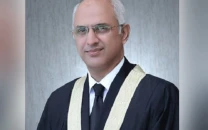
Justice (retd) Wajihuddin Ahmed said extrajudicial punishments fell outside the four corners of the law, asserting that the chief minister, as an enforcer and custodian of the law, should not have made such remarks.
Even in cases of self-defence, where a victim acts to protect himself or herself, the response must be proportionate, as the right to self-defence is not absolute, he said. The law provided no room for an eye-for-an-eye or tit-for-tat approach to justice, he added.
Political commentator Mazhar Hussain said extrajudicial actions reflected a state of lawlessness. Where laws existed, punishments had to be imposed through a proper legal process rather than in a manner likely to breed anarchy, he said.
"In Karachi, if a tanker runs over a motorcyclist, people set it on fire. Dacoits and robbers caught by mobs are beaten to death. This kind of street justice never brings order," Hussain said.
He recalled that extrajudicial killings in Sindh were given legal cover in 1995, but many innocent people fell victim to that state policy.
Hussain said such extrajudicial measures could not establish the writ of the government. Maryam Nawaz's argument that accused persons secured bail the following day carried little weight, he said, as the government could instead legislate to make certain offences non-bailable.
"What is stopping the government from plugging the legal loopholes?" he asked, adding that extrajudicial killings and punishments had never resolved any problem and could not be justified under any circumstances.
Former caretaker Punjab chief minister Hasan Askari Rizvi described the approach as a continuation of what he called a tradition within the Sharif family. Endorsing such unlawful acts amounted to political showmanship aimed at winning public support, he said, adding that such measures offered no long-term benefits.
Rizvi said personalised policies were common in states where legal safeguards were weak, or the rule of law existed only in name. Such idiosyncratic approaches were characteristic of leaders operating in systems with weak legal institutions, he said.
Referring to the state of the judiciary, Rizvi argued that the courts had been rendered toothless, allowing those who patronised such acts to escape consequences. He said Maryam Nawaz appeared to be operating under an aura of self-righteousness, believing herself to be the only person on the right side of the law.
Naseer Kamboh, a former PML-N office-bearer and party-leaning lawyer, said extrajudicial punishments had no place in the legal system and that punishment should ideally be imposed through established legal procedures.
However, he argued that, given the weaknesses of the legal system, such government measures could offer quick, albeit temporary, fixes to restore order in society. He blamed PTI founder Imran Khan for the emergence of such policies.
A day earlier, while addressing a laptop distribution ceremony in Mandi Bahauddin, Maryam Nawaz said Punjab had long been accustomed to a system in which the powerful enjoyed preferential treatment and the wealthy could secure justice on their own terms.
That time was over, she said, urging people to speak out against injustice and abuse and warning that perpetrators would be dealt with an iron fist, regardless of their wealth, influence or political connections.
She said she had personally spoken to a woman who was allegedly beaten by an influential man in a car, reportedly over her refusal to give way on the road.
The chief minister said she had offered the woman the opportunity to slap the man as many times as she wished. The woman, who had sustained a fracture, declined the offer, saying she was satisfied that the state was standing behind her.
Referring to a controversial case that drew widespread criticism, the chief minister also said the Punjab government stood behind an orphan who had been abandoned by his family after being run over by a workshop owner in Multan. Punjab Information Minister Azma Bukhari was approached for comment but did not respond.





This material may not be published, broadcast, rewritten, redistributed or derived from. Unless otherwise stated, all content is copyrighted © 2026 The Express Tribune.






COMMENTS
Comments are moderated and generally will be posted if they are on-topic and not abusive.
For more information, please see our Comments FAQ