SBP reserves rise $33m to $21.52b
Updated 2 hours ago

WB funds 'Bold Reforms' as govt pledges Investment Act & free wheat, sugar trade
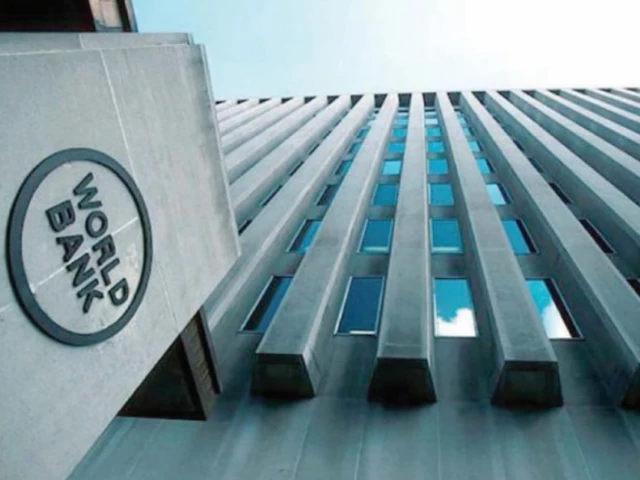
After the failure of previous foreign-funded initiatives, Pakistan has decided to take another $600 million loan from the World Bank, this time under the "Bold Reforms for Investment-Driven Growth and Employment (BRIDGE) Programme".
In return for the loan, the government has assured the World Bank that it will enact at least two new laws, the Investment Act and the Factoring Law, develop a database of Pakistanis going overseas, allow free international trade in sugar and wheat and increase the share of urea imports by private persons.
According to documents the Washington-based lender released late on Wednesday, the estimated approval date for the loan is January 29, 2027, and it will be taken by the Ministry of Finance.
The total cost of the programme has been estimated at $1.2 billion, of which $600 million will be lent by the World Bank. The remaining $593 million will be borne by the federal government, according to the programme information document.
Successive governments have taken concessionary and expensive foreign loans to bring reforms that require only strong political will. In addition to this loan, the government has decided to take $750 million from the Asian Development Bank for pension and private-sector reforms, but the money is used for budget deficit financing.
Despite billions of dollars in past loans for reform, the World Bank's latest report stated that "driven by an unfriendly business environment, private investment stands at around 10% of GDP, less than half the rate of regional peers, and FDI at around 0.6% of GDP".
The government had established the Special Investment Facilitation Council (SIFC) to bring foreign direct investment and improve the business environment.
The World Bank stated that with stabilisation largely achieved under an ongoing International Monetary Fund (IMF) programme, the government is now pivoting towards a credible, growth-focused reform agenda aimed at unlocking private investment-led and export-oriented growth as the primary engine of job creation and long-term prosperity.
The document claimed the loan will support progress towards Pakistan's target of increasing private investment to 15% of GDP by 2035.
The lender said chronically low private investment reflects decades of regulatory friction, shallow credit markets, high trade costs and sector-specific distortions that have locked firms into informality and low productivity, compounding the challenge of generating sufficient quality employment for the more than three million Pakistanis entering the labour market annually.
Loan conditions
The World Bank said the loan will support full operationalisation of the Pakistan Business Portal as a one-stop digital interface for all business authorisations and the enactment of a modernised Investment Act that strengthens investor protections, clarifies rights, obligations and sector limits through an updated negative list, and improves transparency and administrative efficiency in line with international practice.
The loan will also support enactment of a Factoring Law, passage of a unified Insolvency Law with a dedicated regulatory authority and full operationalisation of the EXIM Bank with a banking licence and internationally compliant export credit and guarantee products, it added.
It will also support reductions in the time taken to clear imports and exports and the expansion of internationally recognised accreditation. The government claims it has already reduced clearance times through the newly launched Customs Faceless System.
The document showed the loan will support establishment of a single national seed variety approval system to reduce registration times and accelerate access to high-yield and climate-resilient varieties, and target increased private participation in the urea fertiliser market.
The loan will support removal of wheat and sugar from the Import and Export Order 2022, advancing ongoing wheat sector reforms, according to the documents. The removal does not need any foreign loan, only the cabinet's approval.
It will support institutional and regulatory strengthening required for the Drug Regulatory Authority of Pakistan (DRAP) to achieve World Health Organisation Regulatory Maturity Level 3 (ML3) and Pharmaceutical Inspection Co-operation Scheme membership, along with mutual-recognition and collaborative agreements with Asian and African regions.
The loan will support foundational institutional reforms and systems investments, including strengthening of the National Vocational Qualifications Framework.
Under the conditions, the government will increase the share of eligible institutions and databases incorporated into the established Labour Market Information Systems and the number of Global Skills Partnership agreements signed and supported by an operational digital migration platform.
The World Bank said about 800,000 workers departing for overseas employment annually will benefit from a digitised migration process and improved pre-departure orientation.
The loan will also support improved access to credit and a reduction in credit cost through enactment of a modernised consolidated corporate insolvency law, and increase the volume of receivables-based financing supported by enactment of a dedicated factoring law and issuance of enabling regulations.






This material may not be published, broadcast, rewritten, redistributed or derived from. Unless otherwise stated, all content is copyrighted © 2026 The Express Tribune.








COMMENTS
Comments are moderated and generally will be posted if they are on-topic and not abusive.
For more information, please see our Comments FAQ