Young and old, leading together
Updated 1 hour ago

.
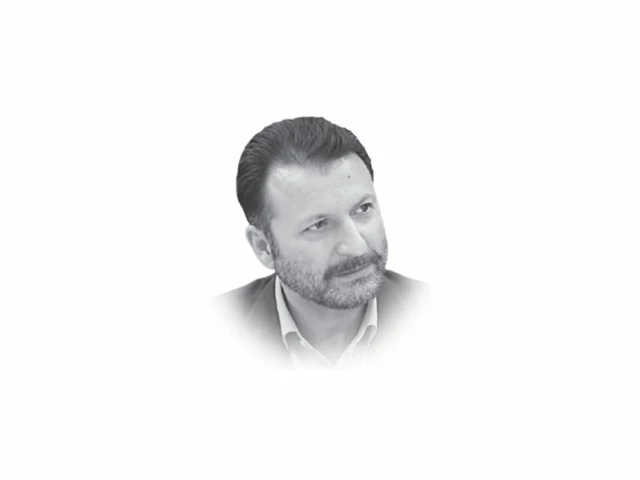
When Amjad Hussain took oath as Chief Minister of Gilgit-Baltistan in July, he assumed office with years of political experience and a close view of how successive governments succeeded or failed. He now has an opportunity to turn those lessons into achievements that could define his tenure. Three initiatives, if successfully implemented, could become the lasting legacy of his government.
The first is the proposed Gilgit-Baltistan Glacier Protection Authority. With thousands of glaciers exposed to climate change, protecting the region's fragile ecosystem is not merely a local concern but a national priority. If Amjad succeeds in building a professionally managed institution capable of attracting international expertise, climate financing and scientific cooperation, it could become one of the most significant contributions of his government. Its success, however, will depend on sustained funding, technical capacity and measurable results rather than the establishment of an authority on paper.
The second is the revival of local government elections after a gap of 24 years. By amending the relevant law and moving towards elections scheduled for this year, Amjad's government has taken a potentially consequential step towards restoring grassroots democratic representation. If the elections take place as planned, they will be a defining milestone of his tenure. Functioning local governments could bring decision-making closer to citizens, improve service delivery and strengthen democratic institutions. Politically, they also offer the PPP an opportunity to expand its grassroots presence through effective candidate selection and local alliances.
The third is the proposed expansion of Gilgit airport to improve air connectivity, including the possibility of regular tourist flights. For a region whose economy depends heavily on tourism but remains constrained by difficult access, improved aviation links could benefit hotels, transport operators, traders and local communities. If the government can turn this ambition into a functioning reality, it could leave a tangible economic legacy.
These priorities suggest that Amjad understands the importance of choosing initiatives that can produce lasting institutional and economic benefits. His other decisions indicate a similar effort to avoid the pitfalls that undermined previous administrations.
As a former member of the Gilgit-Baltistan Council, Leader of the Opposition and PPP regional president for a decade, Amjad observed the governments of Mehdi Shah, Hafiz Hafeezur Rehman, Khalid Khurshid and Haji Gulbar Khan. Their contrasting experiences offered lessons in political confrontation, administrative management and development delivery.
One apparent lesson is to avoid unnecessary conflict with the bureaucracy. Disputes over transfers and postings have often strained relations between CMs and senior officials, diverting attention from governance. Allowing administrative institutions greater autonomy could reduce friction, provided this freedom is accompanied by accountability. An emphasis on merit and transparency is equally important. These commitments will be meaningful only if recruitment, appointments and government decisions reflect competence rather than political connections.
Finances remain another major constraint. Gilgit-Baltistan has a substantial backlog of incomplete development projects and limited resources of its own. Amjad's government appears intent on completing stalled project. The challenge will be to secure adequate funding, prioritise spending and ensure timely execution.
Political management will be just as demanding. The backing of PPP chairman Bilawal Bhutto-Zardari strengthens Amjad's position but also raises expectations among party workers seeking government positions. Balancing these demands with merit-based governance will test his ability to maintain party unity without compromising administrative performance.
Delivery on these commitments will determine whether Amjad has learnt the right lessons.






This material may not be published, broadcast, rewritten, redistributed or derived from. Unless otherwise stated, all content is copyrighted © 2026 The Express Tribune.

COMMENTS
Comments are moderated and generally will be posted if they are on-topic and not abusive.
For more information, please see our Comments FAQ