Pak-Iran border reopens as CDF visits Tehran
Updated 1 hour ago

DPM urges regional bloc to build financial safeguards
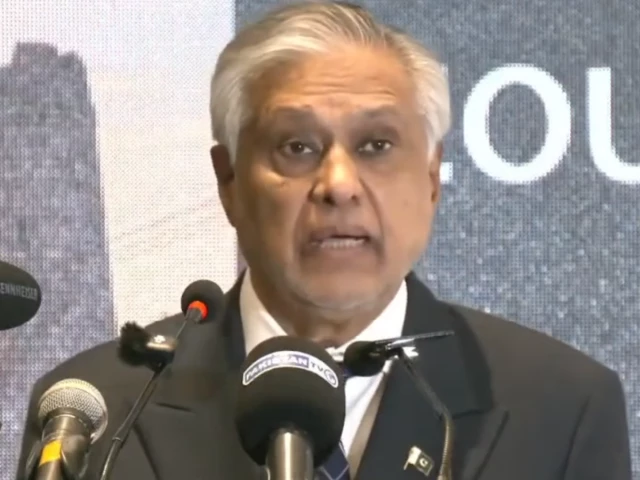
Deputy Prime Minister and Foreign Minister Ishaq Dar on Tuesday urged member states of the Shanghai Cooperation Organisation (SCO) to accelerate the use of national currencies in mutual settlements and establish regional financial institutions to finance development projects and shield their economies from international financial shocks.
Addressing the 25th meeting of the SCO Council of Heads of Government in Dushanbe, Tajikistan, Dar called for establishing an SCO Development Bank, Development Fund and Investment Fund, saying these mechanisms could strengthen economic cooperation and help member states withstand external financial pressures.
He also stressed the need to strengthen the SCO Interbank Consortium, harmonise cross-border payment systems and facilitate trade financing. Pending the establishment of the proposed development bank, he said, the consortium could play a greater role in financing infrastructure upgrades.
Dar said Pakistan remained committed to the SCO's founding principles of mutual trust, sovereign equality, respect for cultural diversity and shared prosperity, collectively described as the "Shanghai Spirit". He called for translating regional cooperation into practical initiatives that deliver economic benefits.
Emphasising the importance of connectivity, Dar said targeted investment in energy and transport infrastructure was essential for linking regional economies and advancing economic integration. He also called for greater investment in agriculture, mining, minerals and information technology to strengthen economic resilience.
Dar described the China-Pakistan Economic Corridor (CPEC) as an opportunity for all SCO partners to participate in regional economic integration. He said artificial intelligence, digital transformation, technological innovation, energy cooperation and international information security should become key pillars of future cooperation among member states.
He urged the SCO to strengthen its business institutions by establishing direct business-to-business links, organising joint trade exhibitions and streamlining customs procedures, particularly to support small and medium-sized enterprises. Such measures, he said, could expand intra-regional commerce and deepen economic partnerships.
Criticising protectionist policies and unilateral coercive measures, Dar said they undermined international law, restricted technological progress and increased inequality. He called for reforming global financial and trade systems to promote more equitable development and strengthen the resilience of regional economies.
The foreign minister also proposed expanding structured partnerships with international organisations, including the United Nations, the Association of Southeast Asian Nations and the Economic Cooperation Organisation, alongside regional and international financial institutions.
He said the SCO should adopt a forward-looking strategy focused on climate resilience, sustainable energy, secure supply chains and joint technological innovation. Operationalising Eurasian energy and transport corridors, alongside stronger cultural, educational and people-to-people exchanges, would further advance regional integration.
Turning to regional security, Dar said sustainable economic development depended on lasting peace and stability, particularly in Afghanistan. He reiterated Pakistan's desire for a peaceful, stable, prosperous and regionally integrated Afghanistan that maintained peaceful relations with its neighbours.
He said Pakistan expected the Afghan Taliban authorities to ensure that Afghan territory was not used for terrorist activities against Pakistan or other countries. Regional stability, he stressed, remained essential for economic development and shared prosperity.
Dar also reiterated Pakistan's commitment to dialogue and diplomacy as the most effective means of resolving regional tensions, highlighting Islamabad's efforts to facilitate de-escalation in West Asia and the Gulf. He said Pakistan remained engaged in mediation efforts between the United States and Iran and would continue supporting peaceful dispute resolution.
Dar also highlighted Pakistan's role in the organisation, including its chairmanship of the SCO Regional Anti-Terrorist Structure and leadership of the working group on poverty alleviation. He said Islamabad intended to emphasise the contribution of small and medium-sized enterprises to reducing poverty.
He said Prime Minister Shehbaz Sharif's vision for Pakistan's SCO chairmanship centred on "Turning Vision into Action: Connectivity, Innovation and Shared Prosperity". Its priorities include peace and security, regional trade, artificial intelligence, climate resilience, sustainable energy and people-to-people exchanges.
Dar reaffirmed Pakistan's commitment to strengthening regional partnerships and said Islamabad looked forward to hosting the SCO Council of Heads of State summit in August 2027. He called for collective efforts to build a peaceful, interconnected and prosperous regional community.
During his visit to Dushanbe, Dar also met Tajikistan's Foreign Minister Sirojiddin Muhriddin, with both sides reaffirming longstanding ties and calling for expanded trade, economic cooperation, regional connectivity and collaboration in energy and security.
(WITH INPUTS FROM APP)









This material may not be published, broadcast, rewritten, redistributed or derived from. Unless otherwise stated, all content is copyrighted © 2026 The Express Tribune.





COMMENTS
Comments are moderated and generally will be posted if they are on-topic and not abusive.
For more information, please see our Comments FAQ