Pakistan looks to tap advanced Russian agri-technologies
Updated 1 hour ago

Discussions explore field trials of seeds and pesticides, tech transfer
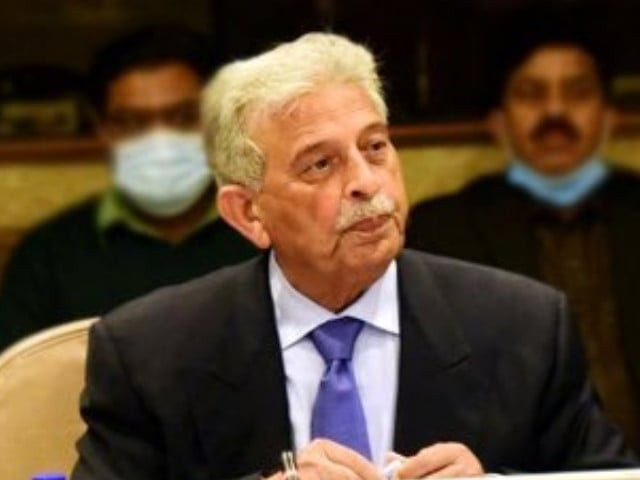
Federal Minister for National Food Security and Research Rana Tanveer Hussain held a meeting with a delegation from the prominent Russian agricultural and agrochemical company, Schelkovo Agrohim. The delegation was accompanied by the second secretary and other officials of the Russian embassy.
The meeting focused on exploring practical cooperation between Pakistan and Russia in seed development, crop protection, pesticides, micronutrients, advanced fertilisers, agricultural research, technology transfer and investment.
Hussain said that Pakistan was seeking agricultural cooperation with Russia that could go beyond imports of finished products and lead to technology transfer, local production, joint research, breeding programmes and capacity building of Pakistani experts. He said Pakistan needed advanced agricultural technologies and seeds that would enhance productivity while demonstrating greater resilience to drought, diseases, pests and climatic stress. The Russian delegation briefed the minister on Schelkovo Agrohim's pesticides, advanced pesticide formulations, micronutrients, micro-fertilisers, biological products and high-quality seeds for various crops. The company also presented its research and production capabilities in seeds and hybrids of wheat, maize, sugar beet, rapeseed/canola and sorghum. According to the Russian delegation, the company's maize seeds are non-GMO.
The meeting identified effective pest and disease management in cotton, rice, sugarcane and vegetables as key areas for potential cooperation. Discussions also covered micronutrients and alternative plant nutrition solutions that could improve nutrient-use efficiency and potentially reduce dependence on conventional fertilisers. Hussain said that climate change posed a growing challenge to Pakistan's agricultural production. Therefore, climate-resilient technologies, drought-tolerant seeds and disease-resistant crop varieties are being accorded priority.
Discussing cooperation in the seed sector, Pakistani officials emphasised that future collaboration should not be limited to the import of finished seeds. Instead, practical cooperation could focus on access to suitable Russian germplasm, joint breeding programmes, technology transfer, seed traceability, local seed multiplication and the establishment of a Russian seed company or partnership in Pakistan.






This material may not be published, broadcast, rewritten, redistributed or derived from. Unless otherwise stated, all content is copyrighted © 2026 The Express Tribune.













COMMENTS
Comments are moderated and generally will be posted if they are on-topic and not abusive.
For more information, please see our Comments FAQ