Kashmiris observe Black Day in Paris
Updated 1 hour ago

Says efforts should be made to improve the entire value chain to further develop the meat, livestock export industry
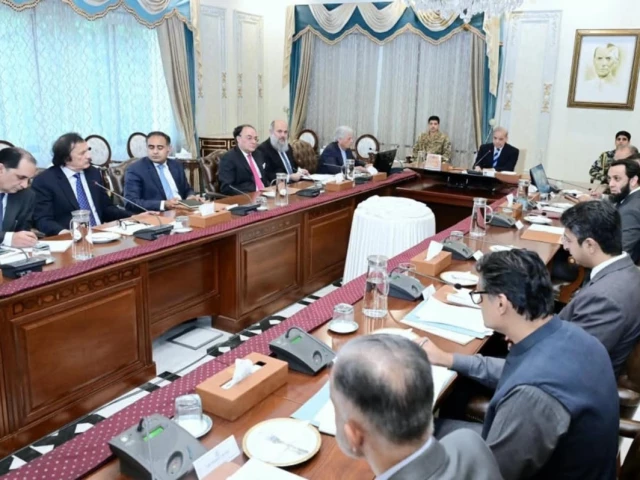
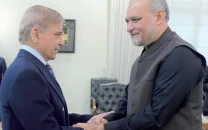
Prime Minister Shehbaz Sharif on Monday approved a comprehensive plan to restructure the country's livestock sector on corporate lines and boost exports by allowing duty-free imports of livestock for specialised rearing farms for re-export.
PM Shehbaz, chairing a high-level review meeting on ongoing reforms in the livestock sector, directed the formulation and implementation of livestock sector reforms with input from private-sector experts.
The premier instructed that specialised farms should be established for livestock exports and that high-yield, superior-breed livestock should be imported and reared in these specialised farms for export purposes.
Read: PM eyes tech-driven livestock boost
He said a modern livestock tagging system should be introduced to ensure that the livestock reared in these farms are indeed exported.
Prime Minister @CMShehbaz has approved the establishment of special farms for raising imported livestock to boost the country's livestock exports@PakPMO @GovtofPakistan @tdap_official #RadioPakistan #News #Livestock #Exports #Agriculture
— Radio Pakistan (@RadioPakistan) October 5, 2026
https://t.co/1V8lEEBvqu pic.twitter.com/9hshlJS2zK
The PM stated that the livestock sector should be reorganised on a corporate model to modernise it, and expertise from private sector specialists should be utilised for this purpose.
Livestock accounts for over 60 per cent of the country's agricultural sector, and the sector holds immense export potential, PM Shehbaz said, adding that a comprehensive plan with specific targets for eradicating Foot-and-Mouth Disease from the country should be formulated and presented within the next two weeks.
The premier said international certification of slaughterhouses across the country must be ensured, and third-party validation must be ensured to guarantee international standards at slaughterhouses. The Ministry of National Food Security should work in collaboration with provincial governments to eradicate livestock diseases, he added.
He said efforts should be made to improve the entire value chain to further develop the meat and livestock export industry.
The premier directed that targets for meat, livestock, and related exports be determined and presented.
The meeting was given a detailed briefing on the livestock sector, and proposals regarding the future roadmap for the sector's development and the enhancement of exports were presented.
Regarding the overall potential of Pakistan's livestock sector, the meeting was informed that the country possesses approximately 245 million livestock, with a total estimated value of around Rs 5.5 trillion. The livestock sector contributes 14.97% to the national economy and 63.6% to the agricultural economy, with an annual production of approximately 74.69 million tons of milk and 6.31 million tons of meat.
It was noted that while around 8 million rural families in the country are associated with livestock, the prevalence of small-scale livestock rearing and a fragmented supply chain hinder the full utilisation of export potential. The meeting was informed that there is immense potential to significantly increase Pakistan's meat exports. Meat exports stood at approximately $530 million in the 2025-26 fiscal year, with the bulk of current exports destined for Gulf countries, including the UAE, Saudi Arabia, Kuwait, and Qatar. It was noted that Malaysia, Saudi Arabia, China, and other nations offer significant prospects as new and expanding markets.
The meeting was also briefed on government initiatives to boost livestock and meat exports. These include the national program for animal disease surveillance, protection, and animal traceability; the establishment of Foot-and-Mouth Disease (FMD)-free zones and compartments; digital monitoring of vaccinations and diseases; and the development of export-grade farms alongside international health and Halal certification systems. Furthermore, the meeting was apprised that the government is focusing on promoting feedlot farming, cold chain infrastructure, de-boning, value-added products, and export-related infrastructure, with a target set to further increase meat exports by 2028.
Federal Ministers Rana Tanveer Hussain, Ahsan Iqbal, Dr Musadik Malik, Ahad Khan Cheema, Muhammad Aurangzeb, and Attaullah Tarar, Prime Minister’s Advisor Haroon Akhtar, Minister of State Bilal Azhar Kayani and other relevant senior officials attended the meeting.






This material may not be published, broadcast, rewritten, redistributed or derived from. Unless otherwise stated, all content is copyrighted © 2026 The Express Tribune.

COMMENTS
Comments are moderated and generally will be posted if they are on-topic and not abusive.
For more information, please see our Comments FAQ