Naqvi announces plans for high-rises, Manhattan-style city and safari park in Islamabad
Updated 51 minutes ago

Interior minister calls for export-led growth, urges shift towards ‘Made in Pakistan’
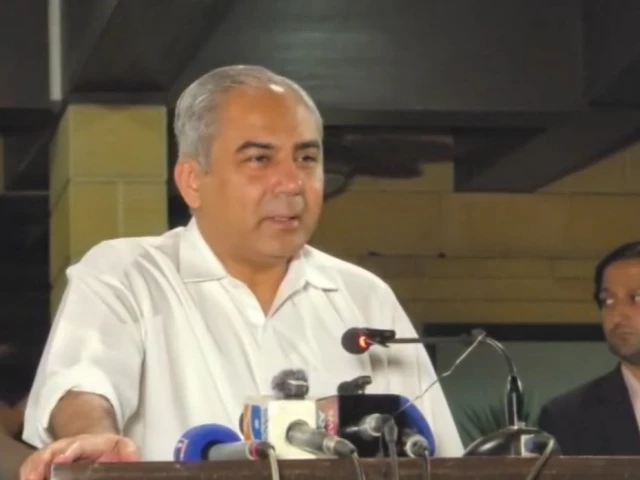
Interior Minister Mohsin Naqvi said on Friday that the "country's system was about to be reset" and that this move would improve the state of affairs in Pakistan.
Naqvi’s latest remarks come amid an ongoing debate over the creation of new provinces and restructuring of the country’s administrative setup, after he said earlier this year that the governance system had collapsed and was no longer capable of addressing the country’s challenges
Addressing a ceremony of the Lahore Chamber of Commerce and Industry to congratulate its newly elected office-bearers, Naqvi stated that Pakistan should learn from the "experience and systems" of developed countries.
Also Read: Naqvi vows not to back down from demand for new provinces, says decision must reflect public will
"I will not delve into the details right now, but I have been trying, and while we have achieved many things, I can tell you that the system of this country is going to be reset. For this reset to take place, we need the business community's support. When the system is reset, I remain hopeful that many things will improve," he remarked.
He said the solution to the country’s economic problems was to increase exports by any means possible, adding that whether the target was $170 billion or $9 billion, “every dollar is important” to him.
“Wherever you need me, I am available to you 24 hours a day. As long as I am sitting in this seat, I am here for you,” he told members of the chamber.
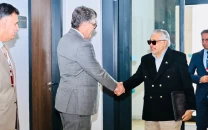
He said that over the past three to four months, he had frequently travelled to Iran for mediation efforts aimed at resolving the conflict between Tehran and Washington, which had engulfed the region since Feb 28, when the United States and Israel attacked Iran.
Naqvi said those who had not visited Iran might assume that the country, having been at war and under sanctions for 30 to 40 years, would be devastated, but those who travelled with him were surprised by the level of self-reliance there.
“They have a construction industry, an automobile industry — name anything and they manufacture it in their own country,” he said.
He urged the members to consider shifting towards “Made in Pakistan”, saying that if the goods currently imported from abroad were produced domestically, it would be highly beneficial for the country.
“If Iranians can manufacture and do everything themselves, why can’t we?” the minister asked.
While acknowledging that the country would continue to rely on oil imports, he said Pakistan also imported other goods worth more than $40 billion annually and that this bill could be reduced to $20 billion.
“This is also very easy to do. If we set targets of $10 billion and $5 billion and start working towards them, God willing, we can make significant progress in three to four years,” he said.
He suggested that the chamber should, alongside increasing exports, also prepare a “Made in Pakistan” proposal for Islamabad so that work could be undertaken on both fronts.
Read: Governance system has collapsed: Naqvi
The current debate over new provinces began on July 30, when Interior Minister Mohsin Naqvi called for additional administrative units or provinces as part of a broader overhaul of the country’s governance system. Naqvi argued that meaningful structural reforms were needed to improve governance, deliver justice and create opportunities for young people.
A day later, his proposal appeared to receive support from Inter-Services Public Relations (ISPR) Director General Lt Gen Ahmed Sharif Chaudhry, who said an administrative reset, if required, should be undertaken to ensure good governance
The proposal quickly became politically sensitive in Sindh, where the PPP strongly opposed any move to divide the province. Sindh Chief Minister Murad Ali Shah rejected Naqvi’s assessment that the governance system had collapsed and called the proposal outdated, warning that no bloodshed would be allowed over the creation of new provinces.
The debate widened in August when Muttahida Qaumi Movement–Pakistan (MQM-P) backed the creation of new provinces and called for a national dialogue with political parties. The party argued that Pakistan’s growing population, poor governance and concentration of political power made greater administrative devolution necessary. The move put the party, which is part of the federal coalition but sits in opposition in Sindh, at odds with the PPP’s position on the province.
The PPP, meanwhile, maintained that administrative reform and the division of Sindh were separate questions. Sindh minister Nasir Hussain Shah said the provincial government was willing to discuss measures to improve governance and devolve power, but rejected linking those reforms to the creation of a new province.
The dispute reached the Sindh Assembly at the beginning of September. On September 3, the house unanimously passed a resolution rejecting any proposal to divide Sindh or alter its territorial limits. The resolution described Sindh as a “historic, civilisational and constitutional entity” and declared that “Sindh is one and shall remain one”.
Read More: PTI's Barrister Gohar warns against dividing provinces without broad public consensus
Naqvi, however, showed no sign of backing away. On September 5, he said he would continue to support new provinces regardless of whether he remained in office, arguing that the ultimate decision should belong to the people rather than politicians or governments. He said the public should first be told the “pros and cons” of creating new administrative units before being allowed to decide.
That position has since raised another question over how public opinion could be formally established. A constitutional debate emerged over whether a referendum could be used to gauge support for new provinces. Article 48(6) allows a matter of national importance to be put to a referendum following approval by a joint sitting of Parliament, although a referendum itself would not create a new province; any change to provincial boundaries would still have to follow the constitutional process.
Pakistan Tehreek-e-Insaf Chairman Barrister Gohar Ali Khan warned on September 7 that dividing Sindh or any other province without the consent of its people and representatives would weaken the federation. He called for a commission and extensive deliberations before the issue was taken to parliament.
Defence Minister Khawaja Asif, while accepting that Sindh had the right to take its own position, also said a final decision would have to emerge through consensus. Asif separately suggested that Islamabad could be used as a starting point for any future administrative restructuring, while Prime Minister’s Adviser Rana Sanaullah said the question of new provinces should be taken up at the relevant forums and resolved through consensus among political parties.







This material may not be published, broadcast, rewritten, redistributed or derived from. Unless otherwise stated, all content is copyrighted © 2026 The Express Tribune.



COMMENTS (13)
Comments are moderated and generally will be posted if they are on-topic and not abusive.
For more information, please see our Comments FAQ