Four held in school abuse case
Updated 13 hours ago

Nearly 60% of daily OPD patients at Allied Hospital report respiratory complaints
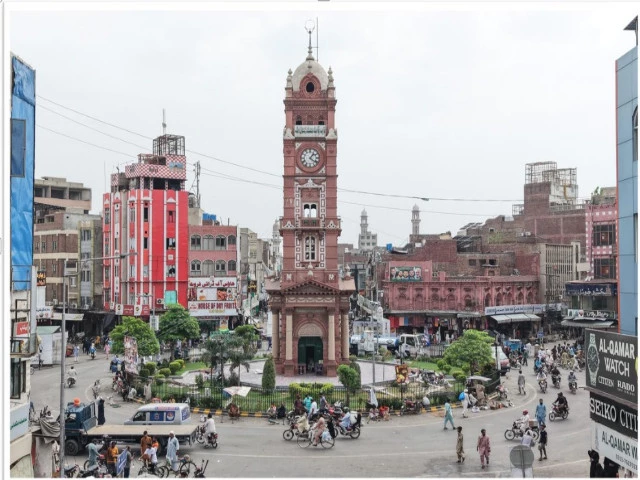
Heavy dust and industrial emissions have already begun affecting several areas along Faisalabad's Sargodha Road ahead of the November smog season.
Areas around Samana Bridge, Madina University, Bawa Chak Drain, Dawood Mills Stop and Yousaf Bus Stop and adjoining localities have been enveloped in dust and smoke from nearby industrial units, according to residents and environmentalists.
Private environmentalist and entrepreneur Sultan Ali Khan said the current Air Quality Index (AQI) in Faisalabad was around 132 to 160, categorised as unhealthy to unhealthy for sensitive groups, according to the Punjab AQI Dashboard and IQAir.
He said pollution levels could rise further during peak traffic hours and periods of low wind.
Khan advised children, older people and those with heart or respiratory conditions to avoid prolonged outdoor exertion during periods of high pollution. He also suggested that people spending extended periods outdoors consider wearing masks and keep windows closed when pollution levels were high.
Abdul Ghaffar, a retired WASA director and former resident of Gulshan-e-Madina Colony, recalled that residents had long faced the impact of soot and smoke in the area.
"Whenever we went to the nearby mosque, especially for Fajr prayers, our clothes would often become covered in soot. The smoke would mix with it and make them almost black," he said.
He said clothes washed and hung outside overnight could also become covered in a white layer before turning black, while floors inside homes were also affected by soot.
He said the pollution had become one of the reasons his family eventually shifted from the locality to FDA City, around four miles away.
Dr Naveed Ahmed, a physician at Allied Hospital, expressed concern over the reported increase in respiratory illnesses associated with deteriorating air quality.
He said industrial pollutants were contributing to respiratory, lung, kidney and ear, nose and throat (ENT) problems.
According to Dr Ahmed, between 5,000 and 6,000 patients visit the hospital's outpatient department daily, with nearly 60% reporting respiratory complaints.
Meanwhile, Environment Protection Department (EPD) Deputy Director Tahir Abbas Sayyal said several industrial and power-related units had been identified as "red zones" and action had been taken against those found violating environmental regulations.
He said the department had conducted inspections of roadside and power-related units and identified violations. The details of the inspections and violations would be shared, he added.
Sayyal said the department had also held a pre-consultative session with industrial units, advising them against using substandard fuel and directing them to adopt required pollution-control measures and keep their control systems operational.
The units were also instructed to provide the Environmental Protection Agency access to their CCTV systems so that compliance could be monitored when required, he said.
"We have taken proper action against them, and we have the relevant files and records," Sayyal said, adding that seven-day notices had been issued to units found with deficiencies.
Explaining the procedure, Sayyal said the notices informed units about deficiencies in their systems and directed them to rectify them. They were also asked to address any other environmental violations arising from their operations.
"If they fail to comply, we proceed towards imposing fines, registration of cases and FIRs, and ultimately demolition where legally applicable," he said.












This material may not be published, broadcast, rewritten, redistributed or derived from. Unless otherwise stated, all content is copyrighted © 2026 The Express Tribune.






COMMENTS
Comments are moderated and generally will be posted if they are on-topic and not abusive.
For more information, please see our Comments FAQ