A warrant is not a proof of political neutrality
Updated 8 hours ago

Vedas divide Hindu society into four varnas
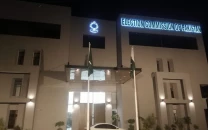
Two controversies are rocking India today. Both about software. One is about the Indian government's decision to allow payment processing companies and banks to charge a 0.4 percent Merchant Discount Rate (MDR) on Unified Payments Interface (UPI) transactions over INR 2000. And the second is about the centralisation of electoral rolls by the Election Commission of India through a software called ECInet.
The trigger of the second controversy was provided by The Indian Express journalist Ritika Chopra's brilliant expose. The Reporters' Collective has also done ace work on the matter. The gist of it is that the ECI is using software to lock out decentralised, local staff from the grid and making arbitrary changes to the electoral rolls. Goes without saying that the Muslim population has been disproportionately affected by the changes, which was also the crux of my September 12 piece, "Aap chronology samajhiye!" What interests me is what it all means. What if I told you that while minorities and Dalits are the ruling party's favourite whipping boys meant for amusement and votebank consolidation, they are not the targets? This emerging digital panopticon is meant to disenfranchise the real mark.
Ask yourself, how do you erase a majority? I will show you a half-century-long project to do just that, larger than the incumbent BJP government or the RSS.
A caveat for Pakistani readers: do not congratulate yourselves on being free from casteism. Prejudice changes nomenclature and hides in plain sight. When a member of the Indian elite says he does not believe in caste, he is not advocating for a casteless society or exogamy, but demanding you make peace with the status quo and not challenge their privilege. Caste prejudice is a daily reality in India. According to various human rights sources, Pratiloma (inter-caste) honour killings routinely exceed one thousand per annum.
The Vedas divide Hindu society into four varnas: Brahmins (priestly class), Kshatriyas (warriors and kings), Vaishyas (mercantile class) and Shudras (working class and artisans). The Vedas do not go out of their way to stigmatise the last category. That honour rests with another text called Manusmriti.
A fortnight ago I showed you how the ghost of RSS architect MS Golwalkar drives the ongoing SIR exercise and prejudiced citizenship laws today. The very same man hailed the author of Manusmriti as the "first and greatest lawgiver of the world," writing in his manifesto that the caste hierarchy is not a social flaw but a divine mandate: "Brahmin is the head, Kshatriya the hands, Vaishya the thighs and Shudra the feet... the Hindu People, is our God."
In his book Jyotipunj (2008), PM Modi canonises Golwalkar as his supreme ideological mentor, describing his life as "an unbroken yajna [ritual sacrifice]" for the nation. In Karmayog (2007), Modi rationalises the manual scavenging forced upon Dalit Valmikis as a divine duty rather than exploitation, writing it should continue as an "internal spiritual activity for centuries". A full-throated, fatalist endorsement of the varna system.
To grasp the scale of this hierarchy, consider the math established by Kanshi Ram, pioneer of India's lower-caste political awakening in the 1980s. He popularised the term Bahujan to define the oppressed castes as a collective 85 per cent of the country, identifying Shudras specifically as the single largest demographic majority at 52 per cent. Today, the Shudra population may exceed 60 per cent. Yet you hardly ever encounter the word Shudra in daily discourse. The reason is societal stigma and a deliberate state project of divide and rule. Power and resources remain controlled by the Brahmin-Bania alliance. Bania is a subset of the Vaishya varna. How do these upper castes control the overwhelming majority? By weaponising stigma, imposing sanitised secular labels, and endlessly splintering them.
The British referred to Shudras as the backward castes. Independent India rebranded them Other Backward Classes (OBCs). Then it linked the term to resources: certain Shudra communities were expelled for being affluent, while disadvantaged upper castes were slipped in. Modi's caste, Modh Ghanchi, belongs traditionally to the Vaishya varna, yet was included in the OBC category in 1994.
In 1990 the state finally implemented the Mandal Commission report, granting OBCs a 27 per cent reservation in public jobs and education. However, to prevent this demographic giant from ever consolidating, the Modi government weaponised the Rohini Commission in 2017 to sub-categorise the quota, fracturing collective Shudra identity by pitting thousands of sub-castes against one another for scraps.
That is not all. Through corrupt practices like paper leaks and the bureaucratic sleight of hand known as lateral entry, the Modi government leaves most OBC reserved seats unoccupied. Those already in the system are blocked by endless extensions granted to the upper-caste old guard.
To a marked community, visibility is a curse. To escape the Brahmin-Bania elite, the Shudra economy was historically cash-based and operated outside the formal banking system. Then came the Modi government with demonetisation and the siren song of the free JAM trinity: Jan Dhan bank accounts, Aadhaar biometric IDs, and Mobile connectivity.
Now that the informal bazaar is corralled inside the digital pen, the squeeze begins. The upcoming 0.4 per cent MDR on UPI transactions above INR 2000 is not a technical fee. It is a toll on the informal Shudra economy to be scaled up later. You trap them on a platform, extract their data, and charge them to access their own capital.
Amit Shah has the cunning of a municipal ward boss, but the strategic depth belongs to a technocratic vanguard in Bangalore. Collectives like iSPIRT engineered a digital panopticon disguised as public infrastructure.
The SIR exercise and ECInet may target Muslims and Dalits today to polarise the electorate, but the software is compiling a shadow ledger of the entire Shudra majority. By centralising voter rolls and gutting local oversight, the state ensures the 85 per cent can be partitioned, deleted, or managed at will.
After this come the supermajorities of 2029, engineered by cannibalising electoral rolls, delimitation boundaries and opposition parties. Then the secular constitution, along with all reservations, goes out the window and a Hindu Rashtra is proclaimed. Shudras should open the Manusmriti to see what this means for them. Under Manu, a Shudra raising a limb against a superior faced amputation, and coupling with a higher caste woman meant castration and execution.
If you are a Shudra reading this, you should know Muslims, Sikhs, Christians, Dalits and Adivasis are merely in the way. You are the real target.


1727268465-0/Untitled-design-(42)1727268465-0-208x130.webp "story")




This material may not be published, broadcast, rewritten, redistributed or derived from. Unless otherwise stated, all content is copyrighted © 2026 The Express Tribune.

COMMENTS (1)
Comments are moderated and generally will be posted if they are on-topic and not abusive.
For more information, please see our Comments FAQ