Vance acknowledges 'failures' in US handling of Iran war
Updated 2 hours ago

Declaration aims at reducing greenhouse gas emissions, providing funding to vulnerable states to strengthen resilience
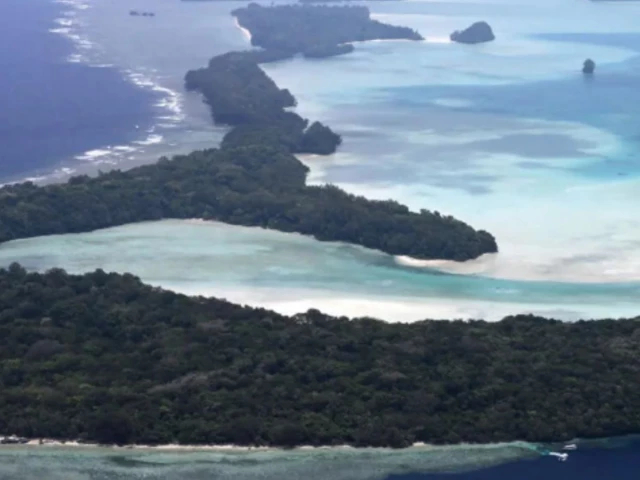
The United Nations on Thursday passed a unanimous resolution demanding stronger action on rising sea levels, an existential threat for low-lying island nations driven by ocean warming and melting ice sheets and glaciers.
In 2024, global sea levels rose by almost six millimetres, the largest annual increase ever recorded, and they are set to rise by a meter or more by the end of the century without drastic action.
"Sea-level rise is measured in millimetres, but its toll is measured in millions of shattered lives, uprooted communities, and stolen futures," Secretary-General Antonio Guterres said. "We cannot allow countries and cultures to vanish beneath the waves — or leave the aspirations of billions dead in the water."
The declaration is aimed at bringing new momentum to efforts to tackle the problem — reducing greenhouse gas emissions and providing funding to vulnerable countries to strengthen their resilience plans.
Read: Strong El Nino to intensify from August
Concretely, it resolves legal issues around what happens to nations when they start to vanish under the waves. It affirms that maritime zones remain in place even if coastlines recede, and that "once a State is established, the disappearance of one of its constituent elements would not necessarily entail the loss of its statehood."
"For States that are literally defined by the ocean around us, the impact of sea level rise will be life-altering," said Palau President Surangel Whipps Jr, speaking on behalf of the Alliance of Small Island States.
Small island states have been sounding the alarm since the 1989 Male Declaration on Global Warming and Sea Level Rise and helped develop international law on the issue, he continued, welcoming the declaration as "a genuine achievement."
Read More: Europe's hottest town says climate change is reshaping daily life
Even small increments of sea-level rise pose grave risks, explained Tom Mortlock, a senior catastrophe research analyst at Aon. One centimetre of sea-level rise translates to a metre of coastline retreat.
Projections show that flooding that might occur once every 50 years with sea levels as they are today could happen every three or four years if sea levels rise by half a metre.
Nature-based solutions like mangroves "can reduce coastal risk, but it can also get to the core problem we have for climate change which is carbon sequestration and carbon mitigation," said Mortlock.















This material may not be published, broadcast, rewritten, redistributed or derived from. Unless otherwise stated, all content is copyrighted © 2026 The Express Tribune.





1727268465-0/Untitled-design-(42)1727268465-0-208x130.webp "sisyphus in the land of saviours")
COMMENTS
Comments are moderated and generally will be posted if they are on-topic and not abusive.
For more information, please see our Comments FAQ