World leaders return to UN amid wars in Middle East and Ukraine
Updated 1 hour ago

Say group will respond forcefully if Pakistan and Turkiye intervene militarily alongside Saudi Arabia
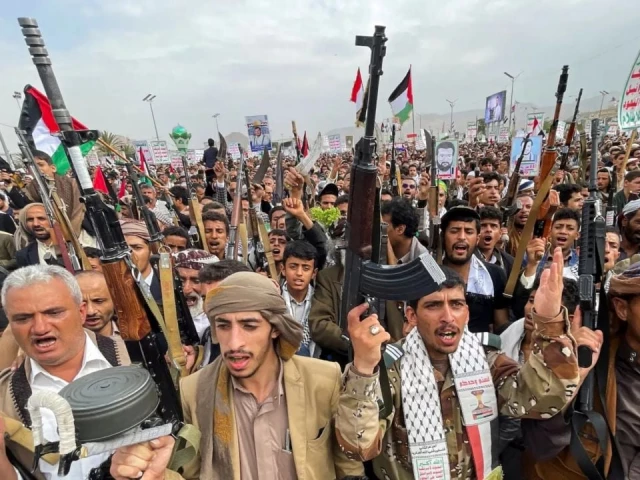
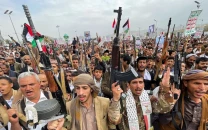
As tensions between Yemen’s Houthi rebels and Saudi Arabia mount amid renewed attacks, the group has issued a direct warning to Pakistan and Türkiye, threatening a “decisive and painful response” if either country intervened militarily alongside Saudi Arabia in Yemen.
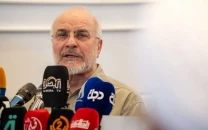
Mohammed al-Bukhaiti, a member of Ansar Allah’s political bureau and governor of Dhamar, made the remarks during an interview with the Iraqi television programme Another Reading.
“By God, if Türkiye and Pakistan become involved, we will strike them with an iron fist,” al-Bukhaiti said, adding that the Houthis would “teach” both countries a lesson if they joined what he described as Saudi aggression against Yemen.
A senior Houthi political figure has issued an unusually direct warning to Pakistan and Türkiye, threatening a “decisive and painful response” if either country intervenes militarily alongside Saudi Arabia in Yemen.
— BPI News (@BPINewsOrg) September 19, 2026
Mohammed al-Bukhaiti, a member of Ansar Allah’s political… pic.twitter.com/ZKTW3AjjjS
The warning comes as continued Houthi attacks on Saudi Arabia have placed growing attention on the Makkah Joint Defence Agreement between Saudi Arabia, Pakistan and Türkiye.
Al-Bukhaiti nevertheless acknowledged what he described as strong sympathy for Yemen among the Pakistani and Turkish populations, saying his warning was directed at their governments if they became militarily involved.
The Houthi warning has brought renewed focus on Pakistan’s position following the signing of the Pakistan-Saudi Arabia-Türkiye defence agreement earlier this year.
Signed by Türkiye, Pakistan and Saudi Arabia on August 7, the pact is based on the principles of shared responsibility and regional ownership amid growing regional and global instability. It aims to promote security, peace, stability and prosperity while strengthening collective deterrence.
Under the agreement, an attack against any one of the signatory states will be considered an attack against all parties.
The pact has assumed greater significance amid the renewed attacks between the Houthis and Saudi Arabia and growing concerns over possible military involvement by its signatories.
Türkiye signals support
The Houthi warning came as Turkish Foreign Minister Hakan Fidan said Saudi Arabia’s territorial integrity and sovereignty had come under serious attack and that Türkiye, bound by its alliance commitments, stood in solidarity with Riyadh.
“Saudi Arabia may need military-level support. As the Makkah Alliance, we will take this up with Pakistan and can provide the necessary technical support,” Fidan said.
He said Türkiye’s Foreign Ministry had condemned attacks on oil infrastructure near Makkah and that the alliance was closely monitoring the situation.
Fidan added that any military needs would likely centre on specific technical areas.
Yemen has been gripped by war since the Houthis seized the capital Sanaa in 2014, prompting a Saudi-led Arab coalition to intervene in 2015 in support of the internationally recognised Yemeni government.
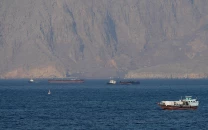
The group has been engaged in renewed fighting with government forces since July, when it declared a maritime blockade on Riyadh, and has recently claimed advances along the Red Sea coast and the Bab el-Mandeb Strait.
The Houthis have also targeted Saudi Arabia’s oil infrastructure, further raising concerns over oil prices in the international market.
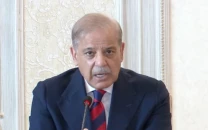
Pakistan has, from the outset, condemned the Houthi attacks on the Kingdom, describing them as a serious violation of Saudi Arabia’s sovereignty and territorial integrity while reaffirming its solidarity with Riyadh.
However, following the reported attack near Makkah, Islamabad adopted a more forceful stance, with its concerns also being voiced at the United Nations.
That increasingly forceful position was articulated by Defence Minister Khawaja Asif, who told a private television channel that Pakistan would defend Makkah and Madinah, calling their protection an “eternal agreement”.
“Their protection is our religious obligation. So yes, there are worldly agreements, and they have their sanctity, which we also honour, but if an attack takes place on the House of God or the place where the Prophet (PBUH) was born, then no Muslim sitting anywhere would ultimately need to wait for any agreement. This is our religious duty — to protect it,” he added.
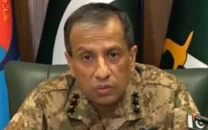
Later, Inter-Services Public Relations (ISPR) Director General Lt Gen Ahmed Sharif Chaudhry reinforced the position, reiterating Pakistan’s “unconditional” commitment to Saudi Arabia and saying the country would “go to any extent” required to ensure the security of the Haramain Sharifain and the Kingdom.
“Nothing stops us, nothing bars us, nothing is there which hesitates our commitment from going, so whatever is required, whatever is asked, we will go to any extent to that,” he said.







This material may not be published, broadcast, rewritten, redistributed or derived from. Unless otherwise stated, all content is copyrighted © 2026 The Express Tribune.

1727268465-0/Untitled-design-(42)1727268465-0-208x130.webp "the jirga industry s hidden tragedies")



COMMENTS (2)
Comments are moderated and generally will be posted if they are on-topic and not abusive.
For more information, please see our Comments FAQ