21 years on, quake victims still await promised homes
Updated 1 hour ago

Measures include 50% cut in official vehicle fuel allocations, restrictions on public events and reduced govt spending
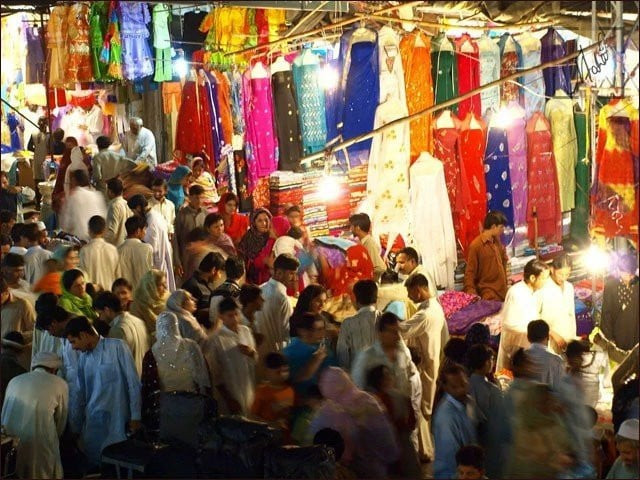
The federal government on Thursday reintroduced austerity and fuel conservation measures, tightening business operating hours and restricting public events while reducing fuel allocations for official vehicles by 50 per cent for three months.
Under the measures, notified with immediate effect, shops, markets, shopping malls, bazaars, departmental stores, grocery stores, general stores and kiryana shops will close by 9pm throughout the week, according to a notification issued by the Cabinet Division.
Marriage halls, marquees and other commercial venues hosting festive events will close by 10pm, while restaurants, cafés, eateries, food outlets and standalone fruit and vegetable shops will be allowed to operate until 11pm. Takeaway and home delivery services will remain exempt from the timing restrictions.
Pharmacies, medical and medical supplies stores, laboratories, clinics and hospitals have been exempted from the fixed operating hours. The exemption also covers standalone bakeries, tandoors, milk and dairy shops, fuel and CNG pumps, electric vehicle charging stations, gyms, sports facilities, sports and padel courts, IT companies and call centres.
The government has also restricted food served at marriage-related functions and events to a single dish, according to the notification.
The Federal Government has announced a series of fuel conservation and austerity measures, including a fifty percent reduction in the provision of fuel to official vehicles, with immediate effect@GovtofPakistan #News #RadioPakistan https://t.co/TKgPaNJ4dw
— Radio Pakistan (@RadioPakistan) September 17, 2026
Measures for government
According to the notification, fuel allocations for official vehicles will be reduced by 50 per cent for three months.
Operational vehicles of the armed forces, civil armed forces, law enforcement agencies, essential services and the Federal Board of Revenue have been exempted from the measure. However, the restriction will apply to vehicles used by the administrative and non-operational formations of these entities.
The fuel conservation measure will not apply to development projects, according to the notification.
The measures also include a five per cent monthly reduction in non-employee-related expenditure for the current financial year. The reduction will also apply to foreign missions and officers and officials belonging to any occupational group or service posted at these missions.
The government has also imposed a complete ban on the purchase of vehicles of all types. The procurement of durable goods has likewise been prohibited, except for information technology-related purchases. Both restrictions will not apply to development projects.
The notification also imposed a three-month ban on foreign visits and travel, including obligatory trips.
The restriction will not apply to scholarships offered by international development partners, training and courses arranged through the Economic Affairs Division or under institutional agreements with the Government of Pakistan, it stated.
In cases where foreign representation is considered compulsory or important, the relevant Pakistani ambassador or high commissioner will represent the country.
For unavoidable foreign travel, ministers, advisers, ministers of state, special assistants to the prime minister, parliamentarians and government functionaries will be required to travel only in economy class.
Government departments have also been directed to preferably hold meetings through teleconferencing, except for intra-city meetings.
The notification further prohibited all official seminars, training sessions and conferences “funded by the government”. Where such events are unavoidable, departments have been directed to use government-owned venues, including auditoriums, committee rooms and other official facilities.
The cabinet has also prohibited official dinners, except in the case of visiting foreign delegations.
Requests for exemptions from any of the austerity and fuel conservation measures may be considered on a case-by-case basis by the Committee for Monitoring and Implementation of Fuel Conservation and Additional Austerity Measures. The committee will submit its recommendations to the prime minister for approval.
The notification further clarified that exemptions granted by the committee would not require a separate exemption from the Austerity Committee constituted by the Finance Division from time to time.
Provincial and regional governments have also been advised to consider adopting similar austerity and fuel conservation measures.
Background
The latest austerity measures come against the backdrop of a fuel conservation drive launched by the federal government earlier this year as international energy prices surged amid escalating tensions in the Middle East. The war between the United States, Iran and Israel sent global energy prices up.
In March, the government introduced a broad package of energy conservation and cost-cutting measures aimed at reducing fuel consumption and containing pressure on the economy that were later extended up to June.
The drive included a 50% reduction in fuel allocations for government vehicles, grounding 60% of the official fleet, restrictions on foreign travel and a ban on the purchase of vehicles and several categories of equipment. The government also announced reductions in official expenditure and changes to working arrangements in the public sector.
On June 10, the government extended several austerity measures until June 30 and revised the closing time for standalone grocery and neighbourhood stores.
Nine days later, the government announced a sharp reduction in domestic petroleum prices following an improvement in regional conditions and a decline in international oil prices. The prime minister said the federal government had used savings generated through austerity measures, alongside development budget allocations, to help provide relief to consumers.
Then on June 21, the government formally withdrew most of the austerity measures. Full petrol allowances for officials were restored, and up to 60% of the government vehicle fleet was allowed to return to operation. However, restrictions on the operating hours of markets, shopping malls, wedding halls and restaurants remained in place.
Read more: Austerity drive leaves NA with vehicle headache
The government’s renewed austerity push now comes amid another sharp deterioration in the international fuel market. In a report published on September 15, The Express Tribune said the government was considering bringing back some of the earlier fuel conservation measures as renewed conflict and disruption to oil supply routes in the Middle East pushed up petroleum prices.
The renewed pressure coincided with a sharp increase in domestic petroleum prices.
Yesterday, the government, with the approval of the prime minister, also introduced a targeted fuel-relief scheme for motorcycles, rickshaws, Qingqi rickshaws and cars with engines of up to 800cc.





This material may not be published, broadcast, rewritten, redistributed or derived from. Unless otherwise stated, all content is copyrighted © 2026 The Express Tribune.








COMMENTS (5)
Comments are moderated and generally will be posted if they are on-topic and not abusive.
For more information, please see our Comments FAQ