Interpol helps net murder suspect
Updated 16 hours ago

Traditional rural homes offered natural response to South Punjab's harsh climate
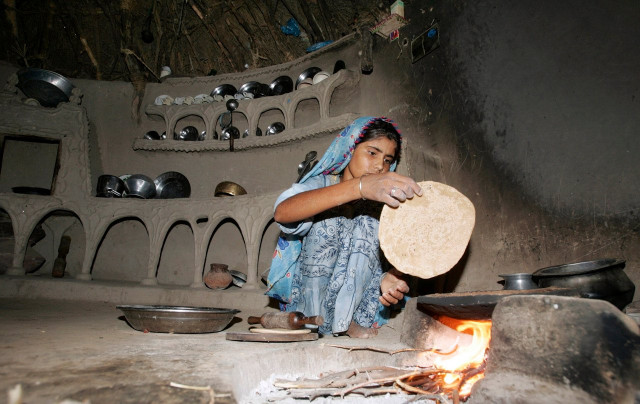
Traditional rural homes offered natural response to South Punjab's harsh climate.
Brick and concrete houses have steadily replaced the traditional mud structures in villages, with the skills, material and customs associated with their construction also disappearing.
Elderly residents recall a time when building a mud house was a familiar part of village life. Good-quality clay was collected and carefully prepared before being applied to walls. Women played an important role in maintaining and finishing the houses, particularly through the traditional practice of plastering and smoothing the clay walls.
But both the material and the people who knew the craft are now becoming difficult to find even in rural areas.
According to Muhammad Shafiq, a village elder of Syed Wali Khoi, mud houses required considerable effort to maintain, particularly before the rainy season every year.
The walls were polished with specially prepared clay cleaned and filtered to make a smooth mixture, he said, adding that the clay-coloured finish gave the houses a distinctive natural beauty.
The roofs also reflected the traditional knowledge of rural communities. Wooden beams and timber supports were commonly used. The roofs were also repaired and strengthened before the monsoon season. Traditional outlets and channels helped manage rainwater.
In many old houses, wooden roof beams can still be seen, carrying memories of a construction tradition that has largely disappeared.
The availability of suitable timber has declined as many trees have been cut over the years, while modern construction material has become easier and more practical for most families.
The mud house also offered a natural response to South Punjab's harsh climate. Its thick clay walls helped moderate indoor temperatures, keeping rooms cooler during the intense summer heat and warmer during cold periods.
The traditional house was, in many ways, built around the environment rather than separated from it.












This material may not be published, broadcast, rewritten, redistributed or derived from. Unless otherwise stated, all content is copyrighted © 2026 The Express Tribune.






COMMENTS
Comments are moderated and generally will be posted if they are on-topic and not abusive.
For more information, please see our Comments FAQ