PSX plunges nearly 1,965 points amid domestic political clamour
Updated 6 hours ago

Trade war with China mirrors 1980s currency manipulation that cost Japan a decade
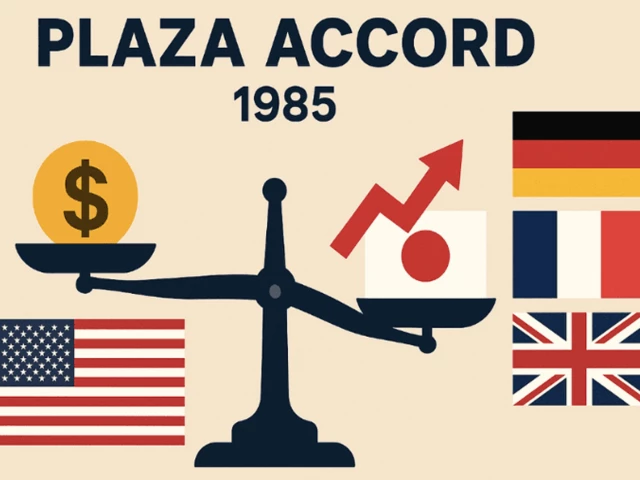
In the early 1980s, the Reagan Administration struggled to control the trade deficit without success. It kept rising, reaching around $123.5 billion in 1984. The administration sought a short-term solution and ignored inefficiencies in the economic, manufacturing and industrial sectors. It blamed the appreciation of the US dollar (43% appreciation) and the strong performance of trade partners, especially Japan. The US Treasury proposed manipulating the currency market and asked competitors to let their currencies appreciate. This led to the famous Plaza Accord.
The US emerged as a major beneficiary, but at Japan's expense. The yen's appreciation impacted Japanese competitiveness, compelling the government to pursue expansionary monetary and fiscal policies. These policies led to inflation and a real estate bubble. The bubble burst, resulting in a lost decade, and Japan's economy is still feeling the effects.
However, the US could not enjoy the benefits for long because of structural problems in manufacturing and policy priorities. Manufacturing continued to deteriorate because of low investment, inefficiencies and a low-quality labour force. To maximise profits, US companies began outsourcing manufacturing, worsening the situation. On the policy side, the US became obsessed with maintaining hegemony and started senseless wars. The US did not realise these actions damaged its image. Partners and opponents began to believe the US was not a trustworthy partner. Countries began to look for alternatives and diversify their relations.
Unfortunately, they had no alternative, dependable partner that could withstand US pressure and lead economic diversification with a strong technological base. Over the years, China emerged as a major economy, technological powerhouse, dependable partner and a country with resources to counter US pressure. The world began building partnerships with China; it now has 150-plus trade partners, 153 BRI members and 110 AIIB members. The US saw this as a threat to its interests, global position and dominance. The worsening trade deficit, mounting debt and loosening global ties strengthened the US's belief.
Instead of fixing its problems, the US began blaming China for its shortcomings. The US reopened the old playbook. President Trump launched a trade war against China during his first tenure. The Biden administration continued it, and President Trump intensified it in his second term. The trade war is worsening because China is not holding back either. It has adopted a tit-for-tat policy, retaliating with sanctions and tariffs. China has learned there is no end to American bullying until you retaliate. Last year, for the first time, China imposed regulations on rare earth metal trade and banned some categories, sending shockwaves across the tech industry.
The US-led trade war is creating problems and imposing costs on both countries, but to varying degrees. Data suggests China was able to weather the tariff hike. After the tariff hike in 2025, Chinese exports to the US declined by 28% from pre-2025 levels and 40% from the pre-2018 era. China sustained the shock because of its strong manufacturing base and broader trade partnerships. After the trade war, its exports grew by 25.8% to Africa, 13.4% to ASEAN and 8.4% to the EU. In 2025, it had a trade surplus of more than $1 trillion. Technology companies also weathered the shocks and are now becoming leading tech companies worldwide.
However, literature establishes that trade wars have badly impacted the US. The Federal Reserve Bank of New York and Columbia University found that US companies lost at least $1.7 trillion in stock value due to the first trade war. The average price of tariffed products increased by 10-30%. For the current trade war, prices are expected to rise for companies and consumers, increasing the tax burden on households. This assumption is based on initial results. The trade deficit decreased by only a fraction, from $903 billion to $901 billion. It has also increased the household tax burden by $840, which continues to increase. It did not trigger an investment boom. Farmers are struggling, and consumers are suffering.
Against this backdrop, President Xi is travelling to the US for the Xi-Trump Summit. The summit has raised both hope and fear. The hope is that both leaders will build bridges and pave the way for sustainable peace. The fear is that the summit will result in more walls and worsen the situation. Right now, fear outweighs hope because the US seems determined to continue these wars. Why? Because the US has convinced itself that China is rising at its expense and that the US is falling because of China. Moreover, the US wants China to support the US to maintain its status, invest in the US and provide financial support. In a nutshell, China must support the US on US terms.
This attitude is worsening the situation and is not sustainable. The world cannot afford the continuation of trade wars between the US and China, because any action has global implications. History shows that differences or wars are unsustainable and disastrous; only cooperation brings prosperity.
Cooperation is the only viable way forward. It would benefit both parties and the world. China can help the US solve its investment problems and revive the economy. China has huge financial resources because of its high savings rate, roughly 42% of national income, almost $8 trillion, double that of advanced countries. China's share of global savings has also increased from 5% in the 2000s to 27% in 2025. At the same time, cooperation would benefit China through US technological advancements, especially in chips, space, semiconductors and medicine.
China-US cooperation would bring global stability and support economic recovery. It will also help resolve conflicts and ensure sustainable peace.
Let's hope both leaders decide to build bridges, not walls. Bridges will bring peace, cooperative coexistence and prosperity, while walls will bring conflict and misery. China showed strong intent to build bridges during Trump's visit. The world hopes the US will reciprocate during Xi's visit. It will be a win-win for both countries and the world.
THE WRITER IS A POLITICAL ECONOMIST AND A VISITING RESEARCH FELLOW AT HEBEI UNIVERSITY, CHINA














This material may not be published, broadcast, rewritten, redistributed or derived from. Unless otherwise stated, all content is copyrighted © 2026 The Express Tribune.







1727268465-0/Untitled-design-(42)1727268465-0-208x130.webp "the poor man s burden")
COMMENTS
Comments are moderated and generally will be posted if they are on-topic and not abusive.
For more information, please see our Comments FAQ