Farooq's century puts MIT Solutions on top in President's Trophy
Updated 8 hours ago

Former leggie links Babar’s decline to power-hitting demands of T20 cricket
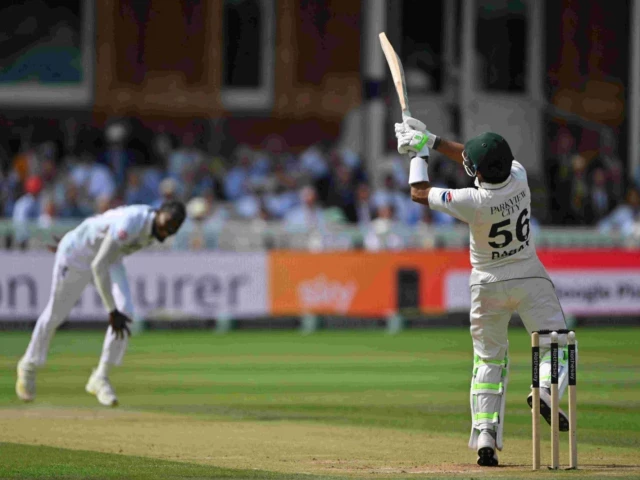
Former Pakistan Test leggie and Bangladesh spin-bowling coach Mushtaq Ahmed has identified the reasons behind Pakistan cricket’s current crisis and Babar Azam’s decline in form.
Mushtaq said Pakistan’s struggles were not the result of failure in one series or two Test matches, but stemmed from years of poor decisions, inconsistency in selection, frequent changes of captains and coaches, and the neglect of red-ball cricket.
He said consistency was essential for building a strong team. A player should know his role, batting position and what the management expects from him. Frequent changes, he added, affect a player’s confidence.
In an exclusive interview with Express News Cricket Corner Mushtaq said Pakistan had changed between eight and ten captains and almost as many coaches in recent years, preventing the team from developing stability.
Mushtaq said Bangladesh conducts regular research and planning around the World Test Championship. Coaches, selectors and other stakeholders work together to develop a long-term strategy.
“If two fast bowlers are injured, you should know who their replacements will be. If the spinners are out of form, you should know which player can replace them,” he said, adding that similar planning was required for batting and overall bench strength.
He said selection should take into account all possible scenarios, the strength of the bench and the abilities of individual players, but Pakistan was making such decisions too late.
The former spinner also expressed concern over the standard of spin bowling in Pakistan, saying there was currently no world-class spinner who appeared capable of setting major records for the country over a long period.
He said players such as Usama Mir, Shadab Khan and other spinners needed to be developed into consistent red-ball options.
On Babar Azam, Mushtaq said the experienced batter had produced notable performances over the previous three to four years, but suggested that his recent decline could be linked to white-ball cricket, particularly T20 cricket.
He said Babar's main strengths had traditionally been his technique, balance and conventional batting, but the emphasis on power hitting and clearing the boundaries in T20 cricket may have affected his technique.
“Babar needs to return to his basic strengths,” Mushtaq said.
Mushtaq said Babar looked closer to his old self when playing on good pitches and given the opportunity to play his natural game. However, he said the batter needed to shift gears according to the demands of Test and 50-over cricket.
“50-over cricket is, to some extent, like shortened Test cricket, while Test cricket tests your patience and defence even more,” he said.
Mushtaq believes spending more time playing red-ball cricket could benefit Babar, particularly by helping him understand when to defend, when to leave the ball and when to play scoring shots.
He cited Virat Kohli, Joe Root and Kane Williamson as examples of world-class batters who retained their basic techniques throughout their careers.
“Babar also needs to return to his original strengths,” he said.
Speaking about conditions in England, Mushtaq said the Dukes ball can swing and seam, making knowledge of the off-stump, the ability to leave the ball and confidence in defence particularly important.
Trying to drive every delivery, he warned, could prove costly.
He also identified frequent changes in Pakistan's batting order as a problem, pointing to Shan Masood and Salman Ali Agha as examples of players whose positions have changed.
A consistent batting position and clearly defined role, he said, would help players build confidence.















This material may not be published, broadcast, rewritten, redistributed or derived from. Unless otherwise stated, all content is copyrighted © 2026 The Express Tribune.




COMMENTS
Comments are moderated and generally will be posted if they are on-topic and not abusive.
For more information, please see our Comments FAQ