Unregistered shelter homes leave children beyond effective oversight
Updated 1 hour ago

Petition argues that measures are required to protect children's innocence and development
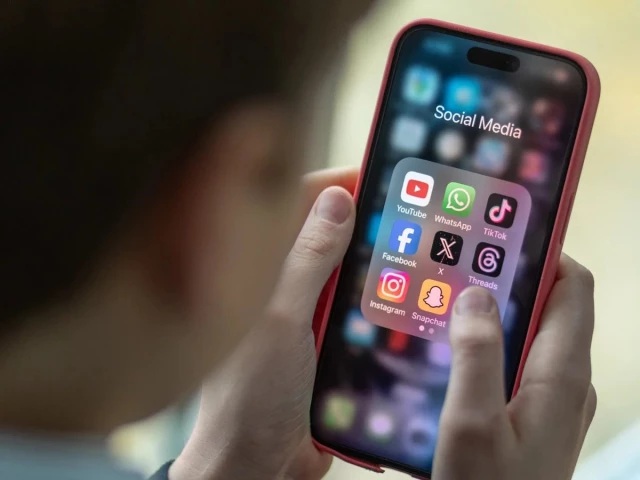
A plea was filed in the Federal Constitutional Court (FCC) seeking directions to the government to restrict social media access for children below 16 years of age, introduce a mandatory age-verification mechanism, and take measures to shield minors from cyberbullying, sexualised content, addiction, and other harmful material.
Last week, the Punjab Assembly unanimously passed a resolution recommending measures to restrict social media access for children under the age of 16 and ensure their safety in the digital environment. The resolution recommended measures to protect children from cyber harassment, online sexual exploitation and inappropriate content. It also called for an effective age-verification mechanism on social media platforms to identify underage users.
The plea sought directions to the Pakistan Electronic Media Regulatory Authority (PEMRA) to strictly enforce its Code of Conduct and prevent the airing of indecent scenes and depiction of alcohol in television dramas and advertisements during hours when children are likely to be watching.
Petitioners Sheraz Zaka, Supreme Court advocate, and Ch Moien Akhtar, High Court advocate — made the Federation of Pakistan, Ministry of Information Technology, National Cyber Crime Investigation Agency (NCCIA), PEMRA and the Social Media Protection Regulatory Authority respondents.
The petitioners asked the court to direct the federal government to legislate or amend the Prevention of Electronic Crimes Act (PECA), 2016, to impose restrictions on social media access for children under 16 and establish an effective age-verification system.
They contended that Pakistani law presently does not specifically provide for an under-16 restriction or mandatory age verification for social media platforms.
The petition pointed out that countries including Australia, Italy and Brazil had introduced restrictions on social media use by children under 16, arguing that such regulation was therefore feasible.
According to the plea, children were increasingly exposed to cyberbullying, social-media addiction, sexualised content and the glorification of alcohol, which the petitioners say could adversely affect their mental and moral development.
Read: Can Pakistan keep under-16s off social media?
They also alleged that PEMRA failed to effectively enforce its Code of Conduct concerning television advertisements and dramas, with some programmes allegedly depicting intimate scenes and alcohol consumption at times accessible to children.
The petitioners separately approached PEMRA, complaining about the alleged depiction of alcoholic drinks and intimate scenes involving young actors and actresses in certain drama serials.
The petition argued that the alleged inaction of the authorities violates Articles 9, 14, 25, 25-A and 35 of the Constitution, making the matter one of public importance involving enforcement of fundamental rights and protection of the future of Pakistani youth.
It also invoked the Convention on the Rights of the Child, arguing that measures are required to protect children's innocence and development.
The petitioners further highlighted Pakistan's large out-of-school population, stating that around 25 million children were out of school, and had asked the court to direct the authorities to ensure that children up to the age of 16 receive education and to take measures against the high number of out-of-school children and dropout rates.
Read More: Govt tightens social media rules for civil servants
The plea asked the court to direct the NCCIA and the Social Media Protection Regulatory Authority to coordinate with social media platforms and introduce effective parental-control mechanisms to protect children.
The petitioners also relied upon a Lahore High Court judgment, PLD 2020 Lahore 137, claiming that the court had issued directions to the state concerning legislation on human rights and social issues.
The petitioners have requested the FCC to issue any other appropriate orders necessary to protect minors from harmful social media and media content.
Read More: Punjab Assembly passes resolution to restrict social media access for children under 16
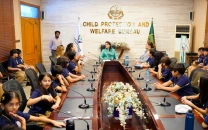
The resolution in the Punjab Assembly was moved by Punjab Child Protection and Welfare Bureau Chairperson and MPA Sarah Ahmed, and called for effective legislation to protect children under 16 and safeguard their digital future.
It further recommended that social media companies comply with child protection standards and that a coordinated mechanism be established among federal and provincial institutions for the online protection of children.
Countries around the globe, including China, the United Arab Emirates and Türkiye, have either instituted measures intended to curtail or bar access to social media for young people, or have said they were planning to do so.
Last month, France's top court blocked a bill banning social media access for under-15s, saying it infringed upon freedom of expression and delivering a setback for President Emmanuel Macron, who asked his government to rewrite the legislation.
Australia in December became the world's first country to ban social media for children under 16, blocking them from platforms including TikTok, YouTube and Meta's Instagram and Facebook.
Also Read: France's top court blocks social media ban for under-15s
The European Union said it was planning to seek stronger protections for children from harmful social media features.
However, social media companies generally oppose blanket bans, saying they have measures already in place to protect younger users, including age restrictions, though they have also said they would comply with government bans. Google, Meta, Snap and TikTok did not immediately respond to requests for comment.
Social media platforms including TikTok, Facebook and Snapchat say people need to be at least 13 to sign up.
Child protection advocates say the controls are insufficient, and official data in several European countries shows huge numbers of children under 13 have social media accounts.









This material may not be published, broadcast, rewritten, redistributed or derived from. Unless otherwise stated, all content is copyrighted © 2026 The Express Tribune.





COMMENTS
Comments are moderated and generally will be posted if they are on-topic and not abusive.
For more information, please see our Comments FAQ