PSX slides over 1,500 points as geopolitical tensions rattle investors
Updated 10 hours ago

Former PAAPAM chairman asks why tax breaks for rich while millions bear adjustment costs
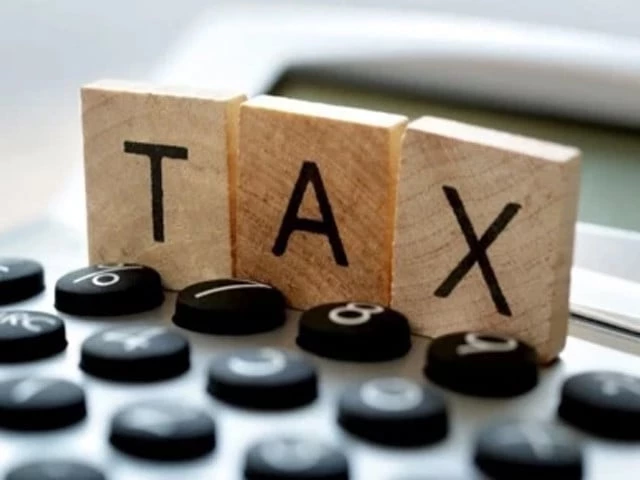
A committee of the Ministry of Industries and Production has suggested reducing sales tax on luxury vehicles after reviewing the automotive and auto parts manufacturing policy.
The Auto Parts Export Council (APEC), chaired by the Minister of Industries and Production and comprising the Secretary Industries, Secretary Commerce, Chairman of the Trade Development Authority of Pakistan (TDAP), CEO of the Engineering Development Board (EDB) and three industry representatives, reviewed the policy.
"The tax relief was recommended on luxury vehicles costing more than Rs10 million. This is just to benefit a few buyers in the high-end segment," said Abdul Rehman, former chairman of the Pakistan Association of Automotive Parts and Accessories Manufacturers (PAAPAM), adding that this would hurt the competitiveness of local production.
Rehman asked why this favour is being extended to the luxury segments at a time when the country remains under an International Monetary Fund (IMF) programme that has demanded difficult sacrifices from the wider population. "This has also raised questions over the priorities of the policymakers whether scarce fiscal space should be used to reduce the tax burden on luxury vehicles when millions of Pakistanis continue to absorb the cost of economic adjustment," he added.
Pakistan has been implementing tough economic reforms under its IMF programme. Reducing sales tax on hybrid and plug-in hybrid vehicles raises a fundamental policy question, Rehman said. The Finance Bill 2026 increased sales tax on hybrid and plug-in hybrid vehicles to 25% as part of efforts to strengthen revenues and meet fiscal commitments.
Rehman reasoned that luxury vehicles are well beyond the reach of most Pakistanis. This step by the Ministry of Industries and Production creates the perception that while ordinary citizens continue to shoulder higher taxes, inflation and reduced government support, tax relief is being extended to buyers of luxury vehicles.
It is pertinent to mention here that a locally manufactured Suzuki Alto, priced at around Rs3 million, carries approximately Rs550,000 in sales tax, federal excise duty and the New Energy Vehicle levy. In comparison, a Range Extended Electric Vehicle priced at nearly Rs10 million reportedly attracts sales tax of around Rs100,000, with no federal excise duty or NEV levy. "Such disparity has raised questions about whether government incentives are being distributed fairly. Vehicles such as Alto and Cultus serve as basic mobility options for middle-income families, yet receive no meaningful tax relief," Rehman added.












This material may not be published, broadcast, rewritten, redistributed or derived from. Unless otherwise stated, all content is copyrighted © 2026 The Express Tribune.









COMMENTS (2)
Comments are moderated and generally will be posted if they are on-topic and not abusive.
For more information, please see our Comments FAQ