Sindh lab declares six medicines counterfeit
Updated 20 minutes ago

IBCC moves to replace rote learning with conceptual assessment
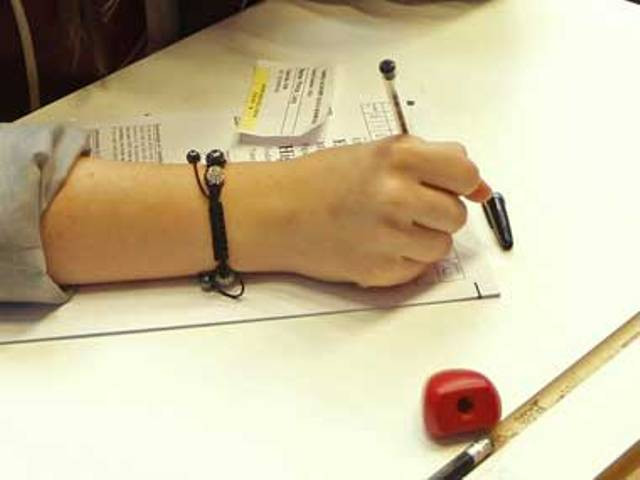
The Inter Board Committee of Chairmen (IBCC) has approved major reforms to the country's examination system, including setting the minimum passing marks at 40% under a new grading policy and shifting assessment from rote learning towards understanding and conceptual evaluation.
The decisions were taken at the 184th IBCC Forum, which also approved measures to bring uniformity to examination and assessment systems across the country.
It was further decided that B-Form or Computerised National Identity Card (CNIC) numbers would be included on matriculation and intermediate certificates.
Under the new grading policy, the minimum passing marks have been set at 40%. Implementation of the new grading policy has already begun in the Sindh, Federal, Mirpur Azad Kashmir, Karakoram, the Aga Khan University Examination Board (AKU-EB) and the Ziauddin University Examination Board (ZUEB).
The IBCC also decided to include B-Form or CNIC numbers on matriculation and intermediate certificates.
The committee will provide scholarships and overseas educational opportunities to position holders of boards affiliated with the IBCC. It was also decided that winter and summer camps would be organised for outstanding students.
The forum recommended granting equivalence to the certificates of 12 more religious seminaries with Secondary School Certificate (SSC) and Higher Secondary School Certificate (HSSC) qualifications.
Following the recommendation, the number of religious seminaries whose equivalent certificates are recognised under the IBCC framework has risen to 26.
In an important facilitation for students of foreign examination boards, the forum decided to grant science-group equivalence to students of foreign boards who have passed two science subjects, easing the existing rules for science-group equivalence.
The forum also agreed to prepare a uniform calendar for theory and practical examinations across the country. It further decided to formulate common guidelines and procedures for conducting practical examinations.
IBCC Executive Director Dr Ghulam Ali Mallah said emphasis had been placed on promoting e-marking to ensure transparency in the examination system.
He said the appointment of board chairpersons in Punjab on merit was commendable, while the introduction of e-marking in Sindh's educational boards was an important development.







This material may not be published, broadcast, rewritten, redistributed or derived from. Unless otherwise stated, all content is copyrighted © 2026 The Express Tribune.







1727268465-0/Untitled-design-(42)1727268465-0-208x130.webp "the reverse renaissance")

COMMENTS
Comments are moderated and generally will be posted if they are on-topic and not abusive.
For more information, please see our Comments FAQ