'Crazy Rich Asians' is coming to HBO as a new eight-episode drama series
Updated 3 hours ago

Gyllenhaal also raised concerns about AI’s environmental cost and warned filmmakers could face financial pressure
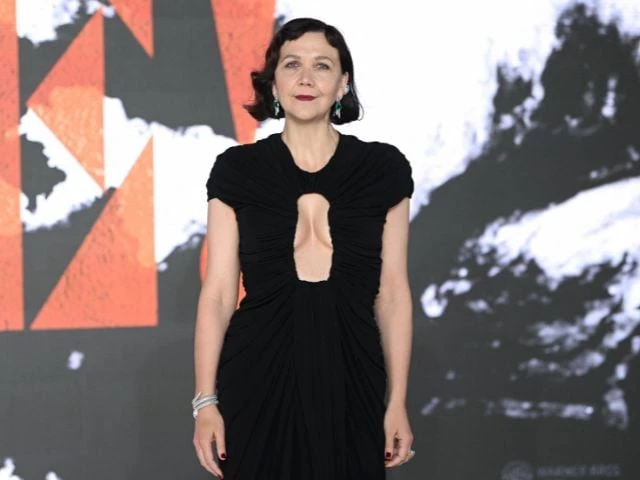
Maggie Gyllenhaal has revealed that she experimented with artificial intelligence while making her short film Flesh Impact, using the technology to transform Dakota Johnson into Marilyn Monroe before ultimately abandoning the experiment.
Gyllenhaal, who is serving as jury president at the 83rd Venice International Film Festival, discussed the decision during a symposium on the Lido. The filmmaker explained that the project’s commissioners had asked her to explore AI, using licensable technology trained on licensed Marilyn Monroe films.
The short film features Johnson portraying Monroe, including flashbacks to the actress in her 30s, while the story also presents Monroe at the age of 100. Gyllenhaal initially agreed to test the technology out of curiosity, despite being uncertain about how well it would work.
“And I thought, I mean, they weren’t using OpenAI, they were using licensable AI, training it off of Marilyn Monroe films that we had licensed,” Gyllenhaal said during the discussion. “And I went for it. I was like, all right, I’m curious, I don’t know, let’s see.”
The experiment involved training the system on Monroe’s likeness and then placing the resulting face over Johnson’s. According to Gyllenhaal, the technical process was carried out extensively, but the finished result failed to capture what she considered the most important element of Johnson’s performance.
“The idea was that we trained it on her, we then put her face on Dakota’s face,” she explained. Gyllenhaal said she eventually discarded the AI version because Johnson’s own performance felt “so much more moving, human, alive”.
She added that the experiment failed on a fundamental creative level, saying, “It fundamentally did not work.” For Gyllenhaal, the AI version removed the qualities that had motivated her to make the project in the first place.
The filmmaker also used the discussion to raise wider concerns about the consequences of increasingly widespread AI use in the film industry. Among those concerns were the environmental costs associated with the data centres required to power AI systems. She pointed to ongoing discussions around data centres in South Memphis as an example of the issues surrounding the technology.
Gyllenhaal also referenced computer scientist Geoffrey Hinton, who has become one of the most prominent voices warning about the potential risks of artificial intelligence. She recalled Hinton’s suggestion that AI could be programmed with a maternal instinct, describing the idea as fascinating while questioning what such a concept would mean in practice.
The director also expressed scepticism about claims that AI will democratise filmmaking by dramatically reducing production costs. She argued that the companies promoting those claims are also positioned to benefit financially from the technology.
Gyllenhaal recalled being told that a film costing $40m could eventually be made for $4m through AI, with costs potentially falling to $40,000. While such reductions could appear to open filmmaking to people with fewer resources, she warned that cheaper production could also undermine opportunities for filmmakers working through traditional methods.
Her concern centres on what happens when commercially viable films can be produced for a fraction of their current budgets. If studios can make an adequate commercial film for $4m or even $40,000, she argued, there could be little incentive to finance a $10m production using conventional filmmaking methods.















This material may not be published, broadcast, rewritten, redistributed or derived from. Unless otherwise stated, all content is copyrighted © 2026 The Express Tribune.






COMMENTS
Comments are moderated and generally will be posted if they are on-topic and not abusive.
For more information, please see our Comments FAQ