Naqvi says govt exhausted efforts to secure K-P's cooperation on terrorism
Updated 3 hours ago

Civil service reforms near final shape
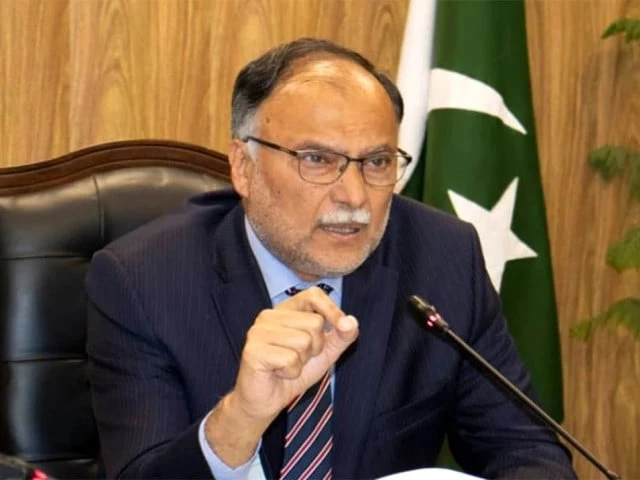
The civil service reforms committee has finalised recommendations to overhaul Pakistan's ailing bureaucracy but the disagreement still persists on some core issues of specialised recruitment, option to attempt competitive examination in Urdu and a National Executive Service.
After two years of work, the Ahsan Iqbal led-committee has developed a consensus on 43 recommendations for Prime Minister Shehbaz Sharif but the four key issues that are said to be the reasons for poor quality of bureaucracy and consequent poor service delivery remain undecided.
The details showed that there was a consensus within the 13-member committee on reducing administrative tiers from five to three by abolishing posts of section officer, joint secretary and special secretary.
There has also been consensus on removing barriers between federal and provincial service after Grade 21, making it possible for officers to enter a collective pool once they have attained grade-21.
The committee's working suggested that the cost of implementation of civil service reforms is Rs3 billion to 11 billion, depending upon the final recommendation that Prime Minister Shehbaz Sharif will approve once the file reaches his desk.
The government saw the need for bringing reforms in bureaucracy because of its lack of domain knowledge and expertise, mismatch in qualification and selection, poor link between performance and career progression, lack of new management knowledge, data and digital experience, slow decision-making process, weak implementation capacity and poor leadership skills.
The committee observed that the current civil service model is rooted in a colonial legacy and was last modified in 1973, which is hierarchical bureaucracy focused.
In September 2024, the prime minister constituted the committee on Civil Service Reforms under the chairmanship of the planning minister. But in July last year, the prime minister established a second committee for further deliberations of recommendations of the first committee.
The second committee's third meeting was held in February this year and Consensus was reached on 43 out of 46 recommendations.
However, officials said that the core recommendations that could address the mismatch between the quality of new bureaucrats and the needs and address the chronic issue of generalist bureaucrats versus the specialised ones remained undecided.
There was no consensus on the implementation of specialised recruitment through either cluster-based examination or separate exam for each occupational group through CSS examinations.
Three out of the 10 members have divergent views who are of the opinion that cluster-based exams will drastically reduce the pool of candidates. It would create a double burden on candidates as they will have to take multiple exams.
These three members want to keep a generalist foundation early, then channel officers into clusters for deep specialisation measured by skills and not just degrees, while preserving some mobility so that officers maintain range.
The second area of disagreement was the language. The majority of the members have proposed that the option of English or Urdu may be introduced for CSS initially for essay, precis & composition, Islamiyat, Pakistan studies and current affairs.
The committee observed that a five-year report of FPSC highlighted the highest failure rates among compulsory subjects in English essay and Pakistan studies. In 2022, an alarming 99% of candidates failed in both subjects. Rhode scholar, now Gates scholar failed to pass English.
However, some of the members are of the view that introducing Urdu as a compulsory subject is not viable as most of the subjects taught in Pakistan are in English. Introducing Urdu as a subject would act as a deterrent to recruiting good human resource educated people at high-quality schools, according to some members of the committee.
They have recommended that the exam of English may be replaced with SAT/GRE style exam which covers comprehension, English literacy and ability to express complex concepts through clear expression.
To reduce the failure rate, the committee's members proposed that the papers of essay and precis and composition should be combined and passing marks threshold may be reduced to 40 from 50 and views-based topics may be avoided by paper setters.
The committee members also have divergent views on the introduction of the National Executive Service, which has been recommended by various committees since 2014 as a solution to generalist top bureaucrats.
Some members suggested that post-based specialised recruitment for grade 20 and above positions of all services at federal level, excluding Police and Foreign Service, through an open and contract-based appointment should be introduced against predetermined indicators for a period of five years.
All candidates from private sector, academia, and government should be eligible to compete and percentage of existing positions for NES will be decided by the prime minister. The remaining positions will be filled through promotion on the basis of performance in training and work. Officers who are superseded twice will be retired at the service of 25 year with all entitled perks.
But according to those members who are opposing it, establishment of NES would create a disparity within existing civil service where officers serving at similar positions will be given different compensation. Besides, it will be unfair as it would reward inexperience over decades of experience in the government sector.
With the establishment of NES and open and contract-based appointments, there is no guarantee of better performance and a higher risk of politicisation of such a service, according to the divergent views.
Instead of NES, technical professionals may be inducted in PAS in 4-5 domains such as: Energy, Finance, Social development, IT & Science, Trade and Industry, according to the minority views.
Agreed recommendations
The committee agreed that unfilled quota seats for Balochistan, Sindh, minorities and women through additional attempts may be introduced. It has also agreed that like in the military, selection for promotion course candidates should be through an exam-based competitive process with up to three attempts to qualify.
Officers who do not qualify after three attempts may be given the option of early retirement. Training methodology, quality of instructors and curriculum may be enhanced. Fifty per cent duration of training reserved for domain-specific knowledge.
Also, in each grade from BS-17 to BS-20, officers may be required to complete two domain-specific short courses developed by their respective Specialised Training Institutes.
As same in the military, it has been recommended to appoint top three performers in these three promotion courses at training institutions with additional financial benefits and career progression for at least one year.
It was also decided that a domain-specific component of four weeks may be added to the senior management course, whereas the common component may be reduced to 12 weeks. The duration of the national management course may be reduced from 18 to 10 weeks.
It has also been proposed to provide scholarships for officers who secure admission in world top-25 universities and provide executive leadership training at top best international institutes to top performing senior leadership with 10 years remaining service.
It was also decided that the promotion board may evaluate the performance of officers well before board meetings. Board may interact with reporting and countersigning officers of each officer. Feedback may be included in PER of reporting and counter signing officers if their assessment is grossly deviant from an officer's overall career performance.
The second option is that boards should instead be provided with structured data summaries compiled from existing performance records, ACRs, and other available documentation.
Compensation
It has been recommended to expand welfare benefits and index compensation by introducing inflation-indexed annual pay raises, housing support, government-backed car loans and education grants, particularly to promote female education.






This material may not be published, broadcast, rewritten, redistributed or derived from. Unless otherwise stated, all content is copyrighted © 2026 The Express Tribune.




COMMENTS (6)
Comments are moderated and generally will be posted if they are on-topic and not abusive.
For more information, please see our Comments FAQ