Ousted UK PM Starmer quits parliament to focus on international affairs
Updated 1 hour ago

Two tankers carrying Saudi oil attacked in Strait of Hormuz
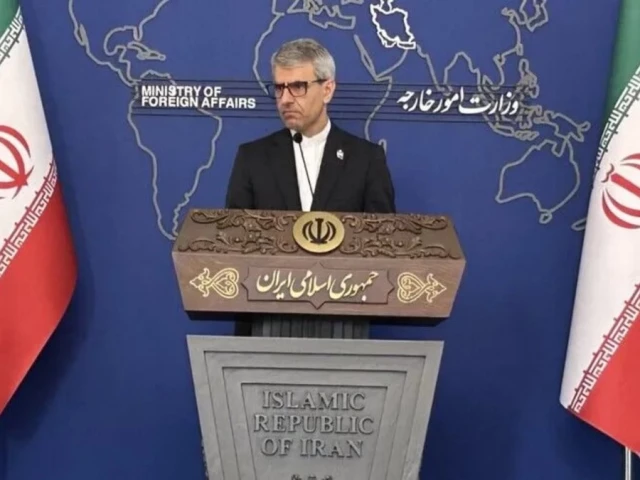
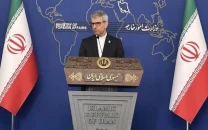
Iran on Tuesday accused the US of mistaking negotiations for dictation, saying such an approach would not work with Tehran, as tensions between the two countries remained high.
“The Americans have mistaken the concept of negotiation for dictation, something that will definitely not work with Iran,” Foreign Ministry spokesman Esmaeil Baghaei told a news conference.
Baghaei accused Washington of acting in “bad faith” and being confused over its approach toward Iran, arguing that the US had become trapped in what he described as a strategic mistake. “As long as they act in this manner, they will certainly achieve no result other than what they have obtained so far,” he said.
اسماعیل بقایی، سخنگوی وزارت خارجه جمهوری اسلامی، با انتقاد از رویکرد آمریکا در مذاکرات گفت: «آمریکا مفهوم مذاکرات را با دیکتهکردن اشتباه گرفته.» او گفت: «نیروهای مسلح ما هیچ تعرضی را بیپاسخ نخواهند گذاشت.» pic.twitter.com/JwP1ekPIhN
— ايران اينترنشنال (@IranIntl) September 1, 2026
Referring to a recent US attack on Iran’s Kharg Island, Baghaei said Washington had repeatedly carried out what Tehran considers acts of aggression and warned that Iranian forces would respond to any further attack.
He also accused the US of violating the Islamabad Memorandum of Understanding, saying the agreement had been signed at the highest level by US President Donald Trump.
“The signature of the US president was on the Islamabad memorandum of understanding,” Baghaei said, adding that Washington had accepted commitments under the agreement but decided to violate them around three weeks after it was signed.
He said Tehran would decide how to proceed with the agreement based on developments, while accusing Washington of continuing sanctions and its naval blockade and intensifying what he called an “economic war” against Iran.
Baghaei, however, said Iran would continue to use diplomacy whenever necessary to protect its national interests.
“We will certainly, taking all aspects into consideration, use the capabilities and tools of diplomacy wherever necessary, both to explain our positions and to secure and uphold the rights of the Iranian people,” he said.
He also said Iran remained in routine contact with the International Atomic Energy Agency (IAEA), but denied that any new negotiations were underway between Tehran and the UN nuclear watchdog.
“Our mission to the International Atomic Energy Agency in Vienna holds discussions with the relevant parties at the agency whenever necessary,” he said. “But if by negotiations you mean a new development between Iran and the agency, there is no such thing.”
Iran's FM Spox. Esmail Baghaei on the US:
— Clash Report (@clashreport) September 1, 2026
They are accustomed to making excessive demands and have mistaken negotiation for dictating terms. pic.twitter.com/LRoQtRuLzb
Baghaei reiterated Tehran’s position that there was no nuclear activity at the Kuh-e Kolang (Pickaxe Mountain) site, after IAEA Director General Rafael Grossi recently said there was no solid evidence supporting allegations about nuclear activities at the location.
The spokesman also criticised what he called contradictory and politically motivated statements by IAEA officials, urging the agency to act in accordance with its mandate and avoid issues influenced by the political positions of member states.
Baghaei said Grossi’s latest remarks were consistent with Tehran’s longstanding position that no nuclear activity was taking place at the site.
Two tankers carrying Saudi oil attacked in Strait of Hormuz
Two supertankers carrying Saudi oil were struck by unknown projectiles within minutes of each other while transiting outbound through the Strait of Hormuz late on Monday, according to shipping intelligence and tracking firms Marisks and Kpler.
"The near-simultaneous incidents represent a further escalation in the threat environment within the Omani corridor," Marisks said.
The tankers each loaded 2 million barrels of Saudi crude at the Juaymah terminal last week, Kpler data showed. Saudi Aramco resumed oil loadings and sales from inside the strait in August.
Iranian and US blockades of the Strait of Hormuz have sharply curbed energy exports from the Gulf as both sides tried to assert their authority over the waterway.
Efforts by mediators including Qatar and Oman to broker a deal to reopen the strait, which carried about a fifth of global oil supplies before the US and Israel launched strikes on Iran more than six months ago, have so far proven inconclusive.
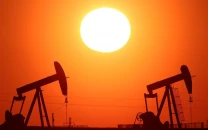
Oil prices gained on Tuesday after US President Donald Trump threatened further strikes against Iran, following the first exchanges of fire since late July.
In the latest attacks on shipping, the Saudi Arabian-flagged very large crude carrier Sidr was struck by unknown projectiles about 16.6 nautical miles northeast of Khasab, Oman at about 12:52am PKT, Marisks said.
Minutes later, the Liberian-flagged VLCC Senegal Prosperity was reportedly struck by three unknown projectiles approximately 17 nautical miles east of Khasab, Marisks said. All crew aboard were reported safe, it added.
The United Kingdom Maritime Trade Operations agency reported three projectiles striking a tanker in the same location as it sailed out of the Strait of Hormuz, in what appeared to be the same incident.
Bahri, operator of Sidr, and Sinokor, operator of Senegal Prosperity, did not immediately respond to requests for comment.
Earlier on Tuesday, Iranian media reported that a Saudi oil tanker was stopped while transiting through the southern corridor of the Strait of Hormuz.
EU’s Kallas says Hormuz diplomatic efforts have produced ‘no results’
EU foreign policy chief Kaja Kallas said on Tuesday that diplomatic efforts over the Strait of Hormuz are continuing but have so far failed to produce a breakthrough, Al Jazeera reported.
“The freedom of navigation needs to be respected. The diplomatic efforts are still ongoing, but no results at the moment,” Kallas said ahead of an informal meeting of EU defence ministers in Wicklow, Ireland.
“For us it is important that there are no tolls, no fees for these routes that have been open before.”
Kallas said ministers would also discuss a possible European mission to support the Lebanese armed forces.
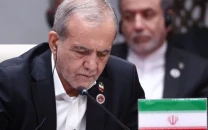
If US returns to MoU commitments, Iran will immediately reciprocate: Pezeshkian
Iran will immediately reciprocate if the US returns to its commitments under an interim deal signed in June, Iranian President Masoud Pezeshkian said on Tuesday, the Iranian Student News Agency reported.
He made his comments at the Shanghai Cooperation Organisation Summit in Bishkek after the first exchange of direct attacks in the US-Iran conflict since late July, with the US striking Larak Island and Iran then launching attacks on two US air bases in Jordan.
“I am stating clearly that if the US returns to its commitments under the Memorandum of Understanding, the Islamic Republic of Iran will immediately reciprocate," Pezeshkian was quoted as saying by state media.
He was referring to an interim deal signed in June between Tehran and Washington in efforts to end the war, which started with US and Israeli strikes on Iran on February 28. The deal quickly unravelled amid disagreements over its implementation.
Tehran has repeatedly said it will allow free navigation through the Strait of Hormuz, a vital waterway for global oil supplies, only if Washington implements the terms of the agreement.
Tehran has enough foreign currency, Iran central bank chief tells Trump
Iran has sufficient foreign currency despite intensified US sanctions and economic pressure, Central Bank Governor Abdolnasser Hemmati said on Tuesday.
Hemmati said: “I am telling the president of the United States:Iran has foreign currency, and it has enough.”
Speaking at a conference in Tehran, Hemmati said the central bank was ready to inject $2 billion into the foreign exchange market, according to the semi-official Tasnim News Agency.
Rejecting US claims of an economic collapse, he said Iran continues to collect foreign currency revenues and receivables and has domestic reserves and other resources whose details he said cannot be disclosed.
Hemmati said Iran’s economic system continues to function despite new sanctions, while attributing the rial’s recent depreciation largely to what he called psychological factors.
He rejected suggestions that Iran had entered hyperinflation, saying the likelihood remains low despite high inflation and extensive economic pressure.
Hemmati acknowledged that unemployment had risen due to the war and damage to some infrastructure, adding that small and medium-sized businesses would be prioritised for financing in the second half of the Iranian year.
The remarks came as the Iranian rial faces renewed pressure against the US dollar amid intensified US sanctions and the economic repercussions of the US-Israeli war.
Read: US to respond to Iranian attacks on forces in Middle East: Trump
“Do not test” the resolve of Iran’s armed forces again, the statement added.
US weighs limited strikes on Iran to curb missile, radar rebuild in Hormuz: report
The US is weighing limited military strikes in the Strait of Hormuz to stop Iran from rebuilding radar and missile systems used to threaten shipping, Axios reported on Monday.
Citing three American officials, Axios reported that US Central Command drafted the plan over the past week and that Defence Secretary Pete Hegseth backed it.
The plan had not received presidential approval before this weekend's exchange of fire with Iran, but officials said that could change following the latest escalation, according to the report.
One official said the objective was to reduce the risk of Iranian attacks on oil tankers, US Navy ships and Air Force aircraft, describing the approach as an effort "to mow the lawn."
"The President retains all options at his disposal. The Iranians want to make a deal, but they are always a day late and a dollar short," a White House official told Axios.
Officials cited a recent incident in which an Iranian anti-aircraft missile was fired toward a US F-35 escorting ships in the strait as raising concerns over Iran's military capacity.
Read more: Iran war depletes US military stockpiles, limiting global deterrence: report
They said Sunday's Iranian missile attacks on US bases in Jordan, following a US strike on Iranian troops, could affect US President Donald Trump's decision.
Trump, meanwhile, told Fox News that the US would "hit them hard" in response.
3 projectiles struck tanker exiting Strait of Hormuz off Oman: UK maritime agency
The UK Maritime Trade Operations (UKMTO) said early on Tuesday that a tanker had been struck by three unknown projectiles while exiting the Strait of Hormuz off Oman.
The incident took place 17 nautical miles (31 kilometers/20 miles) east of Khasab as the vessel was completing an outbound transit of the strait, the UKMTO said.
No casualties or environmental impact were reported.
Authorities are investigating the incident, while the UKMTO advised vessels in the area to transit with caution and report any suspicious activity.
Iran says EU ‘surrendering sovereignty’ by backing US sanctions
Iran accused the European Union early Tuesday of abandoning its legal and political independence by siding with Washington on sanctions against Tehran.
Foreign Ministry spokesperson Esmaeil Baghaei said the bloc appears to be “surrendering its sovereignty, its laws and regulations, its values, and its ethics to American coercion.”
Writing on US social media platform X, Baghaei pointed to the EU’s own Blocking Statute, which seeks to protect European businesses from the extraterritorial application of certain foreign sanctions.
He questioned how Brussels could back unilateral US measures against Iran while maintaining legislation that rejects such extraterritorial restrictions.
Baghaei said the EU had taken a markedly different position in 1996, when it adopted the Blocking Statute in response to US sanctions.
“Today it has become an accessory to Washington’s lawless conduct,” he said.
He also warned that EU member states could bear responsibility for the consequences of supporting US economic measures against Iran.
Baghaei said backing Washington’s pressure campaign while calling for de-escalation and regional stability are “mutually exclusive” positions.
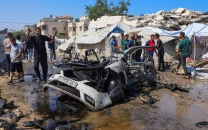
His remarks came amid renewed regional tensions following Sunday US strikes on Iran’s Larak Island near the Strait of Hormuz, which Iranian media said killed two people and injured two others.
Iran subsequently announced retaliatory attacks on sites used by US forces in Jordan and the United Arab Emirates.
Last month, Trump announced what he called “the most crushing economic operation ever taken against any country,” part of his maximum pressure campaign against Iran.
Trump said the campaign would seek to cut Tehran’s financial channels and warned countries providing Iran with an economic “lifeline” through financial institutions, businesses, or government entities of severe economic consequences.
Trump says Strait of Hormuz in 'extremely good shape,' touts '30 ships a night' passing through
Trump said on Monday that the Strait of Hormuz is in "extremely good shape," claiming US naval assistance has helped an average of 30 ships pass through each night.
"We have the Strait of Hormuz in extremely good shape. You know, we're taking over," Trump told reporters at the Oval Office.
"Many, many ships got through last night. As you know, with the Navy's assistance, and we've been averaging 30 ships a night. That's a lot, and a lot of oil coming out. That's why you haven't seen the price of oil go like they thought it might have to go," he said.
Trump also described Iran as a "failed nation," citing what he said was 350% inflation, the lack of a functioning currency and difficulties paying Iranian soldiers.
"They're a failed nation. They've got 350% inflation. They have no currency. They're not paying their soldiers. Their leaders are largely dead. Their navy is gone. Their air force is gone. Their surveillance equipment is almost entirely gone," he said, adding, "That doesn't mean we won't smack them. We'll see what happens."
He said that Iran's leadership structure was unclear. "I don't really think they know who their leader is."





This material may not be published, broadcast, rewritten, redistributed or derived from. Unless otherwise stated, all content is copyrighted © 2026 The Express Tribune.






COMMENTS
Comments are moderated and generally will be posted if they are on-topic and not abusive.
For more information, please see our Comments FAQ