New large docodont fossil sheds light on Jurassic mammaliaform diversity
Updated 17 hours ago

Democrats, Republicans air ads over rising bills, noise
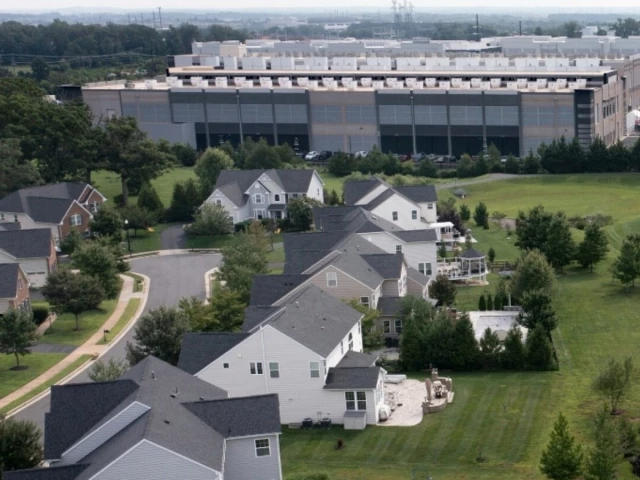
The data centres powering America's artificial intelligence boom have become an unlikely target in November's midterm elections, as anger over rising electricity bills and noise turns Democrats - and a growing number of Republicans - against Big Tech.
Candidates in at least 21 races across 18 states have aired television advertisements mentioning data centres this cycle, according to marketing data cited by US media, almost evenly divided between both parties.
On the grid serving Senate battleground Ohio, as well as 12 other states, demand from data centres drove up capacity costs by $9.3 billion in a single year, a 174% increase, according to an independent market monitor.
Anger over household bills has merged with a broader populist distrust of Silicon Valley, exposing lawmakers who, until recently, were courting the sprawling server farms with tax breaks and promises of jobs and investment.
Read: US data centre protests go national as backlash grows
In Texas, Republican Governor Greg Abbott has frozen new projects while regulators weigh their impact on power and water supplies. It was Abbott who, not long ago, called his state the "epicentre of AI development."
His Democratic challenger wants a moratorium until lawmakers pass stronger safeguards, and accuses Abbott of putting wealthy interests ahead of ordinary Texans.
In Brazoria - between Houston and the Gulf Coast - 44-year-old Melissa Burnett told AFP the serenity of her quiet neighbourhood had been shattered by a 17-megawatt centre last year that is "like a freight train always coming at you."
"We were not supposed to hear it, nor was it supposed to affect our quality of life, and it's just done the opposite, you know?" she said.
Almost alone among Republicans, President Donald Trump has not moved. He still calls the industry essential to beating China on AI, leaving him at odds with candidates running under his own banner.
'Sleeper issue'
The midwestern former manufacturing hub of Ohio offers perhaps the sharpest test of the politics of data centres.
Sherrod Brown, a Democrat who lost his Senate berth in 2024, is running for the Buckeye State's other seat. Brown has run at least four ads attacking Republican Jon Husted for courting data centre investment as lieutenant governor.
They brand Husted "the face of data centres," and Brown has promised to make operators pay the full cost of the power they use.
Senate Republicans have warned that the issue could cost Husted the race. Their campaign arm called data centres a "sleeper issue" and said a defeat blamed on them would chill political support for the industry nationwide.
Read More: Trump administration bans new Chinese humanoid robots, to protect US AI buildout
The same argument is turning up in races that have little else in common: a Republican running for governor in Florida promising to shield families from facilities that push up utility bills; a Pennsylvania Democrat demanding that tech companies cover their own costs; a Wyoming Republican who won a House primary on advertisements attacking Silicon Valley billionaires.
In Michigan, the issue toppled two better-connected Democrats in a primary won by a leftist who said opposition had united committed Republicans, Trump voters, independents and Democrats.
Both parties turn
In Wisconsin, Republican gubernatorial nominee Tom Tiffany has taken to calling his Democratic opponent "Data Centre David Crowley." Earlier this year Tiffany was praising the technology and voting to speed AI infrastructure through.
Tiffany now wants the state's tax incentives scrapped and the industry more tightly regulated, though he stops short of a ban.
Democratic governors are moving the same way.
New York has imposed a year-long moratorium on new hyperscale facilities, and Pennsylvania now requires developers to cover infrastructure costs and meet tougher standards on water use, hiring and community consultation.
Also Read: Trump crypto firm backs venture offering AI from restricted Chinese companies
Trump has not moved with them.
"America must remain dominant in the AI race that is the future. I think the American people understand that, and this president certainly does," his spokeswoman Karoline Leavitt said on Thursday.
His administration has signed up Google, Microsoft, Meta, Oracle, xAI, OpenAI and Amazon to a voluntary "Ratepayer Protection Pledge." Under it, the companies undertake not to leave consumers paying for the power plants and grid upgrades their facilities require.
The pledge has not stopped the advertisements.













This material may not be published, broadcast, rewritten, redistributed or derived from. Unless otherwise stated, all content is copyrighted © 2026 The Express Tribune.



1727268465-0/Untitled-design-(42)1727268465-0-208x130.webp "the poor man s burden")


COMMENTS
Comments are moderated and generally will be posted if they are on-topic and not abusive.
For more information, please see our Comments FAQ