PSX plunges nearly 1,965 points amid domestic political clamour
Updated 9 hours ago

Lender says downward tariff revision will lead to increase in circular debt
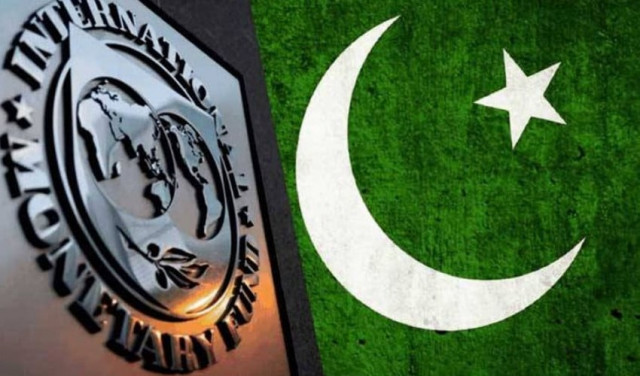
The International Monetary Fund (IMF) is seeking to curtail powers of the federal government for making a downward revision in gas prices in a bid to prevent further accumulation of circular debt.
In a recent meeting, the Cabinet Committee on Energy (CCOE) was informed that the IMF while noticing the burgeoning tariff differential adding to the flow of circular debt in the gas sector in its review of the Extended Fund Facility (EFF) and Standby Arrangement (SBA) from time to time, sought amendments to the Ogra Ordinance 2002 to curtail powers of the government for pushing down tariffs.
Later, a commitment was solicited with set deadlines to timely advise the revision in consumer gas prices following receipt of Ogra determinations and report compliance to the IMF.
Pursuant to the IMF's demand, the Ogra Ordinance 2002 was amended in March 2022 through an enactment. It was also agreed that prices would be timely revised in accordance with Ogra determinations to avoid further accumulation of circular debt. Also, the diversion of re-gasified liquefied natural gas (RLNG) to the domestic sector was allowed with cost recovery through price revisions starting November 2023.
Unlike the power sector where subsidy is budgeted by the government to address the tariff differential, the gas sector has operated under a cross-subsidy mechanism to protect the vulnerable/poor segment in the domestic (residential) sector, which inflated tariffs for other consumer categories to meet revenue requirements of gas distribution companies. The absence of budgeted subsidies has limited the ability of public gas utilities to lower tariffs for industrial, commercial or compressed natural gas (CNG) consumers.
Pakistan's gas supply chain comprises two major segments – the input cost of gas or the wellhead price under the applicable petroleum policies and the end-consumer tariff. The determination of consumer tariff is the exclusive jurisdiction of the federal government under the Ogra Ordinance and the rules made thereunder.
In line the existing regulatory regime, Ogra, on a biannual basis, determines and notifies both wellhead gas prices as per the applicable petroleum policy and the revenue requirements of Sui companies, which serve a larger part of bulk and retail consumers connected to their pipeline networks.
Once Ogra determines the annual revenue requirements of Sui companies, it refers the decision to the federal government for advice within 40 days for issuing a notification. The practice of revision in consumer gas prices in alignment with Ogra's biannual determination was strictly followed until financial year 2013; thereafter, it was neither followed nor any provision for tariff differential subsidy ever made in the annual budget.
On a similar analogy, the tariff differential in ring-fenced RLNG sales arose starting FY 2018-19 after the government decided to divert RLNG to the domestic sector to meet winter gas demand without any firm mechanism for recovery of the actual cost of RLNG. The Petroleum Division, through advisory firm KPMG, got a review conducted in 2024 of the cash flow and circular debt position in the gas/RLNG supply chain. The consultant in its final report, submitted in October 2024, confirmed that a major component in the gas-sector circular debt was the tariff differential, which arose due to lower consumer prices.
As of June 30, 2025, the gas-sector circular debt was reported at Rs3,288 billion (including interest cost of Rs1,468 billion). Under the IMF's EFF and SBA, the government agreed to take the following steps:
(i) Devise a precise definition of circular debt for the gas sector; (ii) compile detailed and verified circular debt stock statistics; (iii) establish a monthly debt flow reporting system; and (iv) devise a CDMP (circular debt management plan).
Salient features of the CDMP will include regular adjustments of end-user gas prices as per established formulas (and in line with the Ogra Amendment Ordinance effective since March 2022) and tangible cost-reducing reforms including measures to slash unaccounted-for-gas (UFG) losses.
The Petroleum Division under non-lending arrangements requested the World Bank to assist according to the IMF's understanding, especially in preparing a definition of the gas circular debt, compiling the gas debt stock and establishing a reporting system. The World Bank, after months of consultations/meetings, data analysis and building on the work done by KPMG, helped the Petroleum Division in coming up with a precise definition of the gas circular debt and the debt reporting tool, which was handed over to Sui companies in May 2025.
A significant proportion of indigenous gas supply comes from state-owned exploration and production (E&P) companies, including Oil and Gas Development Company, Pakistan Petroleum and Government Holdings Private Limited. The government holds the first right to purchase all domestically produced natural gas through its nominated buyers, ie, Sui distribution companies. Such gas is supplied onwards either through the distribution companies or directly to power and fertiliser plants.
Owing to lower-than-expected bill collections by Sui Southern Gas Company and Sui Northern Gas Pipelines, coupled with power-sector issues, the gas-sector circular debt is steadily increasing and affecting the financial capacity of E&P firms to invest in their core business. If the problem of receivables is not addressed urgently, these companies may suffer losses and become a burden on the national exchequer.
It may be recalled that the prime minister had constituted the Committee on Implementing Structural Reforms in the Petroleum Sector. The committee finalised and shared its report with the PM Office on November 13, 2025. It also formulated a circular debt settlement plan, which envisaged settlement of Rs1,493 billion over a period of five years. The proposed settlement plan was presented to the PM on December 31, 2025.







This material may not be published, broadcast, rewritten, redistributed or derived from. Unless otherwise stated, all content is copyrighted © 2026 The Express Tribune.





1727268465-0/Untitled-design-(42)1727268465-0-208x130.webp "the poor man s burden")
COMMENTS
Comments are moderated and generally will be posted if they are on-topic and not abusive.
For more information, please see our Comments FAQ