Oil falls as Trump comments on Iran talks ease supply concerns
Updated 1 hour ago

Real challenge is country's capacity to carry and service debt sustainably; signs emerging direction may finally be c
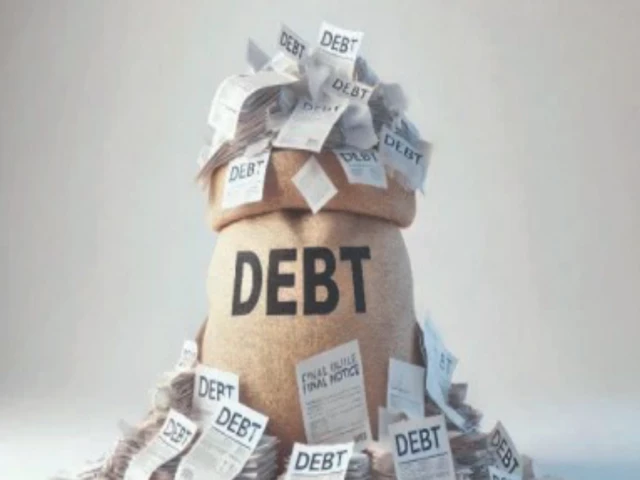
The headlines are alarming: Pakistan's debt has crossed Rs100 trillion. The figure has been splashed across social media and reported prominently in the national press. The number is indeed enormous. But, by itself, it tells us very little about whether the country's debt position is becoming more dangerous or more manageable.
The important questions are: Is debt growing faster or slower? Is it rising relative to the size of the economy? How much of it is in foreign currency? How much government revenue is being consumed by interest payments? What is the maturity profile? How much debt has to be rolled over in the near future? And does the country have sufficient foreign exchange reserves to meet its external obligations?
Viewed through these lenses, Pakistan's recent debt story is considerably more nuanced than the Rs100 trillion headline suggests. The direction matters.
The first encouraging development is the rate at which debt is accumulating. According to government figures, debt growth in FY26 was around 7.7%, reportedly the lowest rate in two decades, compared with an average of about 16% in previous years. This suggests that the trajectory has shifted from rapid accumulation towards greater containment.
The second important indicator is the debt-to-GDP ratio. Pakistan's debt-to-GDP ratio has reportedly fallen to around 68% from the exceptionally high 88% range recorded five years ago. This is a significant change. The absolute stock of debt may continue to rise in rupee terms while the burden of that debt relative to the size of the economy falls.
Another important indicator is debt servicing. Here too, there has been an improvement. Annual interest expenditure has reportedly fallen from around Rs8.9 trillion to Rs6.9 trillion, while interest payments as a share of total government revenue have fallen from about 61% in FY24 to 35% in FY26. Put simply, Rs61 out of every Rs100 of revenue that previously went to interest has fallen to around Rs35.
Debt cannot be assessed independently of foreign exchange reserves. State Bank reserves have risen from around $3 billion three and a half years ago to $18.5 billion, increasing import cover from barely 2.4 weeks to roughly three months. While this remains below the comfortable level, the substantially rebuilt reserve buffer has significantly strengthened Pakistan's ability to meet external obligations.
The composition and maturity of debt are as important as its size. Pakistan has reportedly retired around Rs4.72 trillion of debt before maturity. At the same time, the average maturity of domestic debt has increased from roughly 2.8 years to more than 3.8 years. Longer maturities reduce the risk of having to refinance very large amounts of debt every year.
Perhaps the biggest historical risk has been the external debt since it has to be serviced in foreign currency. This too has improved as the external debt's share of public debt has fallen from about 38% six years ago to 31%. Still, vulnerability remains because about one-quarter comes from bilateral creditors that require frequent rollover.
Another overlooked indicator is market confidence. Pakistan has returned to international capital markets after a four-year absence, including through Eurobond and Panda Bond issuances. Credit-rating agencies have also upgraded Pakistan, with S&P's latest upgrade to 'B', its highest level in almost a decade. Yet Pakistan remains below investment grade and needs further progress to achieve investment-grade status and access international markets on more favourable terms.
The challenge now is to ensure that these improvements are not temporary. We need to reach a point where debt no longer crowds out development, where interest payments no longer consume revenues needed for education and infrastructure, and where economic growth itself steadily reduces the burden of past borrowing.
The Rs100 trillion figure makes a dramatic headline. But the real measure of Pakistan's debt problem is not the size of the debt alone. It is the country's capacity to carry and service that debt sustainably. And, for the first time in many years, there are signs that the direction may finally be changing.
The writer is a Senior Fellow, Pakistan Institute of Development Economics. Previously, he has served as Pakistan's ambassador and permanent representative to the World Trade Organisation









This material may not be published, broadcast, rewritten, redistributed or derived from. Unless otherwise stated, all content is copyrighted © 2026 The Express Tribune.







COMMENTS (3)
Comments are moderated and generally will be posted if they are on-topic and not abusive.
For more information, please see our Comments FAQ