Mother, daughter found murdered
Updated 2 hours ago

CCTV cameras to monitor dumping; surveys planned for flood-risk areas
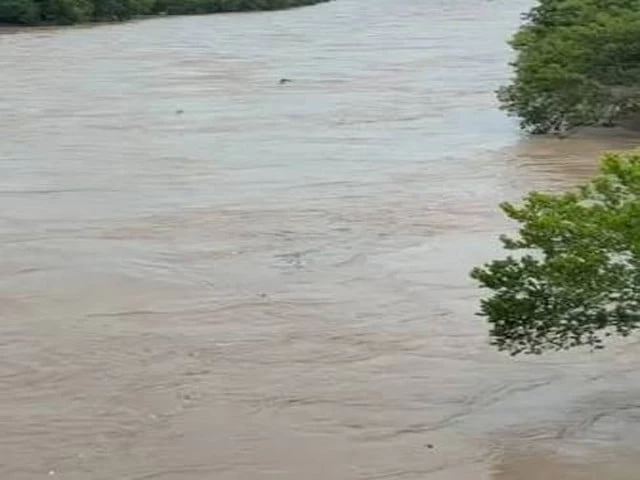
Closed-circuit cameras will be installed along the 17-kilometre Nallah Leh to monitor the dumping of building material, garbage and scrap, with a decision to register cases against violators.
Approval was also given for the construction of mega underground water storage tanks to conserve rainwater, while a rain and flood emergency has been imposed across the city and strict precautionary measures approved.
A meeting to review preparations for monsoon rains and possible flooding was held under Commissioner Salman Ghani and PDMA Director General Saif Anwar Jappa. The deputy commissioner and heads of relevant departments attended the meeting.
The meeting discussed in detail a comprehensive strategy to deal with monsoon rains, urban flooding and particularly the current situation of Nallah Leh, its water-carrying capacity, flood forecasting and warning systems, cleaning and desilting of the drain, and possible flood risks.
The meeting was briefed that Nallah Leh is approximately 17 kilometres long, while its current water-flow capacity is around 20,000 cusecs at New Katarian, 33,000 cusecs at Gowalmandi and 35,600 cusecs at Chaklala. A review was also conducted of channel improvement and necessary engineering measures from around one kilometre downstream of Chaklala Bridge to Katarian Bridge to increase the channel-flow capacity of Nallah Leh.
The meeting was informed that the proposed channel design had been prepared on the basis of a 25-year return period.
The commissioner said the federal government would be requested to construct check dams on Islamabad's nullahs. An immediate survey would be conducted to assess the possibility of constructing ground storage tanks to prevent urban flooding in low-lying areas of Rawalpindi, particularly Safdarabad, Pirwadhai, Dhok Khabba and Sadiqabad.
Wasa was directed to complete its survey within the next 15 to 20 days, identifying flood-risk maps, sensitive locations and local solutions to address the risks.
The Safe City cameras installed along Nallah Leh would also be used to monitor illegal dumping, while encroachments on the right of way of the drain would be removed immediately.
As Rawalpindi and Islamabad are twin cities, the impact of heavy rains could be felt more severely in Rawalpindi. Therefore, effective coordination and a joint strategy between the administrations and relevant institutions of both cities was described as essential.
Continuous monitoring of water flow in Nallah Leh and connected stormwater drains was ordered, while flood forecasting and early-warning systems were to be upgraded on modern lines and an effective mechanism developed to convey timely information to relevant institutions and the public.
Special attention would be paid to timely desilting and dredging of Nallah Leh, cleaning of the drainage system and removal of obstructions from major drains and nullahs so that heavy rains did not obstruct the natural flow of water.
The meeting also considered proposals for ponds and water-storage projects at different locations as a permanent solution to urban flooding.
The PDMA director general said technical assessments would be carried out to identify possible locations for regulating the natural flow of water and storing excess water.
The proposals would be shared and discussed with the Islamabad administration at the next meeting so that a joint and workable strategy could be developed for both cities.













This material may not be published, broadcast, rewritten, redistributed or derived from. Unless otherwise stated, all content is copyrighted © 2026 The Express Tribune.






COMMENTS
Comments are moderated and generally will be posted if they are on-topic and not abusive.
For more information, please see our Comments FAQ