Mohatta Palace to host ninth Sindh Literature Festival
Updated 2 hours ago

Actor reflects on gender stereotypes, toxic masculinity, cinema and his return to acting
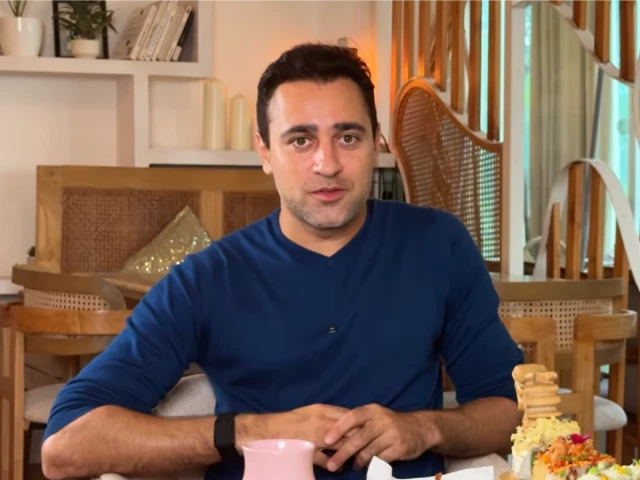
Ahead of his comeback film, Indian actor Imran Khan opened up in a recent conversation about gender stereotypes, feminism, fatherhood, the cultural impact of cinema and what ultimately brought him back to acting.
Khan said he had become increasingly unsettled by the way gendered generalisations had become normalised in everyday conversations, particularly ideas about how men and women were expected to behave.
"I found myself drawn to conversations about the gender perspectives that have started to become normalised and voiced in polite society, and generalised the idea of how one should be," he said. "So yeah, I did feel a responsibility on my part in whatever way I could to add to that discourse, to come into the conversation."
Khan said discussions around feminism and men's rights often became entangled in the very stereotypes they were meant to challenge.
"So many of these conversations around feminism, around men's rights, often find themselves caught up in perpetuating myths and stereotypes that are not helpful at all," he explained. "Men will call out what they consider to be problematic areas of feminism, not realising that often that is in fact patriarchy or toxic masculinity embedded in them."
For Khan, the central idea behind these conversations remained straightforward. "It is important to start to understand: the point of feminism or the point of talking about masculinity is not to exclude others. The whole point is equality, right?" he said.
The actor also criticised what he described as a recurring pattern in Indian cinema, where emotionally immature male characters were portrayed sympathetically after romantic rejection.
"There has been a pretty clear pattern across Indian cinema of managing and kind of coddling these emotionally immature manchild characters," he said. "The film will kind of wallow in the emotional misery of this one character, generally motivated by romantic rejection."
He said such films often turned the character's emotional turmoil into something audiences were encouraged to sympathise with rather than question.
"With that follows a 1.5 to 2-hour tantrum where any manner of misbehaviour is somehow validated, coddled, and justified because of the grief faced by rejection. That's not a depiction of any kind of an emotionally healthy, mature individual."
For Khan, the issue extended beyond storytelling and into the way audiences could internalise such portrayals. "It teaches a pattern. It normalises a pattern," he said.
Discussing what eventually brought him back to acting, Khan said the decision came from an instinctive desire to create rather than a calculated career move. "It was that inner artist who just says, 'I have a story I want to tell people.' And I arrived at a place where I had clarity about that," he said.
That clarity also shaped how he approached his comeback. "Make the film that you want to make from your heart so that later on you can stand by it," he said.
Khan also spoke about the responsibility that came with being someone audiences looked up to, particularly when actors underwent significant physical transformations for roles.
"When you find yourself in a position that people look up to you, or people are inspired by you, I think that one should have some sense of responsibility," he said. "You should be transparent about the process so that you're not creating an unhealthy sense in people."
The actor also reflected on fatherhood and how becoming a parent had changed his understanding of raising a child.
"Becoming a parent really crystallised the idea for me that children will learn experientially. They witness you, and that's where they learn from," he said. "Every choice you make, every act that you undertake, that is what they're learning, and it molds them as a person."
Khan said the realisation had also prompted him to reflect on generational trauma and the responsibility of ensuring that it was not passed on.
He recalled a quote from Denzel Washington that had particularly resonated with him: "This is sacred work. Anyone who gets in the way of that must be pushed out of your way." "That resonated with me; that became my lighthouse," Khan said.
Towards the end of the conversation, Khan also pushed back against the tendency to categorise much of his earlier filmography simply as romantic comedies.
"These films broadly fall under the category of rom-com, which to me is an oversimplification because I saw them as an exploration of a young person's romantic relationship," he said. "So to me, I found an interesting human emotion to explore with all of them, of a young person exploring love, rejection, these things. You're looking at human experiences."
For Khan, that perspective appeared to underpin both his earlier work and the creative choices that had ultimately brought him back to the screen.









This material may not be published, broadcast, rewritten, redistributed or derived from. Unless otherwise stated, all content is copyrighted © 2026 The Express Tribune.
1727268465-0/Untitled-design-(42)1727268465-0-208x130.webp "the reverse renaissance")



COMMENTS
Comments are moderated and generally will be posted if they are on-topic and not abusive.
For more information, please see our Comments FAQ