Pakistan Railways declares three-month emergency amid rising train accidents
Updated 12 hours ago

Modern technologies, including GPS, camera traps, drones Geographic Information System (GIS), were used during survey
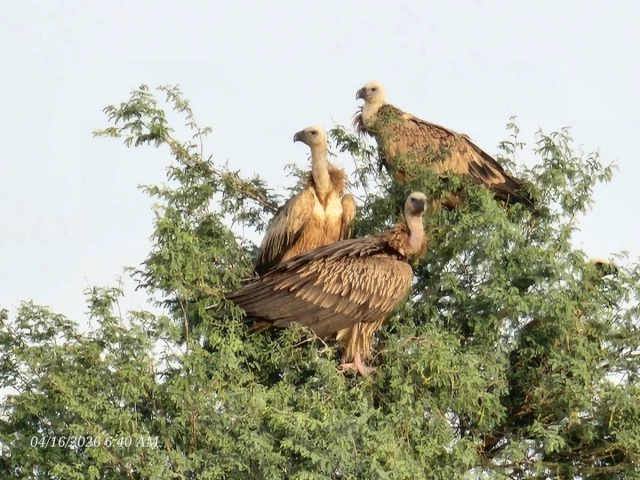
Initial findings of Punjab’s first comprehensive provincial survey of wildlife, birds, reptiles, amphibians and flora have emerged, with the survey recording 5,128 Punjab urials, 1,276 chinkaras, 540 Indus River dolphins, 160 blue bulls, 138 hog deer and 93 blackbucks.
However, the complete and final results of the survey have not yet been officially released for public access.
Among birds, the survey recorded 92,636 grey francolins, 40,526 black francolins, 6,052 chukars, 1,821 houbara bustards, 345 vultures and 49 kalij pheasants.
The survey also recorded 7,600 skittering frogs, 1,070 Bengal monitor lizards, 720 Indian softshell turtles, 85 Indian cobras, 78 saw-scaled vipers and 22 Indian rock pythons. Various plant species, including shisham, kikar, peepal, phulai, pilu and kava, were also documented.
The survey was launched through a collaboration between the International Union for Conservation of Nature (IUCN) Pakistan and the Punjab Wildlife and Parks Department. The project was formally inaugurated in Lahore in April 2025, with an official estimated cost of Rs530 million.
According to IUCN Pakistan Project Manager Asim Jamal, the survey aims to scientifically assess the population, distribution, habitats and threats faced by wildlife and plant species in Punjab and develop reliable data for future conservation policies.
He said preparation of a Red Data Book based on the survey findings was also an important component of the project.
Project Director Wildlife Rangers Mudassar Hassan said preparations for the second phase of the wildlife survey were under way. He said a census of wildlife had been conducted during the first phase, while data collected would be further verified and improved in the coming years.
Mudassar Hassan said the data would be refined by taking into account migration and movement patterns of different species. It would subsequently be aligned with the requirements of the IUCN Red List, he added.
He said preparation of Pakistan’s first Red Data Book was also part of the process and was expected to be completed by 2028.
Modern technologies, including GPS, camera traps, drones and Geographic Information System (GIS), were used during the survey. The data collected is being preserved in a digital database.




















This material may not be published, broadcast, rewritten, redistributed or derived from. Unless otherwise stated, all content is copyrighted © 2026 The Express Tribune.






COMMENTS (2)
Comments are moderated and generally will be posted if they are on-topic and not abusive.
For more information, please see our Comments FAQ